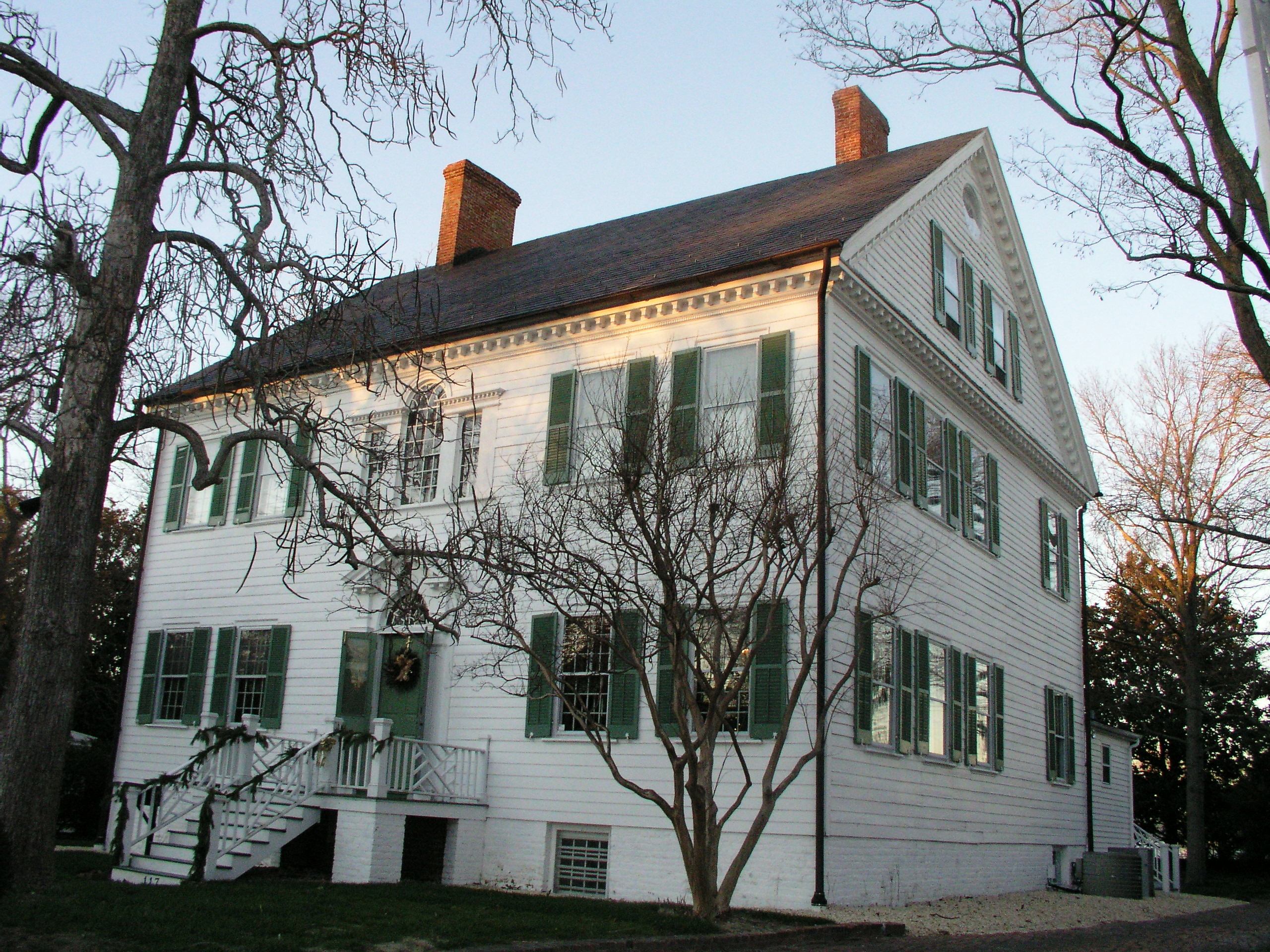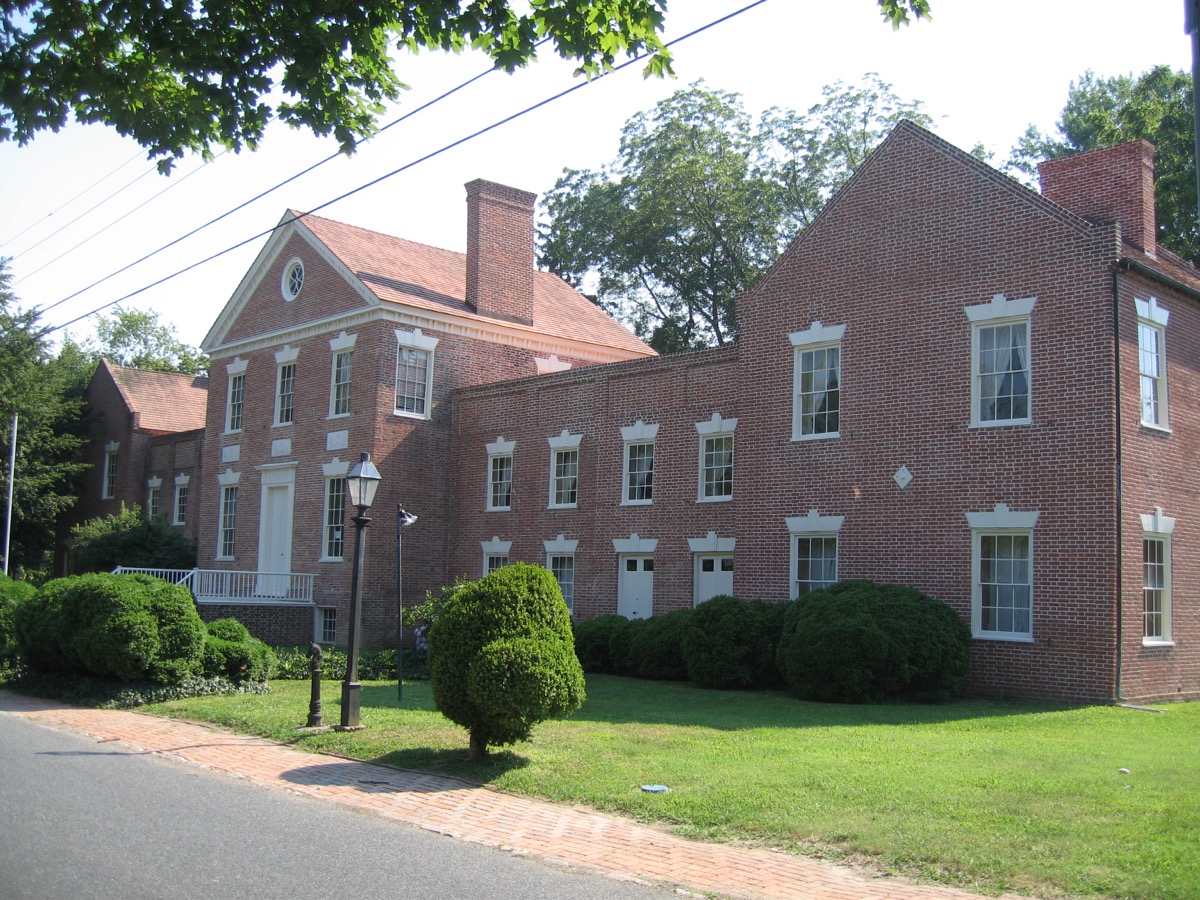
At Teackle Mansion in Princess Anne, Maryland, police are called again and again for interior alarms that trip in an empty building. Sometimes, before they reach the door, they see a figure crossing the second floor, window to window, in a house with no one in it.
The police in Princess Anne, Maryland keep getting called out to Teackle Mansion for nothing. An interior alarm trips, officers drive over, and they find the building empty and undisturbed. Sometimes, before they even reach the door, they see her: a figure on the second floor, moving steadily from one window to the next, left to right, through a house that should have no one in it.
Neighbors have reported the same thing, a glow drifting past an upstairs window like a candle carried room to room. "Sometimes she appears to be holding a candle or a flashlight because she's illuminated a little bit," says Mindie Burgoyne, who runs the local ghost walks.
Most people who know the story think it's Elizabeth Upshur Teackle. She designed the place. She ran the gardens, the outbuildings, the staff, a roughly 10,000-square-foot brick mansion with an indoor bath and steam-driven kitchen equipment, luxuries almost no American home had in 1818. The family called it Teackletonia. She wrote her sister long letters from it, and by every account she loved it more than anything she owned.
Then her husband's fortune came apart. Littleton Dennis Teackle founded the Bank of Somerset, traded across the Atlantic, and watched venture after venture fail. He lost a suit to his own bank, was declared an insolvent debtor, and saw his property go to a sheriff's sale. By 1828 the family had lost the house entirely. He died in a Baltimore hotel in 1848 with a net worth of $21. Elizabeth died in 1836, within a decade of losing the home she'd built.
After the Teackles, the mansion was carved into apartments, and that's when the tenants started talking. One reported a woman in a long white dress who walked through his door in the middle of the night, crossed to the window, and stood there. He gathered his things and never came back. Investigators who have spent nights inside report cold spots, temperature drops, and camera batteries draining to nothing in the same rooms.
The house is a museum now, listed on the National Register since 1971. The figure in the window predates the alarm system the police keep answering for.
The haunting is domestic, not violent. A woman going window to window, second floor, left to right, the same path every time, as if she's still making her rounds, checking that everything is where she left it in the one house she could never quite hold onto.