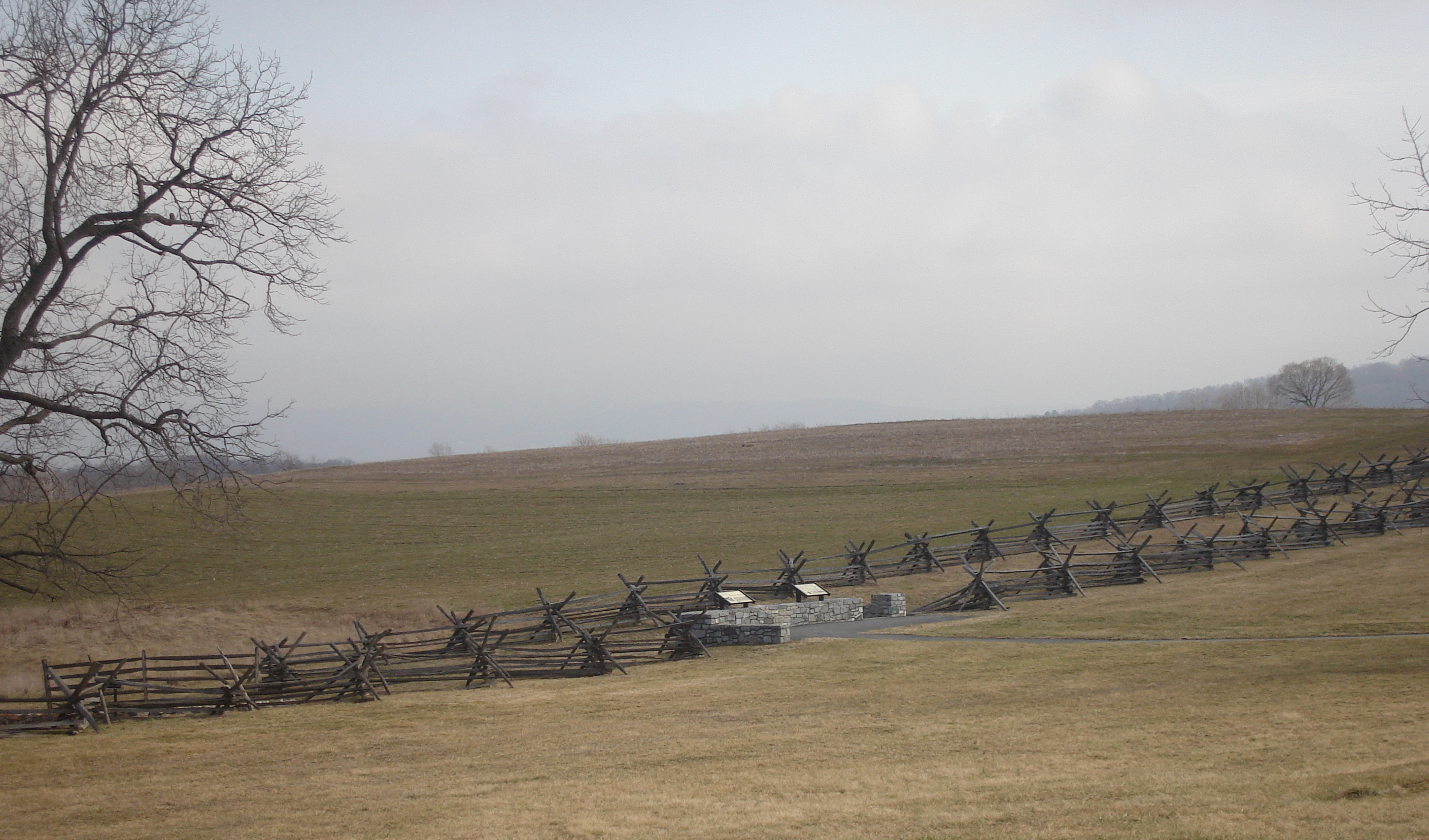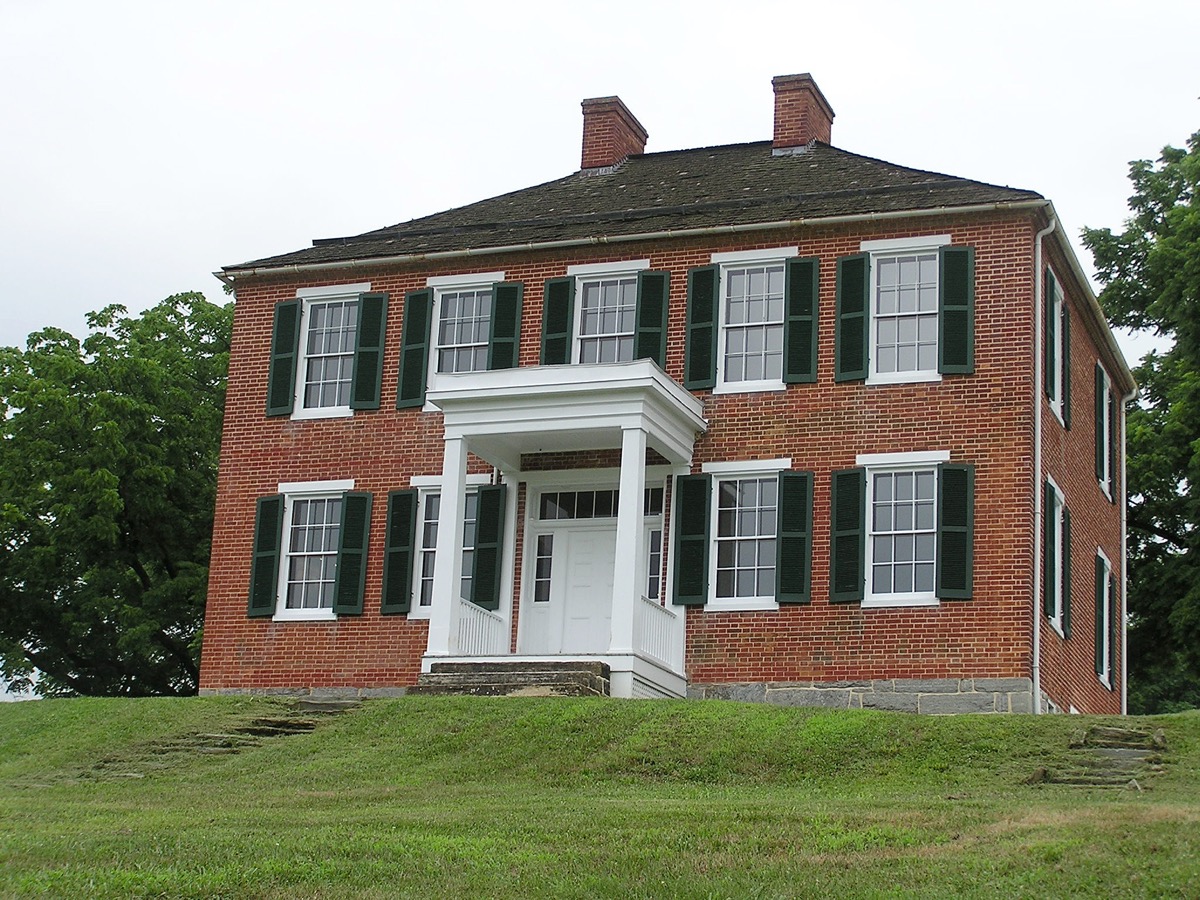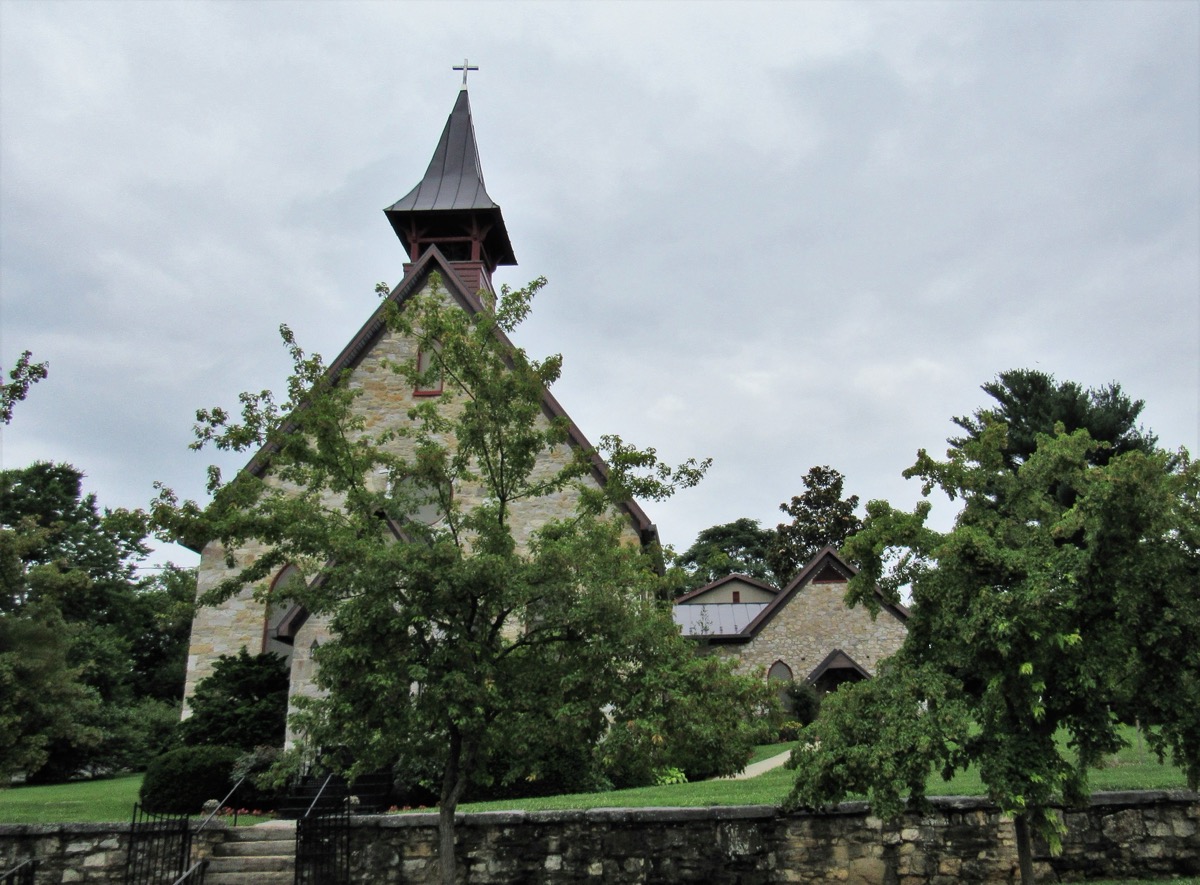
At Burnside Bridge on the Antietam battlefield in Maryland, people who come at night report the same two things across decades: balls of blue light drifting along the creek, and a phantom drum beating cadence that swells, then fades into the dark.
Burnside Bridge crosses Antietam Creek at the south end of the battlefield near Sharpsburg, Maryland, and the people who come to it after dark report the same two things, independently, across decades. Balls of blue light drift along the banks of the creek. And a drum beats cadence somewhere out in the dark, swelling, then fading away, as if a column that no longer exists is still marching past.
The Federal Highway Administration's own history feature on Antietam records it plainly: "Visitors at night have reported seeing balls of blue light moving around the sound of drum playing cadence as it fades into the night."
To understand why a drum, you have to go back to one morning. The bridge was built in 1836, and it wasn't called Burnside then. It was the Rohrbach Bridge, after the local farm family, and people knew it plainly as the Lower Bridge. It is three stone arches, about 125 feet long and only 12 feet wide. A narrow thing, easy to miss.
On September 17, 1862, roughly 400 Georgians under Brigadier General Robert Toombs held that span against an entire Union corps for more than three hours. They fired down from bluffs nearly 80 feet high while Ambrose Burnside's men came at them across open floodplain with no cover at all. The men in the open had to funnel toward those twelve feet of stone, and the Georgians on the high bank simply waited for them to do it.
Four hundred held back thousands. They inflicted over 500 casualties while losing fewer than 160 of their own. And here is the part that gives the place its edge: the creek was shallow and fordable in spots. The bridge did not have to be taken head-on at all. The crossing finally broke only when a Union division forded the water three-quarters of a mile downstream, at Snavely's Ford, and flanked the position as Confederate ammunition ran low. The 51st Pennsylvania and 51st New York took the bridge around one o'clock, after all the hours and all the dead.
By then it was part of the bloodiest single day in American history. The Battle of Antietam left 22,726 casualties on both sides. Many of the men killed at the bridge were buried fast and shallow right there, in unmarked graves in and around the crossing, before being moved later.
Afterward, the Lower Bridge took the name of the general whose corps spent those hours and those hundreds of men forcing a crossing it may never have needed to force at all. The drum keeps its own time now, swelling and fading, marching a column that isn't there.