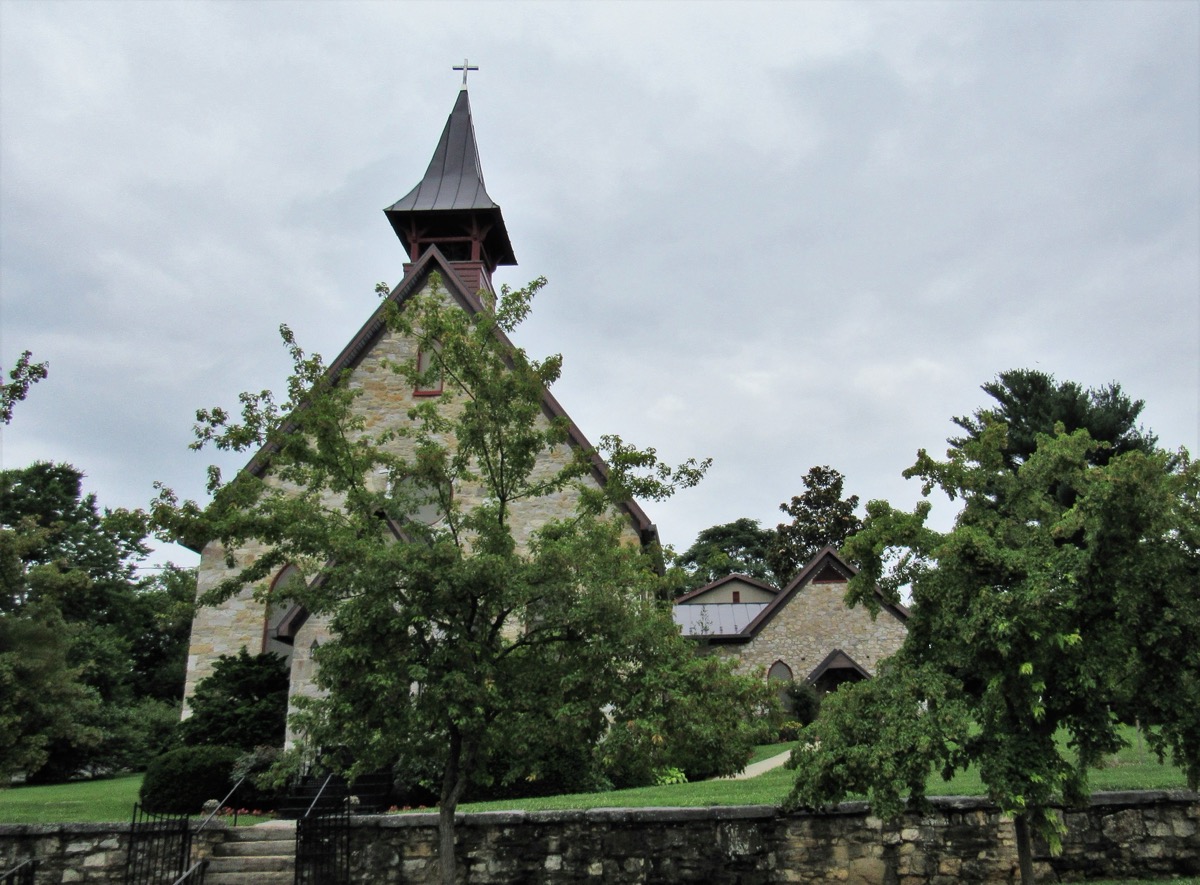
St. Paul Episcopal Church sits on Main Street in Sharpsburg, Maryland, a short walk from Antietam. After the bloodiest day in American history, surgeons filled it with the dying. People who pass at night say the screaming never stopped.
St. Paul Episcopal Church stands on Main Street in Sharpsburg, Maryland, a few minutes' walk from the Antietam battlefield. People who pass the locked, dark building at night say they can still hear screaming inside it. And when no one is in the tower, a light flickers in it anyway, visible from the street.
To understand the screams, you have to go back to one day. On September 17, 1862, the fields around Sharpsburg saw the single bloodiest day in American history. Roughly 23,100 men were killed, wounded, or missing by nightfall.
The wounded had to go somewhere. This small stone church was already half a ruin when they carried them in. The ceiling had collapsed back in 1860, and vandals had stripped the pews, the books, the pulpit, and the windows before the battle ever arrived. Cannon fire finished what they started. Surgeons tore out what furnishings remained to make room for hospital beds, and the wounded were laid down in here and in the houses up and down Main Street.
St. Paul's was stranger than the battlefield farmhouses, because of who used it. The Confederates took it first, on the day of the battle and the day after. Then Lee's army retreated, and the Union army moved its own wounded into the same building. Two armies, back to back, in a windowless stone shell. Surgeons were amputating in churches like this one all over Sharpsburg that week — one Union doctor counted 11 amputations of legs, thighs, and arms among the soldiers he treated.
That November, a federal inspector named W.R. Mosely walked through. He found every church being used as a hospital in town "in a dilapidated condition, and filthy, and unfit for the purpose," and he singled this one out. There was "not a window in the building and no means of ventilation," he wrote, except by pulling away the canvas tacked over the holes where the glass used to be.
Soldiers who died there were buried in the churchyard, then dug up years later and moved to a cemetery in Hagerstown. The bell, taken down and stored away, hung silent for more than 15 years before it rang again. The church was rebuilt over the early-to-mid 1870s, and it's an active parish today, the spire back over Main Street as if none of it ever happened.
But the story locals tell is that some of the dying never finished. The screams come from inside a church that had no windows to let anything out — and the light in the tower keeps flickering on, in a building that has been locked and dark for hours.