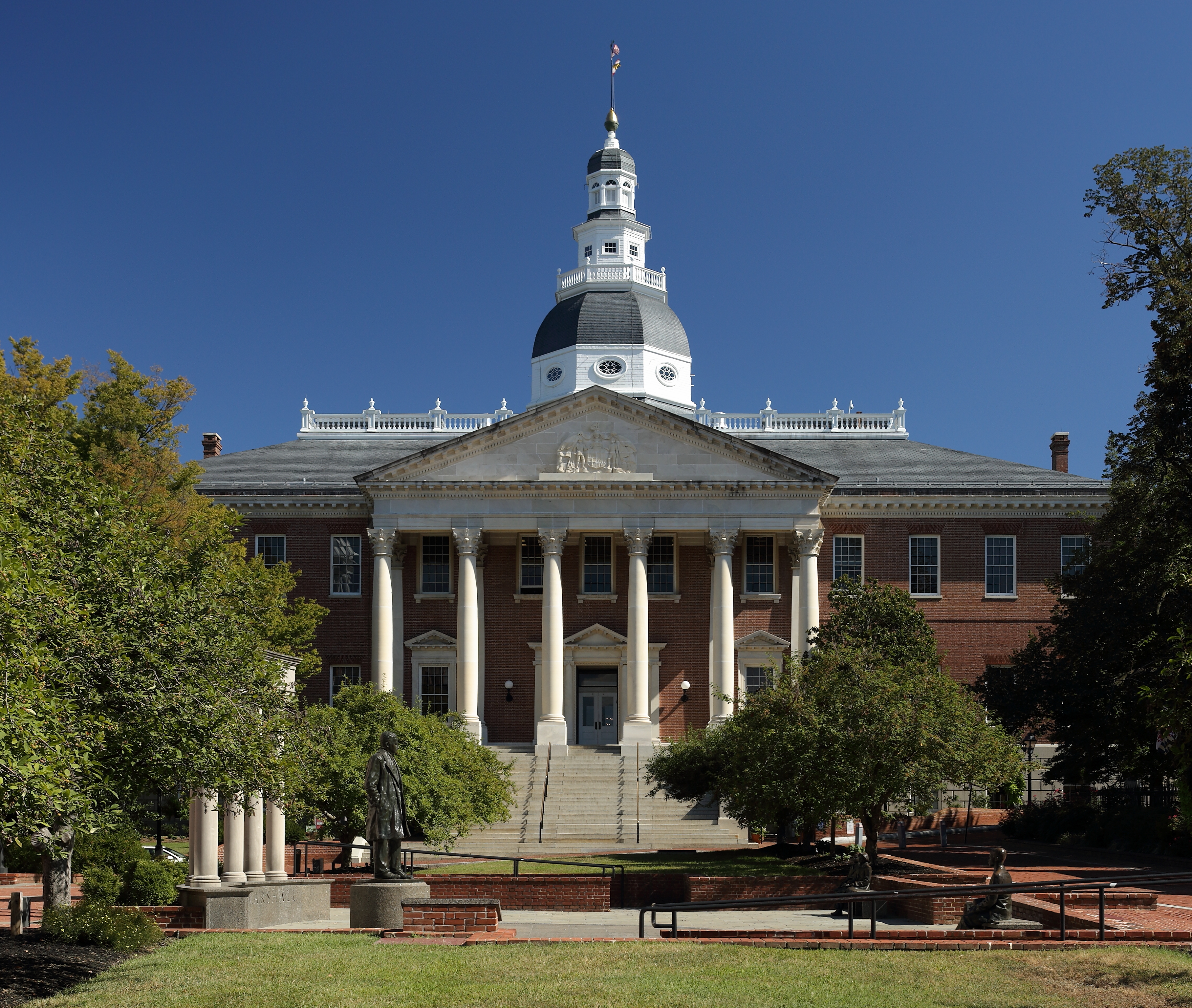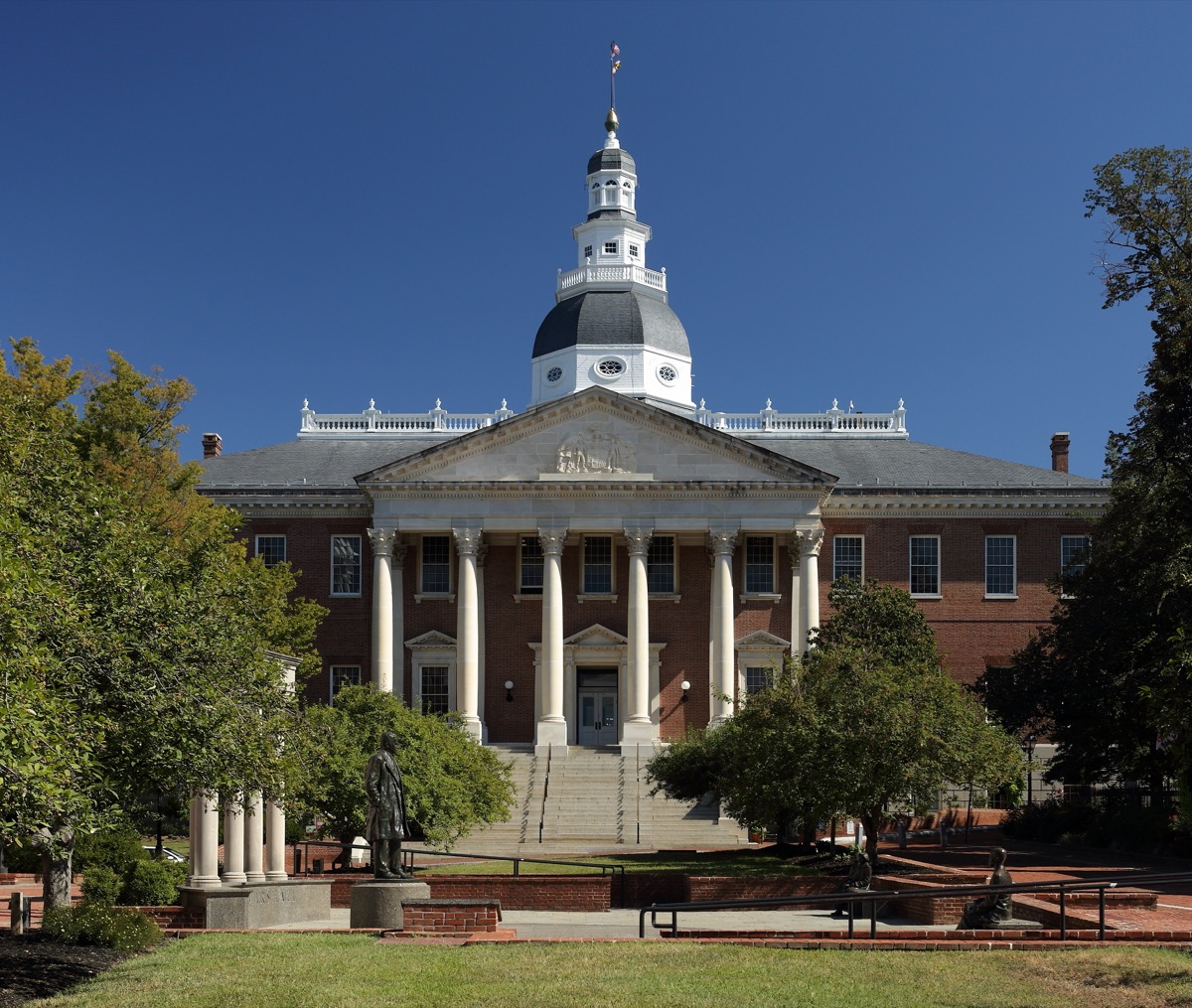
A figure in colonial dress keeps turning up on the dome of the Maryland State House in Annapolis — walking the balustrade, even standing outside near the lightning rod. The story says he's Thomas Dance, the plasterer who fell to his death up there in 1793.
On the dome of the Maryland State House in Annapolis, people keep reporting a man in colonial dress. He walks the inside of the balustrade after the building closes. Stranger still, he's been seen on the outside of the dome, standing near the lightning rod — a spot no living person would casually stand. The story says he's still trying to finish the job he died doing.
His name was Thomas Dance, an English plasterer. In late February 1793, he was at work on the inside of the dome when he made a false step and fell. The Maryland Gazette reported it that week: he "fell [nearly 100 feet] to the floor and died a few hours afterward." It was a long drop. Accounts put it somewhere near 90 feet, roughly the full height of the wooden dome he'd been standing inside, and the fall didn't kill him outright. The paper says he lived a few hours on the floor below before he died.
What happened next is the part that stays with you. After Dance died, his employer kept the wages he was owed from his widow. He withheld the tools, too, so Dance's sons couldn't take over the work their father had been doing. The family got no pension. They were deported back to England with nothing — no money, no trade, no way to stay. And the dome's interior plastering, the work Dance fell out of, wasn't finished until 1797. Four years later, by someone else's hands.
That dome is worth standing under. It's the largest all-wooden dome in the United States, built without a single metal nail — wooden pegs and iron straps, forged by a local ironmonger and designed by an Annapolis architect named Joseph Clark. The 28-foot lightning rod on top of it was built to Benjamin Franklin's exact specifications, the largest such rod attached to any building in his lifetime. That rod is the spot the figure has been seen standing beside, out on the open curve of the dome where there's nothing for a living man to stand on.
The building is still in use. It's the oldest state capitol in continuous legislative use in the country, open to the public with a photo ID. Those who work there describe the rest of it: blasts of cold air strong enough to shove a person back with the doors sealed, lights snapping on and off, water pitchers toppling on their own, footsteps circling the rotunda after the place has closed for the night.
Two hundred years on, a man in colonial dress is still seen climbing toward the top of the dome. Toward the work that was taken from his family the day he died.