At the Pry House Field Hospital Museum near Keedysville, Maryland, firefighters battling a 1976 blaze saw a woman in old-fashioned clothing at a second-floor window — the room where a Union general died. Afterward they found the floor around that window had collapsed.
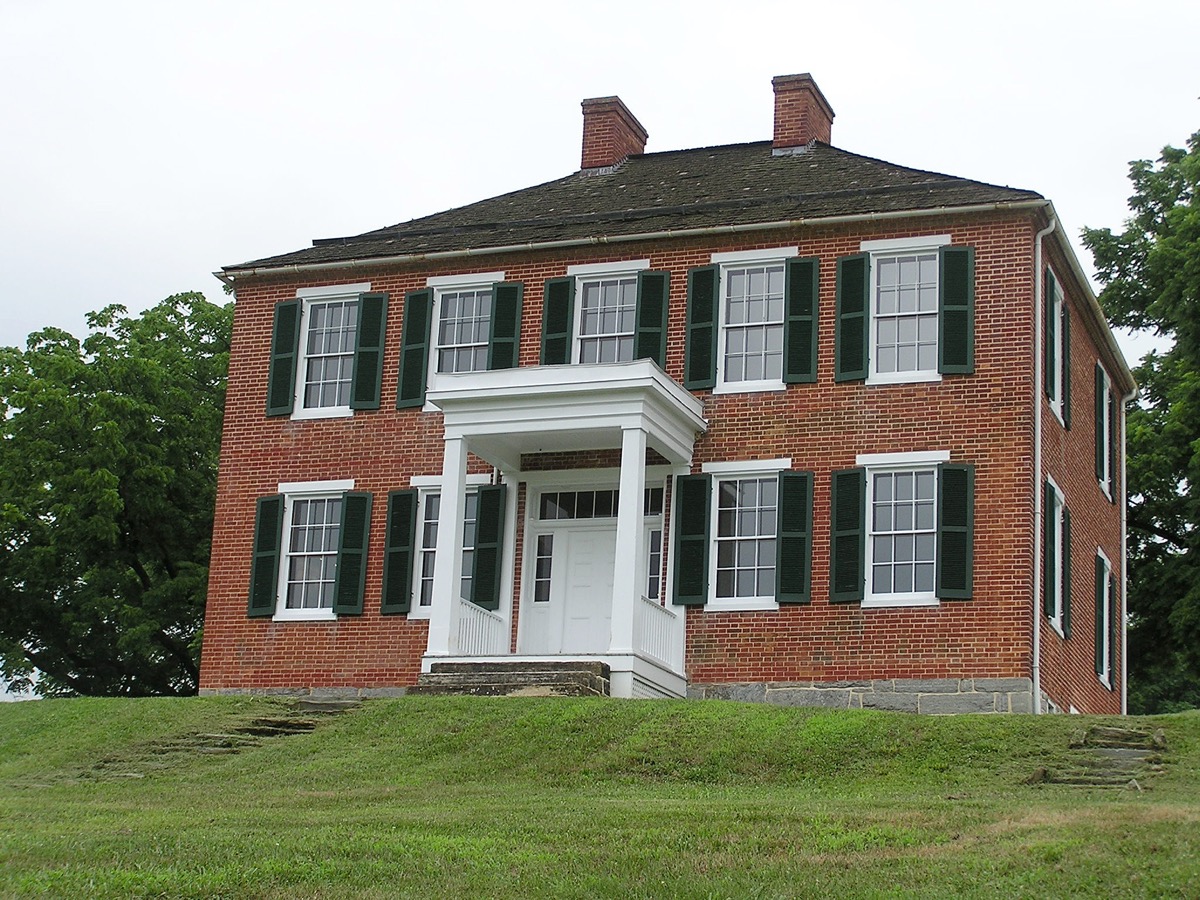
The Pry House Field Hospital Museum stands on high ground outside Keedysville, Maryland, and the woman people keep seeing there is most often at one second-floor window. In 1976 the house caught fire and about a third of it was gutted. While firefighters fought the blaze, several of them looked up and saw a woman in 19th-century clothing standing calmly at that window. When the fire was out, crews found the floor around it had collapsed. No one could have been standing there. No bodies were found in the house.
That window belonged to the room where General Israel B. Richardson died. By some accounts it happened twice: the restoration contractors who came afterward to rebuild the gutted section reported seeing the same woman at the same window, in the same room where the floor was already gone.
The brick farmhouse was built in 1844, and in September 1862 General George McClellan commandeered it as his headquarters during the Battle of Antietam. The fighting on September 17 left over 23,000 casualties, and the house and barn became field hospitals. Major Jonathan Letterman ran the Union medical response from the property, moving the wounded through dressing stations and field hospitals within about a day.
Richardson was carried in wounded and settled into a second-floor room to recover. He was expected to live. Then pneumonia set in, and he died there on November 3, 1862. His wife Fannie had traveled from Michigan in late October to nurse him, believing he was improving. Lincoln himself stopped by that October to see the general.
Local legend says the woman at the window is Fannie. People have reported her for decades — walking down the stairs, standing at the glass, crossing a room and passing through a wall. The barn, another former hospital space, has its own reports of lights, voices, and singing carried out of it.
The museum opened in the house in 2005, and the staff have their own accounts. A guest services worker named Garrett described a night when every door had been locked since five o'clock and a loud banging started up at the front of the house, then settled into footsteps pacing the hallway, on and off for about an hour. He never went to check. Another time he heard voices from the formal parlor — a male voice and at least two women — and could tell they were talking but not a word they said. He barricaded himself in the bedroom.
One director had the worst of it. Running an overnight program during a thunderstorm, she locked up and fell asleep downstairs, only to wake around 1:30 a.m. to pacing on the front porch and a strange metallic scratching. When she opened her eyes she realized the heavy skeleton key was turning in the lock she'd bolted hours before. "I'm not sure whether the key was turning to let whoever was outside in, or to keep them out," she said. "Either way, I didn't want to know then."