TLDR
You watch a live reenactment of a 1692 witch trial examination, then walk through a replica of the dungeon where the accused were held. The replica is based on actual archaeological evidence from the original Salem jail.
The Full Story
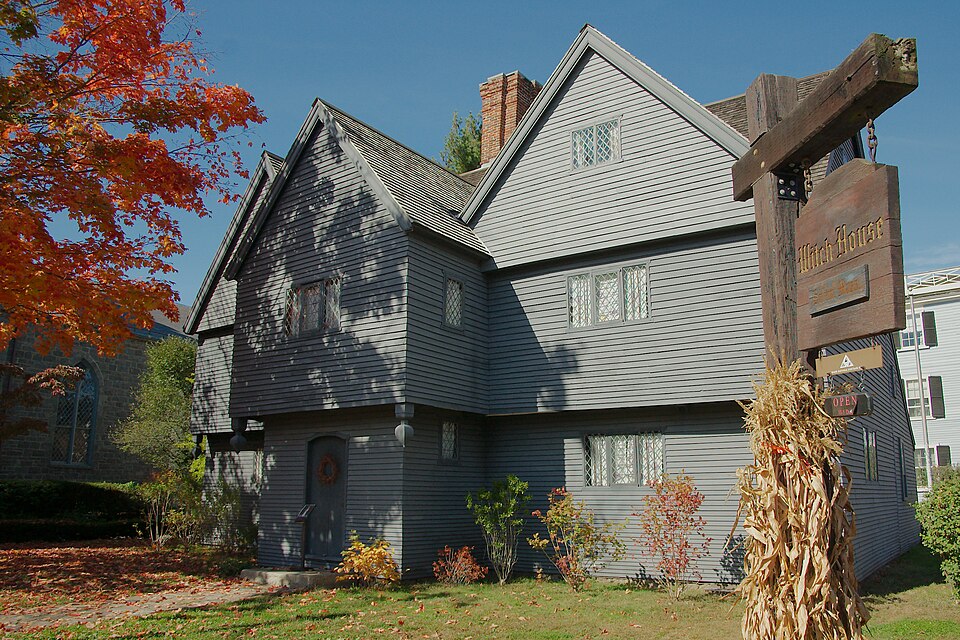
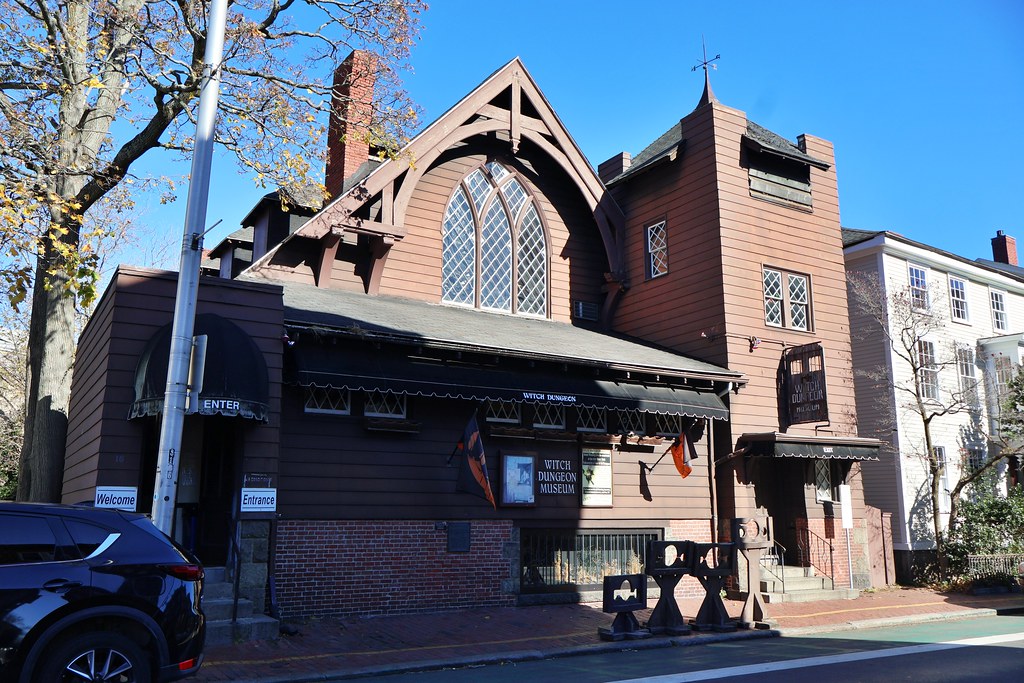
The Witch Dungeon Museum occupies a Stick Style chapel constructed in 1897 for the East Church on a site where Massachusetts Bay Colony erected a fort in 1629. After a fire in 1902, the congregation relocated and the Church of Christ Scientist held services here until 1979, when it became Salem's second-oldest witch museum. Though the building itself dates to the Victorian era, it houses one of the most significant artifacts of the 1692 witch hysteria: an original wooden beam from the Old Witch Jail dungeon.
The original Salem jail was built in 1684 on what is now the corner of St. Peter and Federal Streets -- a small wooden structure measuring just twenty feet square with two stone-walled dungeons in the basement. Conditions were appalling: dirt floors, lice, perpetual darkness, and air thick with the stench of unwashed bodies and excrement. Prisoners were charged for their own chains and fed salted foods to induce confessing thirst. At one point, 150 accused witches were crammed into these chambers, including Sarah Good -- the destitute beggar whose trial the museum now reenacts. Good was hanged on July 19, 1692, along with four other women, while her four-year-old daughter Dorcas remained chained in the dungeon so long she never fully recovered her sanity.
When the New England Telephone Company demolished the jail site in 1956, workers discovered 17th-century beams that had formed the original dungeon cells. Three were preserved: one at the Salem Witch Museum, one at the Peabody Essex Museum, and one here at the Witch Dungeon Museum, where visitors are encouraged to touch this timber that once held the condemned. The museum also displays the original sign from the "Old Witch Jail and Dungeon" -- Salem's first witch tourism attraction, opened by the Goodall family in 1935.
Performers and visitors alike report an unsettling atmosphere that goes beyond simple historical unease. During trial reenactments -- drawn directly from 1692 court transcripts -- some actors claim to feel a presence watching, as if the spirits of the accused are observing their stories being told. The dungeon recreation in the basement amplifies these sensations: as visitors descend, a wave of cold, damp air greets them, the lighting casts long shadows across rough-hewn walls, and the sounds of dripping water and chains create an immediate sense of claustrophobia and dread. Many report feeling the weight of collective suffering -- not theatrical fear, but something deeper.
The wax figures depicting tortured prisoners are described as unsettling, their positions eerie, with a strange off-kilter quality that visitors find genuinely disturbing. The temperature drops noticeably in the dungeon area with no obvious cause, and strange sounds have been reported when the building stands empty. Whether these phenomena stem from the authentic beam connecting visitors to 1692, the emotional residue of reenacting such tragedy, or something else entirely remains debated. What's certain is that the Witch Dungeon Museum offers not just education but an encounter with the darker currents of Salem's past that continue to flow through this quiet chapel on Lynde Street.
Researched from 9 verified sources. How we research.