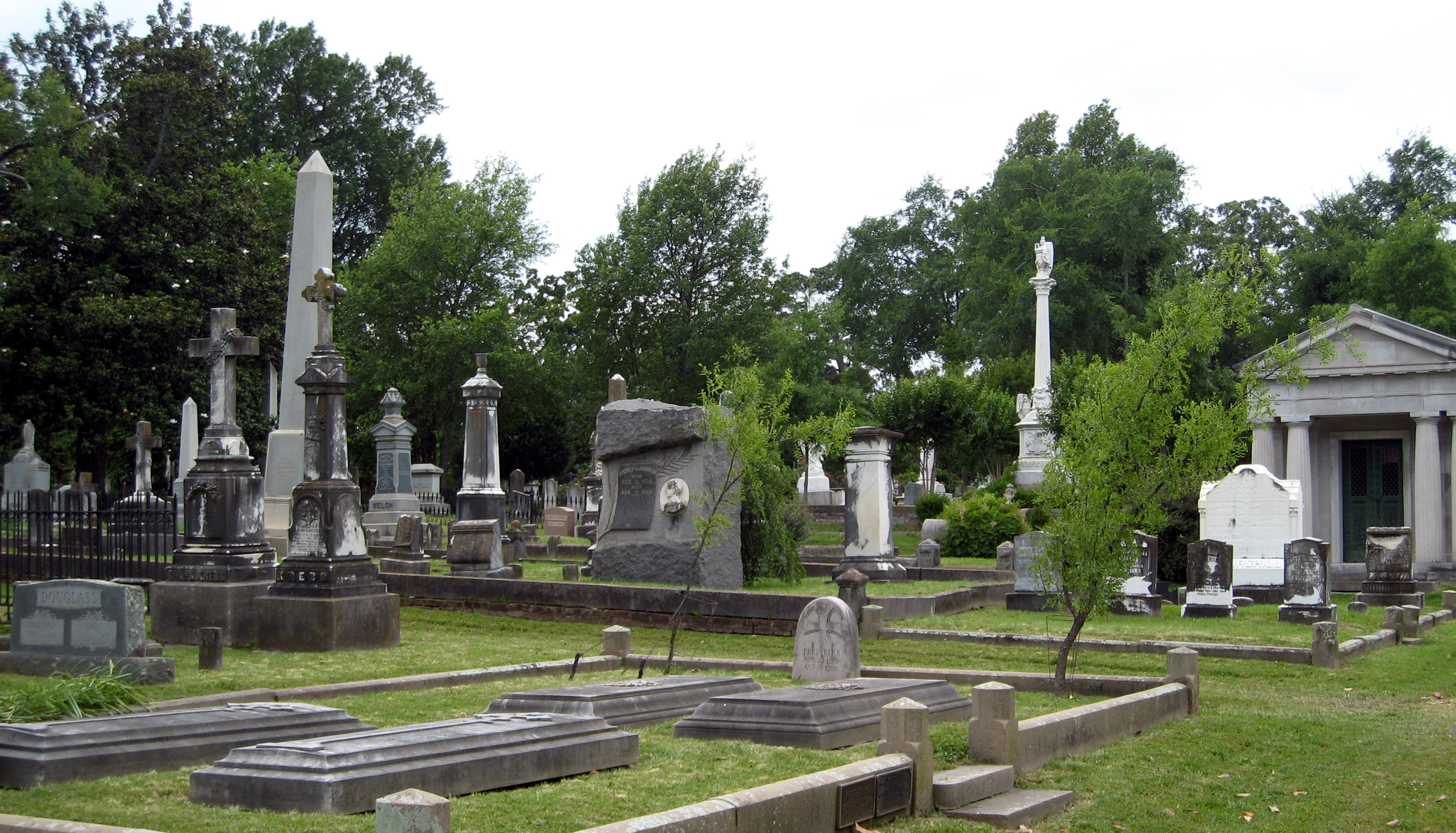
At Mount Holly Cemetery in Little Rock, Arkansas, people report a teenager in old clothes carrying a notebook near the tallest grave — David Owen Dodd, the 17-year-old the Union hanged as a spy in 1864 after finding coded troop counts in his notebook.
At Mount Holly Cemetery in Little Rock, Arkansas, people keep describing the same figure near one grave: a teenager in 19th-century clothes, carrying a notebook, who fades when anyone gets close. The grave is the tallest stone in the cemetery, an eight-foot marble monument to a boy the Confederacy called its Boy Martyr.
His name was David Owen Dodd, and he was 17 when the Union army hanged him on January 8, 1864. That winter, with his family evacuated south after the Federals took Little Rock, he came back through the lines on a pass. On his way out, the pickets searched him and found, in his notebook, a page of Morse code — dots and dashes that an officer decoded into exact information on Union troop strength in the city. A military commission convicted him on a 4–2 vote and sentenced him to hang.
The story people tell has him refusing a deal. Offered his life if he'd name his source, he's said to have answered, "I can give my life for my country but I cannot betray a friend." The Encyclopedia of Arkansas calls that a popular account rather than verified history, and notes his own sister later thought he'd acted alone. He was hanged on the grounds of his old school in front of five or six thousand people. Folklore says the new rope stretched and he strangled for five long minutes; historians doubt it was that slow, but the five-minute version is the one that gets told.
Nobody has ever put a name or a date to the boy with the notebook; the sightings live in ghost-tour writeups and nowhere else. The cemetery's other ghost is a stone angel that locals say holds her hands differently from one visit to the next. Nobody can point to which grave she stands over. Just an angel, somewhere in here, that people swear keeps moving.
It's an old place — deeded to the city in 1843, four square blocks of dense Victorian stone that earned it the nickname the Westminster Abbey of Arkansas. Governors and generals are buried here. But the stone people still walk up to is the tallest one, looking for a boy with a notebook.