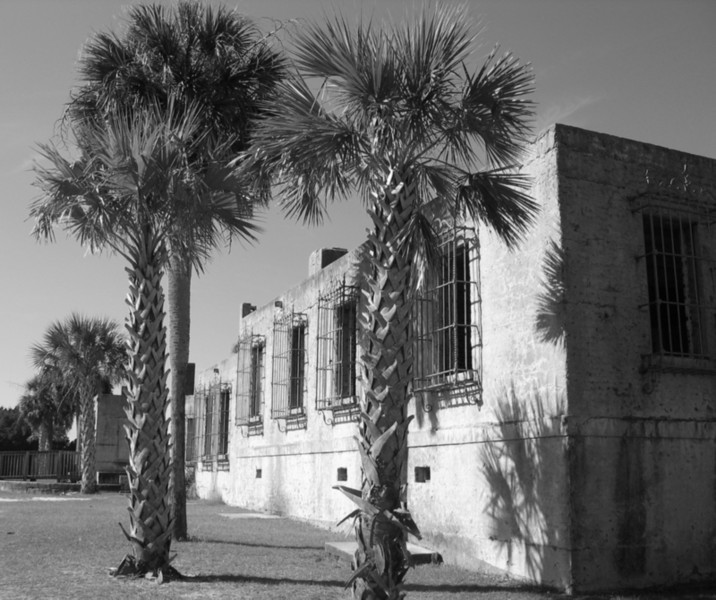
The ranger who runs the ghost tour at Atalaya Castle, near Murrells Inlet, South Carolina, tells visitors up front that it shouldn't be haunted: nobody ever died here. Then people report a ghost anyway, said to be the sculptor the castle was built for.
Some visitors leave Atalaya Castle, the roofless Moorish shell on the coast near Murrells Inlet, South Carolina, sure they saw a woman in its dark corridors. The accounts describe her the same way: a figure in the studios where the sculptor Anna Hyatt Huntington once worked, a sudden chill, the sense of being watched, small objects that have moved when no one was near them.
The strange thing is that the man who leads the ghost tour there will tell you the castle shouldn't be haunted at all. Interpretive Park Ranger Mike Walker lays out the problem plainly: nobody ever died here, and the couple who built the place had no unfinished business. They were fabulously wealthy and had built exactly the house they wanted.
Archer Huntington built it for Anna between 1931 and 1933, a winter home meant to ease her tuberculosis in the mild coastal air. A scholar of Moorish culture, he designed the whole compound in his head, without a single drawn plan, hiring local men who badly needed the work through the Depression to raise it. The result is a masonry fortress around an open courtyard, its 40-foot central tower named "atalaya," Spanish for watchtower, and hiding a 3,000-gallon water tank inside. Its roofline carries 25 chimneys, each capped with a copper hood that turns with the wind.
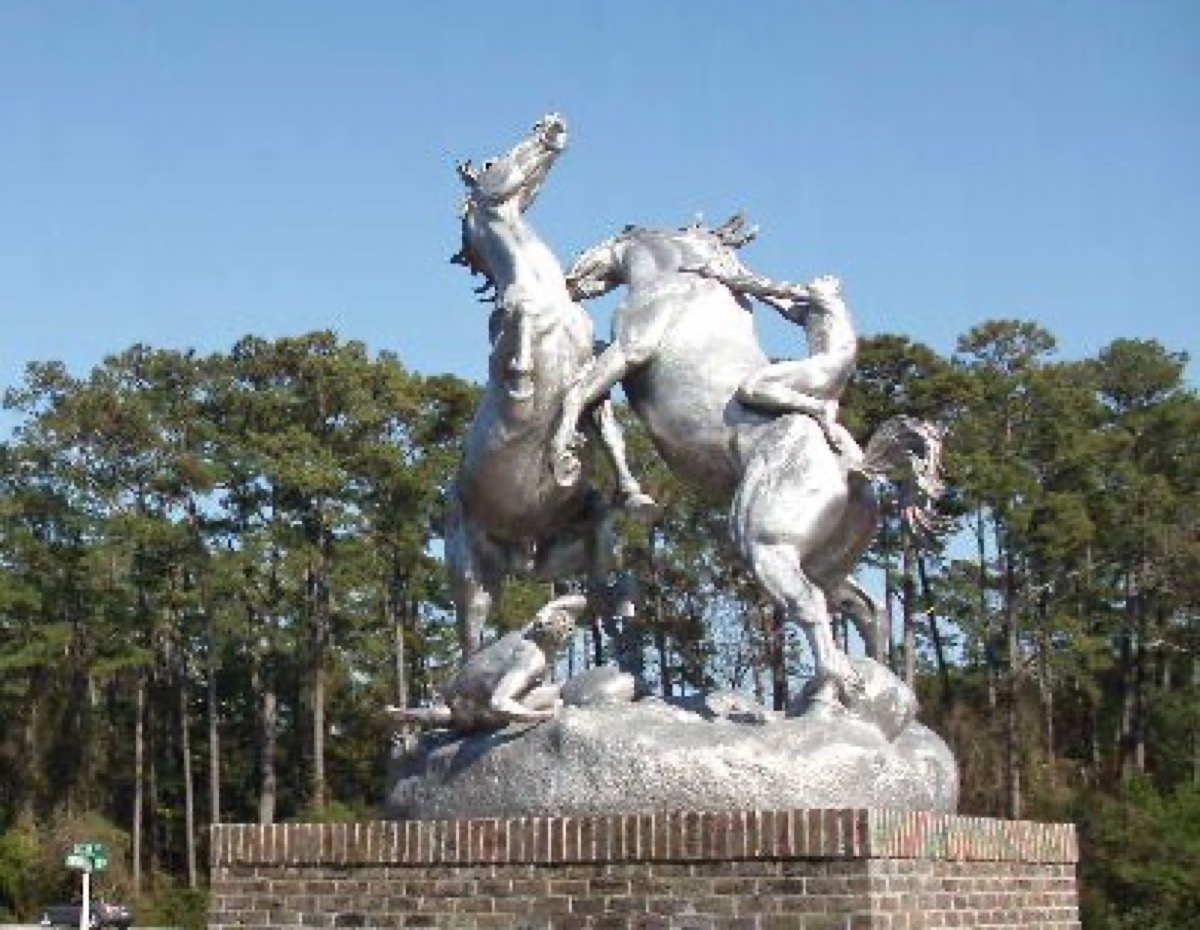
It was built to work in, not to entertain. Anna's studio had a 25-foot skylight so she could sculpt monumental horses indoors, and pens out back held the live bears and horses that posed as her models. There were no guest rooms, no drawing room, no grand dining hall — none of the things a ghost story usually grows out of.
Today the castle is a gutted brick husk inside Huntington Beach State Park, its windows barred in green iron, its stone floors echoing under an open sky. On the tour, Walker leans on borrowed Lowcountry legends as much as the castle itself — the Gray Man, Alice Flagg, the Hag — and lets the empty compound do the rest. One visitor from Cincinnati said Walker "has a way of projecting his voice and grabbing your attention" that "added to the suspense and thrill."
Anna died on October 4, 1973, at 97, hundreds of miles away at the couple's estate in Redding, Connecticut. No one died at the castle. There's no grave here, no body, no tragedy anyone can point to. And she's still the one people say came back to it.