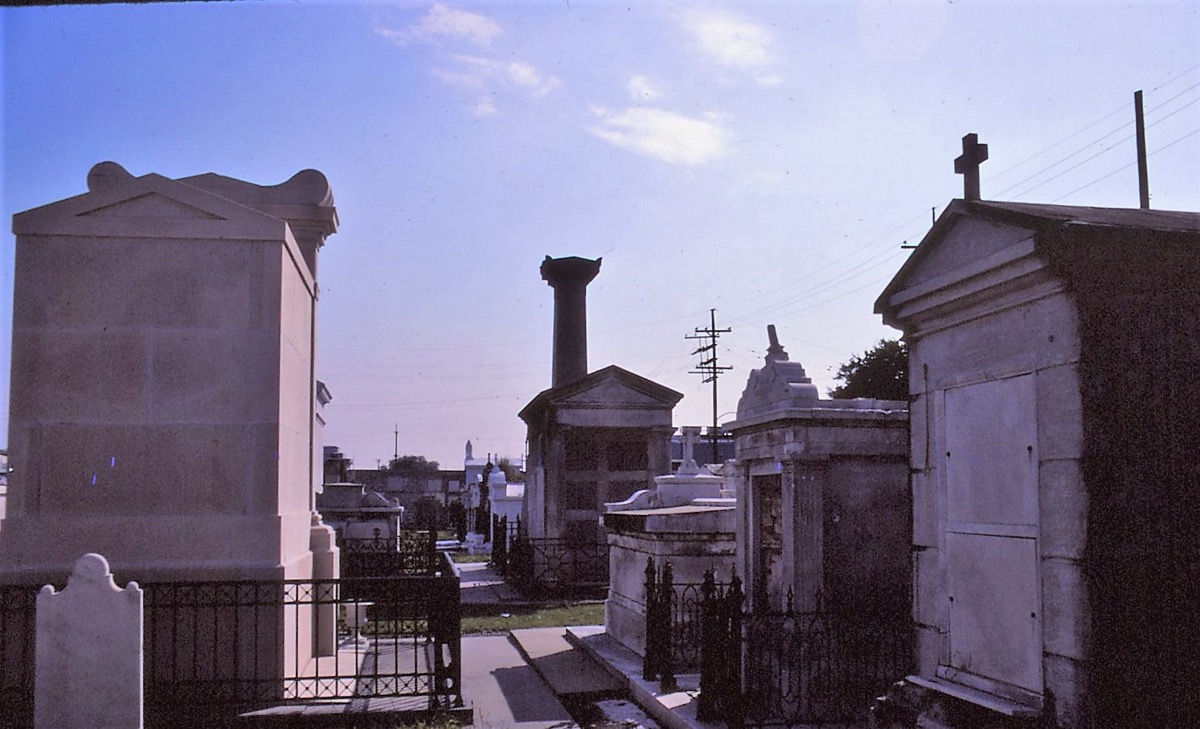
St. Louis Cemetery No. 2 in New Orleans is best known for a bride in white that cab drivers say they picked up near the wall, only to find the seat empty before they arrived. But its real residents are stranger than its ghost.
The ghost cab drivers told about at St. Louis Cemetery No. 2 in New Orleans was a young woman in a white wedding gown. The way it was told, she'd flag a cab near the cemetery wall, give an address, and ask the driver to walk up to the gallery door and ring the bell when they arrived. Drivers who turned to speak to her partway there found the back seat empty. She'd been dead for years, the story goes, and buried in that same gown. Drivers came to avoid the spot at odd hours.
No newspaper or record was ever traced for her. The intersection moves between tellings, and so does how she died. It's a tour-route legend, and the cemetery's real residents are the stranger story.
The ground here was consecrated for burials in 1823, set back from the French Quarter to slow the spread of yellow fever. House-like tombs and wall vaults the locals call "ovens" ring each square; the architect Benjamin Latrobe looked at them and called the place a "City of the Dead."
Buried among them is Dominique You, a former privateer and lieutenant to the pirate Jean Lafitte, who fired cannon at the 1815 Battle of New Orleans. His tomb carries a Masonic square and compass, carved into a stone in a Catholic graveyard, and people still leave cigarettes and tobacco on it. The inscription casts him as a "new Bayard without reproach or fear," an intrepid warrior who "in a hundred combats showed his valor." Tour guides say a heaviness hangs at the spot, sometimes a faint smell of gunpowder, though nothing documents it.
In Square 3, the old African American section, lies André Cailloux, a captain in the 1st Louisiana Native Guard and among the first Black officers killed in the Civil War. He died charging the Confederate works at Port Hudson in 1863, and his body lay on the field for roughly six weeks, because rebel sharpshooters drove off the burial details until the fort fell that July. At his funeral, mourners from some thirty aid societies lined Esplanade Avenue for more than a mile. The exact plot is lost now; a cemetery map marks one wall vault simply "Cailloux."
A few vaults over, followers still drop coins for Marie Laveau the Younger. The records put her in the family tomb over in Cemetery No. 1, but devotees insist her remains were moved here, and they tend the spot as if the legend were settled. The jazz men in the ground need no such argument. Bandleader Paul Barbarin, banjoist Danny Barker, and the R&B singers Ernie K-Doe and Earl King all lie in this same City of the Dead. The bride is the headline. The crowd that came for Cailloux is the better story.