At Poplar Grove Plantation near Wilmington, North Carolina, the rocking chair in the upstairs children's room is the thing people keep asking about. It moves slowly, on its own, in the room where Nora Foy lost four newborns in a row.
At Poplar Grove Plantation near Wilmington, North Carolina, the most-asked-about thing in the whole manor is a rocking chair by an upstairs window. Staff and visitors say it rocks slowly on its own, in a room that used to be a children's bedroom. The presence felt there reads as motherly, not menacing, and once you know who lost a child in that house, that fits.
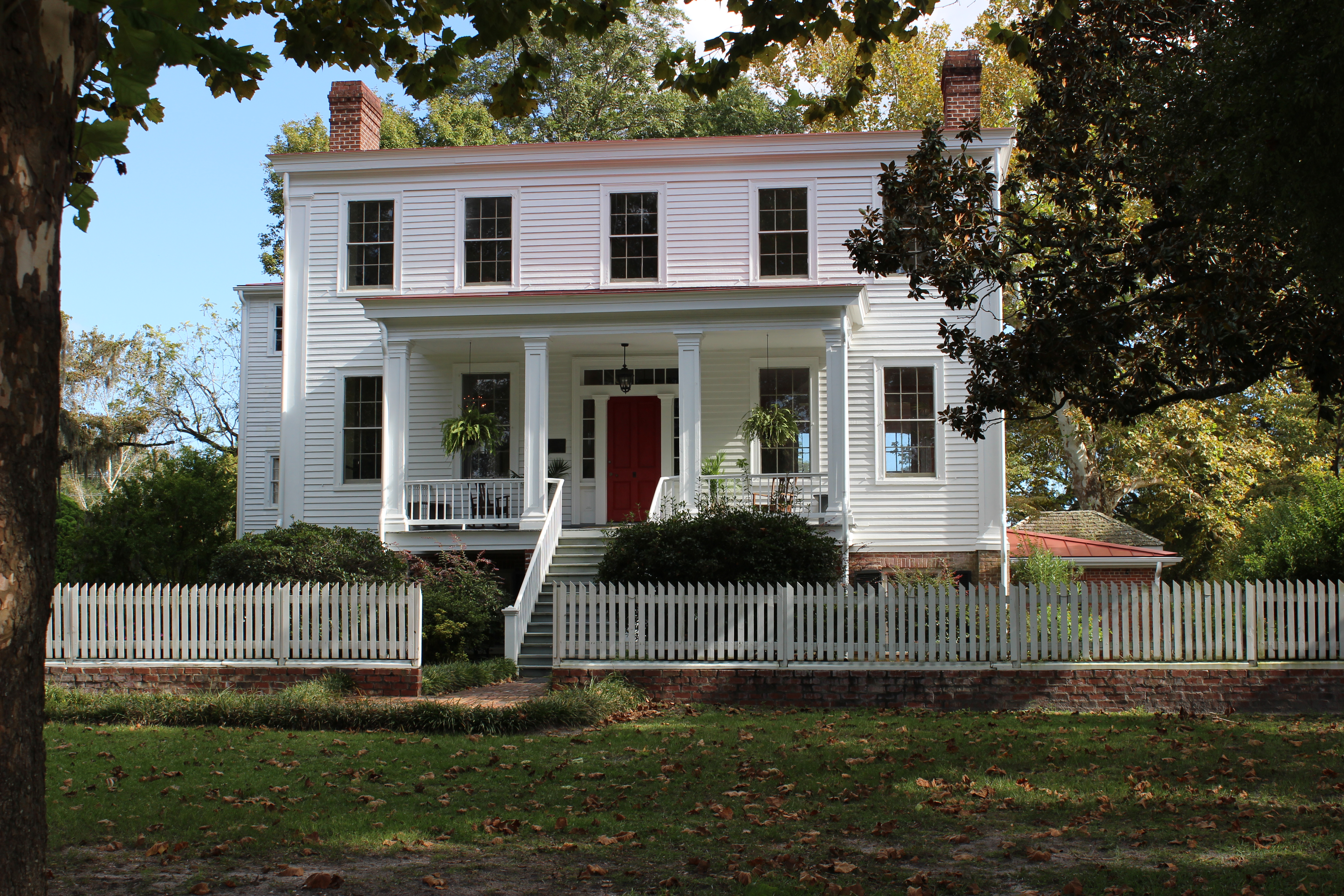
The manor is a 12-room Greek Revival house, built around 1850 by the Foy family, who farmed peanuts and sweet potatoes here rather than cotton or tobacco. The 1860 records list 59 enslaved people on the property, about half of them under 16. A later Foy son's wife, Sarah Eleanora Foy, who went by Nora, carried four children to term in that upstairs room. Every one of them died within hours of being born. Rather than risk a fifth, she adopted her nephew as heir, and never raised a child of her own.
By the legend, Nora's Gullah servant Juba tried everything her tradition knew. She painted the nursery windowsills, the doors, and the porch ceiling "haint blue," because the story holds that evil spirits will never cross water and the color would fool them into thinking they faced the sea. She laid a broom across the doorway so a Boo Hag would have to stop and count every straw until sunrise. She folded a strip of newspaper into the toe of Nora's shoe. None of it worked. Nora buried all four of her babies anyway, and the chair kept its place by the window.
Nora isn't the only one said to linger here. In the plantation business office, visitors report heavy boots crossing the wide plank floors and a voice calling a name, and paranormal teams say the room gives off strong electromagnetic readings. The story ties it to David Foy, the eldest son. He graduated from UNC in 1861, defied his Unionist father, and enlisted in the Confederate cavalry. He never saw battle. He caught typhus at a training camp and died that next June, three months and five days after he joined. He was 21. The office was the role he refused in life, and the footsteps people report are heard pacing exactly there.
Poplar Grove runs seasonal paranormal tours now, with the honest disclaimer that nothing is guaranteed. But the room people leave talking about is the children's room upstairs, where the chair by the window goes slowly back and forth, back and forth, with no one in it.