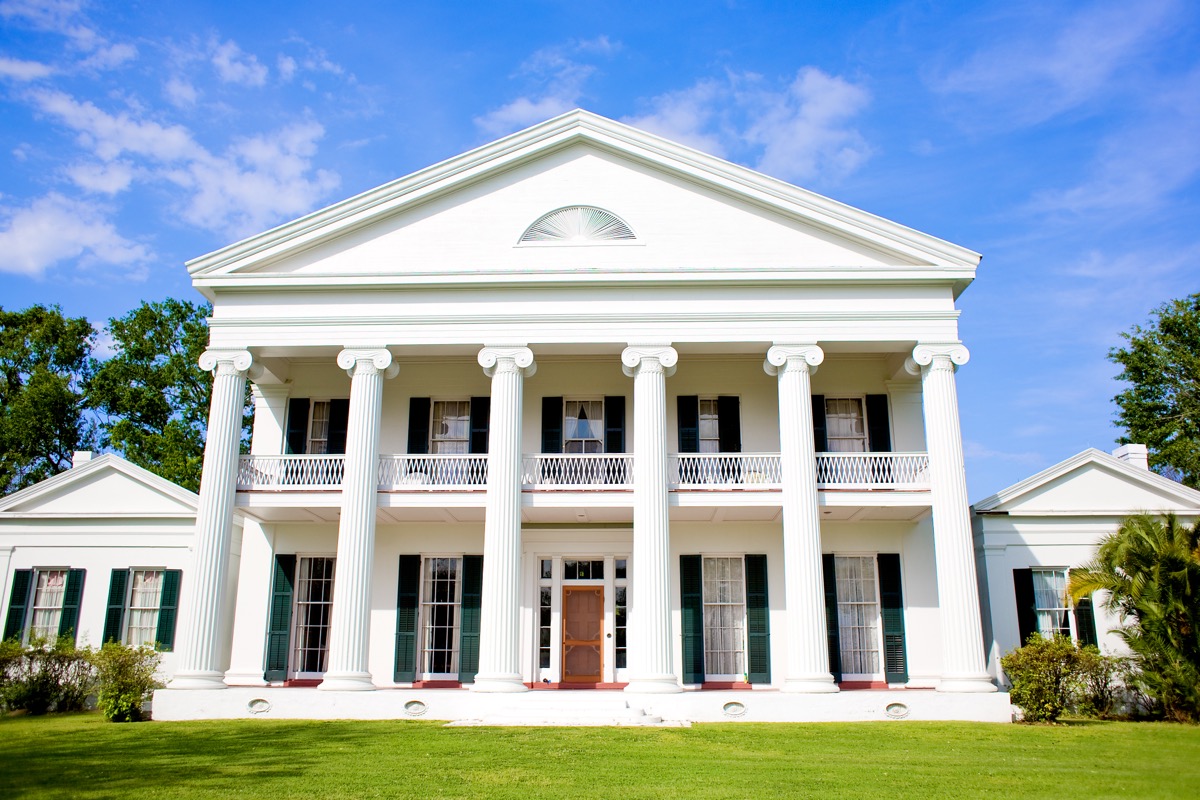
At Madewood Plantation near Napoleonville, Louisiana, guests report a woman and a small white dog wandering up from the Pugh family cemetery on the grounds. She was a mistress of the house. Nobody can say which one, and the dog never got a name at all.
At Madewood Plantation House near Napoleonville, Louisiana, the figure people report isn't alone. A woman in old dress drifts the house, and a small white dog comes with her, both said to wander up from the Pugh family cemetery on the grounds, where the story has it they're both buried. She was a mistress of Madewood. Which one, no account will say.
That cemetery is where most of the lore points. Guests over the years describe footsteps in the upstairs halls with no one walking, voices when the rooms are empty, objects set down in one place and found in another. The story that gets told most is the centerpiece: handymen working outside heard guests inside start screaming, and the guests said a heavy glass piece in the middle of the dining table had flown off and shattered on its own.
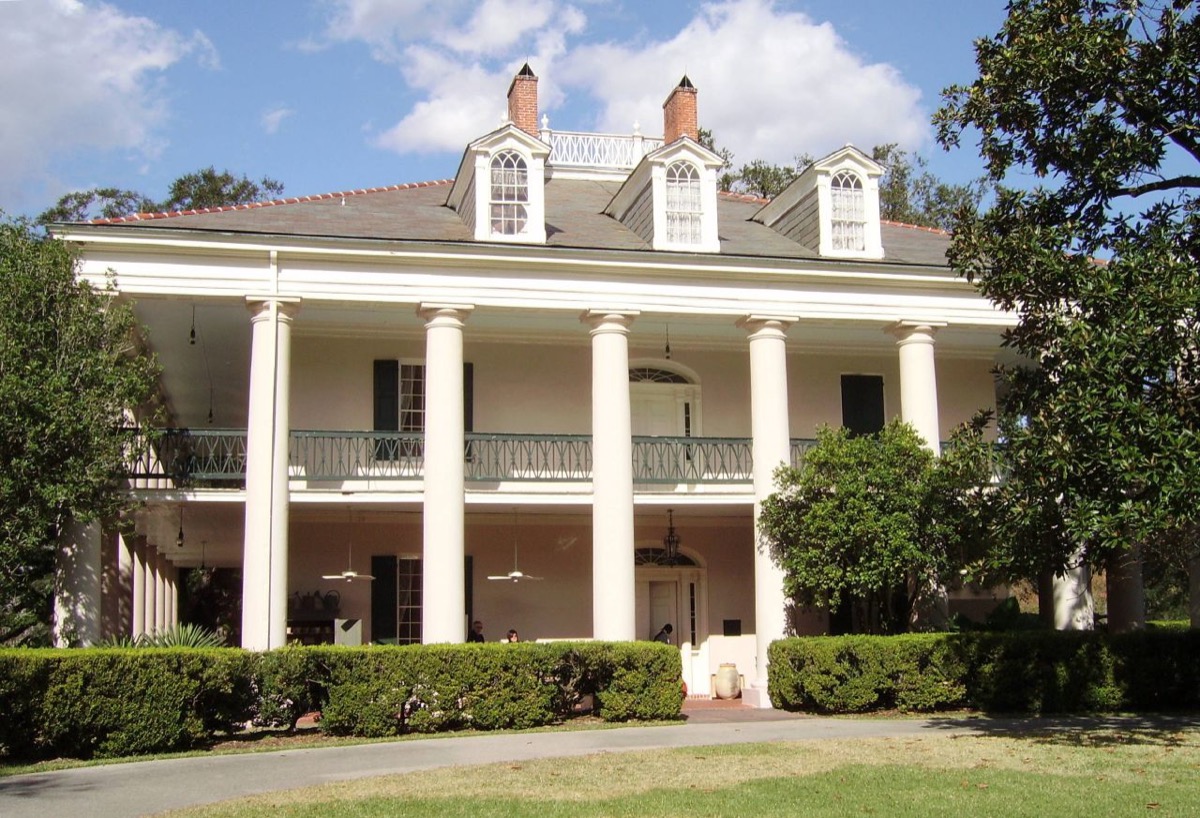
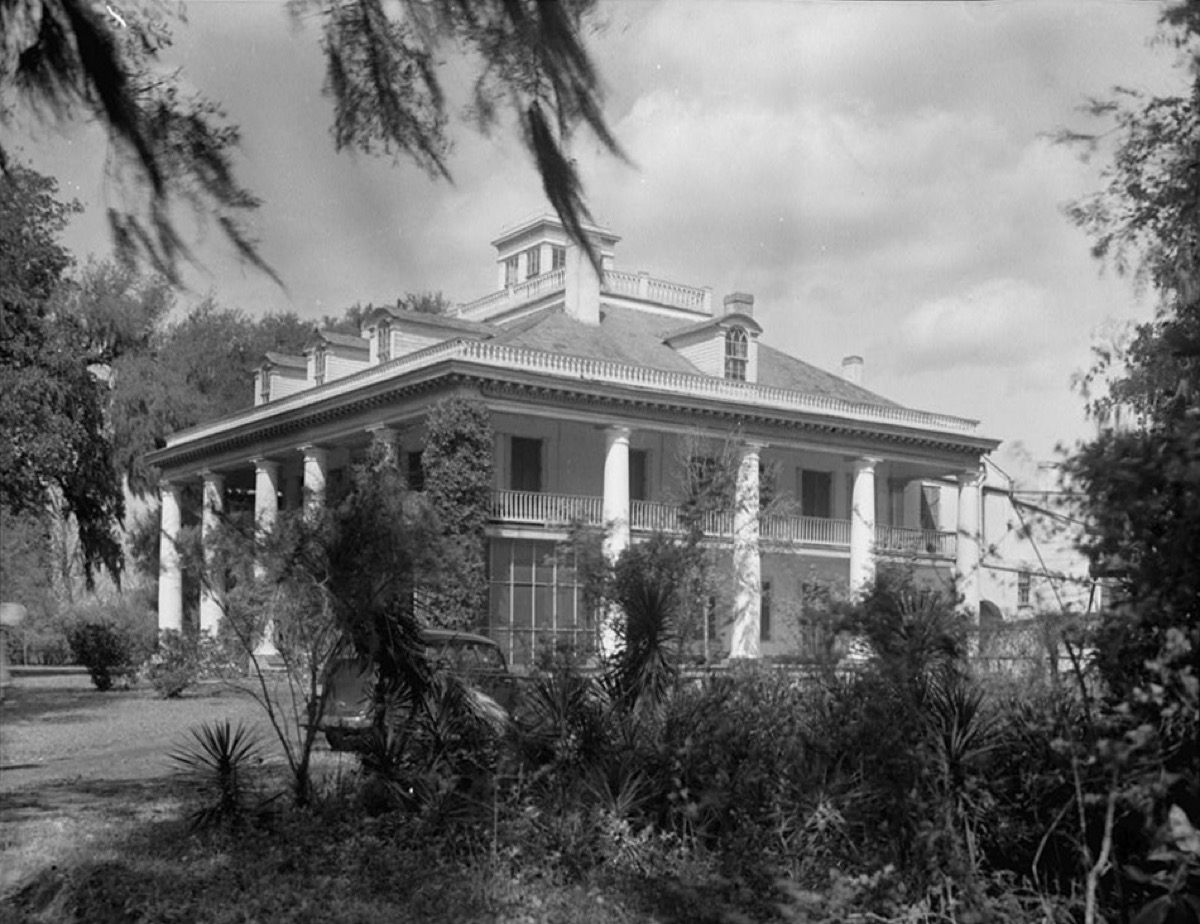
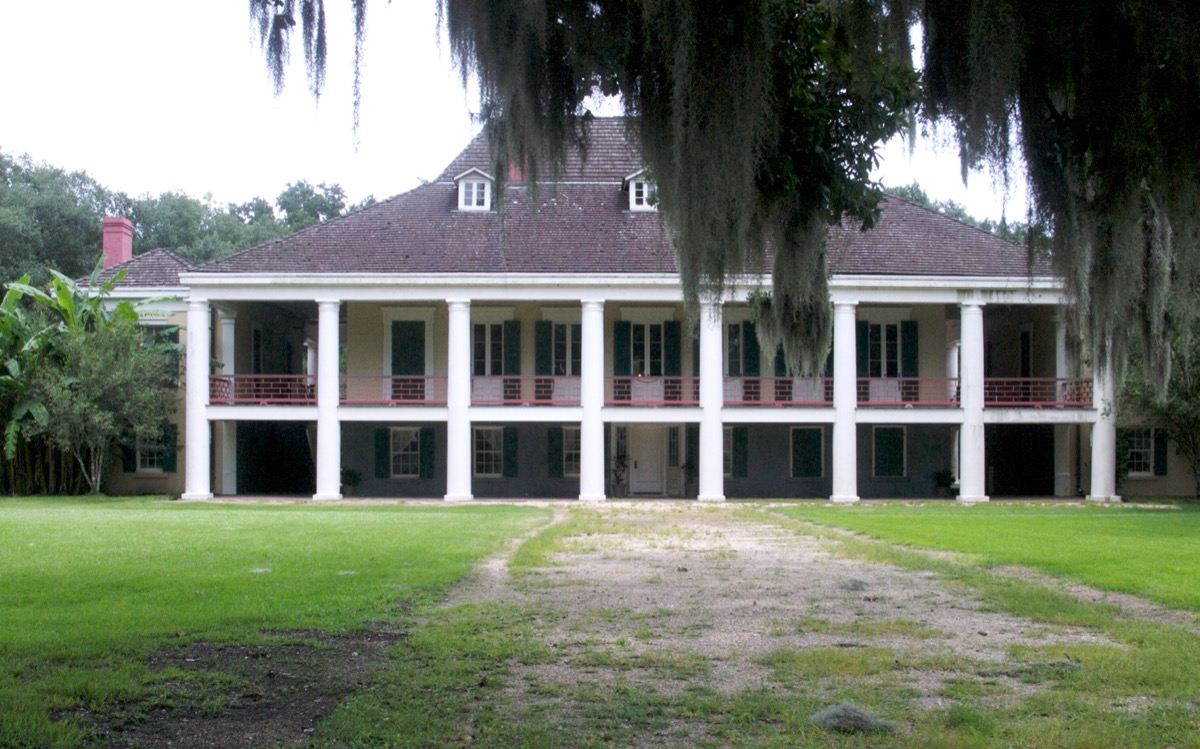
The house was built between 1840 and 1848 for Colonel Thomas Pugh, a sugarcane planter, and designed by Henry Howard in the Greek Revival style, six tall Ionic columns under a wide pediment. It was one of Howard's earliest jobs, the commission that helped launch his practice. Pugh waited years for it. He moved in, and in 1852 yellow fever killed him, only a few years into the home he'd finally finished. The sugar money ran in the family: his half-brothers held Woodlawn and a string of other plantations across the parish, and the whole cluster was built on the same cane.
The name is the part that stays with you. Madewood means made wood, and it's a record of labor: enslaved workers fired every brick on the site and milled the interior woodwork from the plantation's own timber. The house is named for what they made. Their names are nowhere in it. The Pughs didn't keep those records.
So the place is full of people no one can name. The woman from the cemetery, never identified in any account. The dog, never named. And the workers whose hands are in every wall, kept out of the ledger that would have remembered them. The grief at Madewood is real, and it has nothing to attach itself to. The hauntings are quiet for the same reason: there's no single ghost to point at, only a house that won't let go of whoever it kept.
One guest who spent a night here wrote it down plainly afterward. "I'd love to report we captured all kinds of spiritual activity," Debra Kristi said. "Unfortunately I can't." She heard coyotes and met the cemetery cat, and that was the night. The quiet is its own answer at Madewood. The house remembers more than it will tell you.