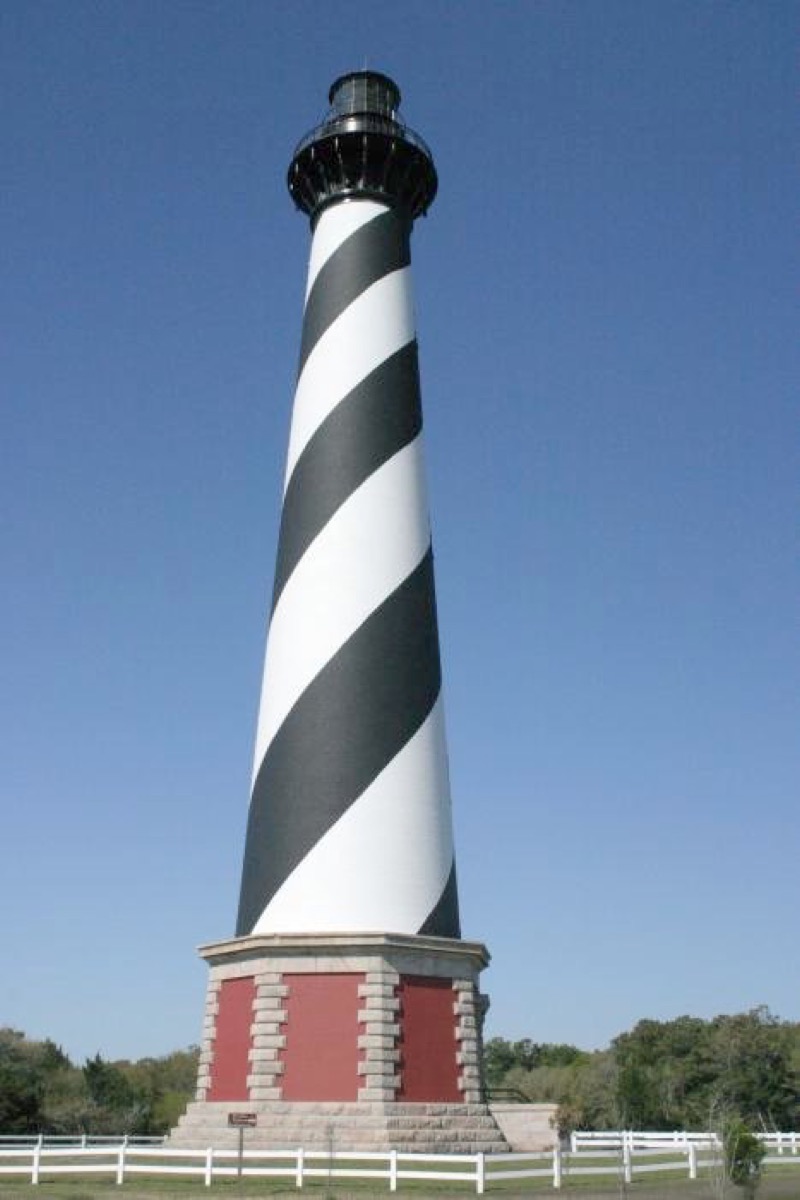
The Cape Hatteras Lighthouse in Buxton, North Carolina stands within sight of where the Carroll A. Deering ran aground in 1921, sails set, a meal laid out below, and the entire crew gone. No trace of them was ever found.
The Cape Hatteras Lighthouse in Buxton, North Carolina has watched over the deadliest stretch of the Atlantic coast for more than 150 years. On the misty morning of January 31, 1921, it watched a five-masted schooner come apart on the shoals within sight of the tower, with no one alive aboard to bring her in.
The ship was the Carroll A. Deering, a five-masted schooner built in Maine two years earlier and on her way home from Brazil. Coast Guardsmen on the beach could see her sitting hard aground on Diamond Shoals with all her sails set. When crews finally reached the wreck, they found food laid out below "as if in preparation for a meal," and not a single person to eat it. The lifeboats were gone. The ship's papers, the log, the navigation equipment, the anchors, and the captain and his entire crew were simply gone too.
"No trace of the crew, the ship's log, or the navigation equipment was ever discovered," the National Park Service writes. None of them were ever found.
Days before the wreck, a crewman had hailed a passing lightship to report the Deering had lost her anchors. That was the last anyone heard from her. In April, a man named Christopher Columbus Gray turned up with a message in a bottle claiming pirates had seized the crew, and for a while it looked like an answer. Federal experts proved Gray had written the note himself. An FBI agent worked the case in Dare County through the summer of 1921, weighing pirates, rum-runners, and mutiny, and closed it solving nothing.
The waters here earned the name Graveyard of the Atlantic honestly. Diamond Shoals shifts under the sea where the Gulf Stream meets the cold Labrador Current, and the lighthouse exists to mark exactly that danger. Locals tell of the Gray Man too, a shadow that walks the Hatteras beaches before a bad hurricane, sparing those he warns of the worst.
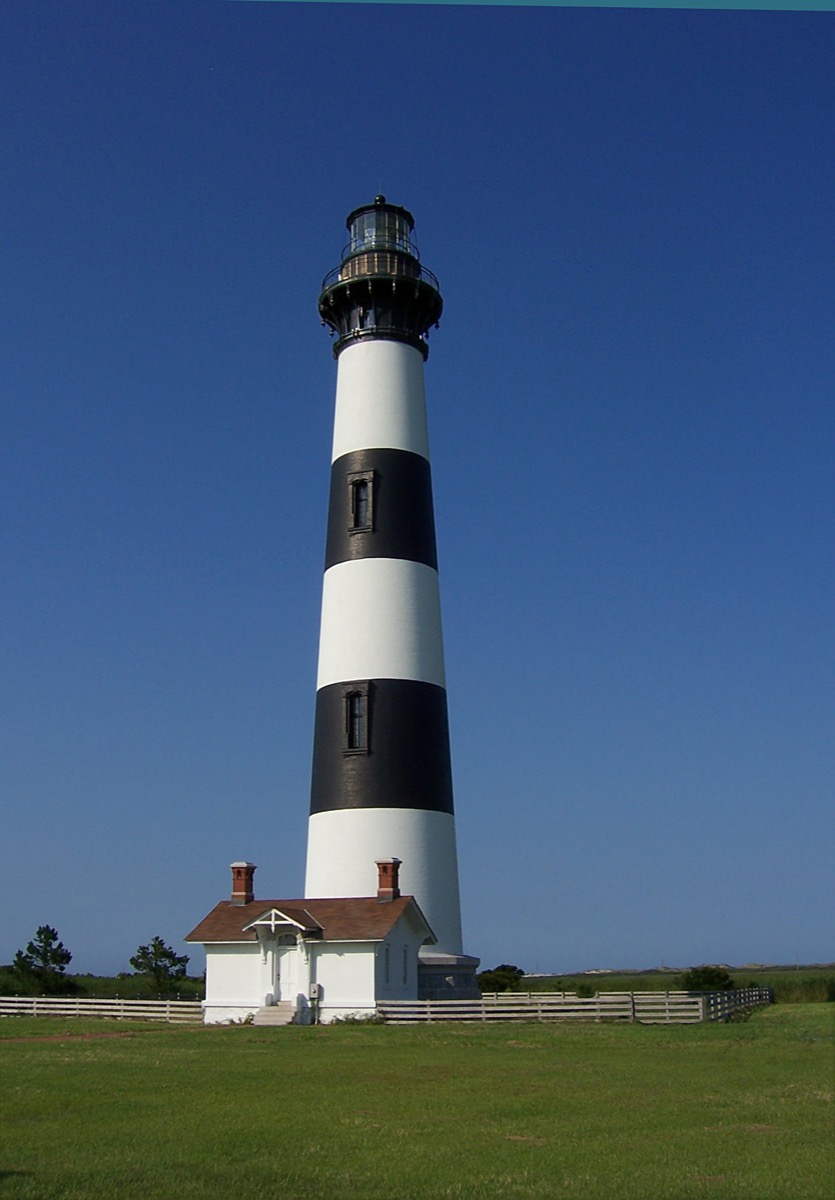
The tower itself is the tallest brick lighthouse in the country, 208 feet of roughly 1.25 million bricks wearing its black-and-white spiral stripes since 1873. By 1970 the surf had closed to within about 120 feet of its base, so in the summer of 1999 the Park Service jacked up all 4,830 tons and rolled the whole lighthouse 2,900 feet inland, relighting it that November. Tour guides will tell you that whatever was already inside the tower made the trip with it.
A few months after she ran aground, the Deering's hull was dynamited so she wouldn't sink another ship. The lighthouse never moved far enough to lose its view of the shoals that took her.