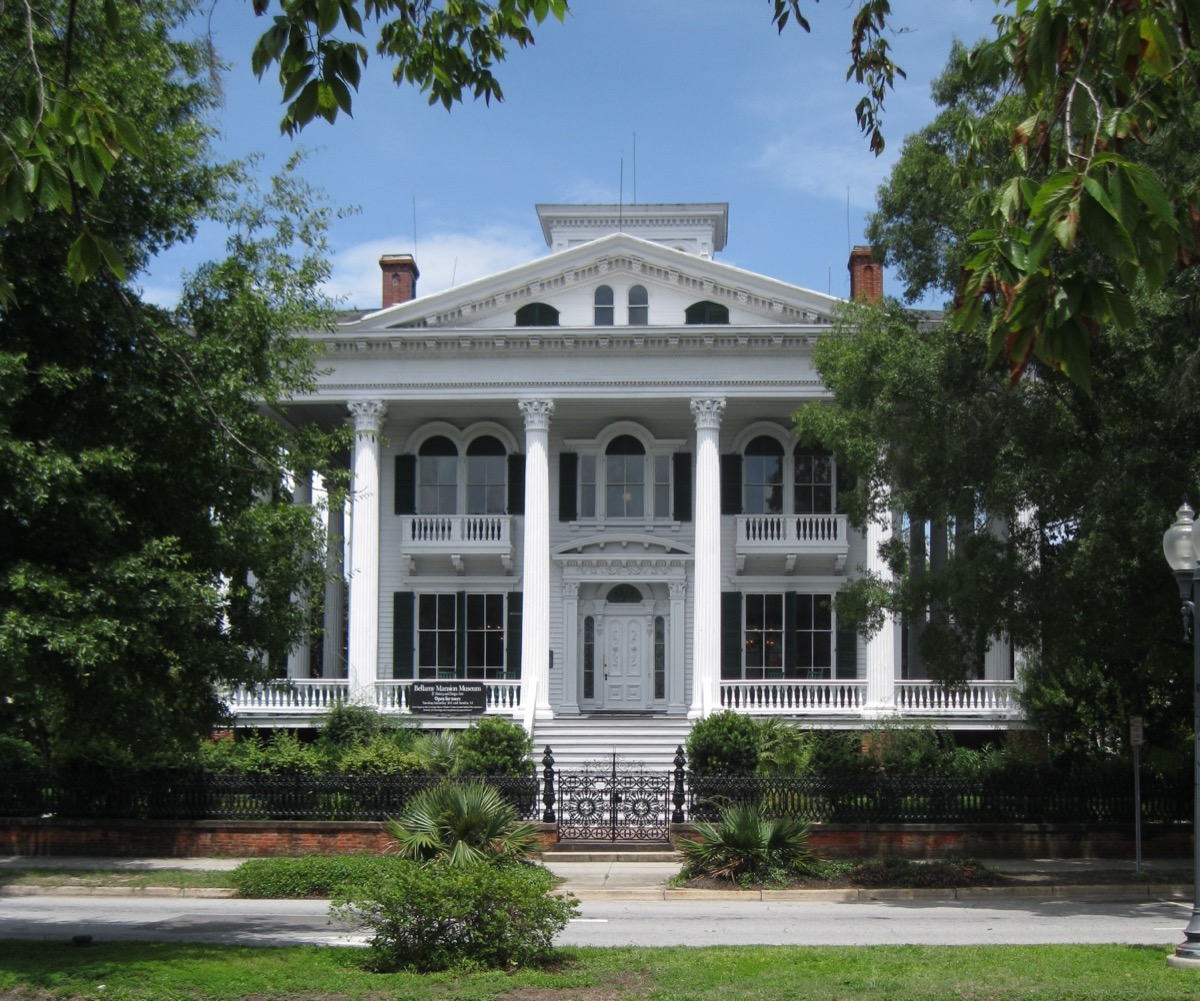
At the Bellamy Mansion in Wilmington, North Carolina, employees report heavy boots pacing the upper floors and a man in a dark Union uniform. The 22-room antebellum house was finished in 1861 by enslaved and free Black artisans — one of whom rowed off to join the very navy that ghost wears.
At the Bellamy Mansion in Wilmington, North Carolina, the people who work there keep hearing boots. Heavy ones, pacing the wooden floors of the upper stories when those floors are empty. Some have seen who they think is doing the pacing: a man in a dark uniform, the kind a Union officer wore.
He has a reason to be in this particular house.
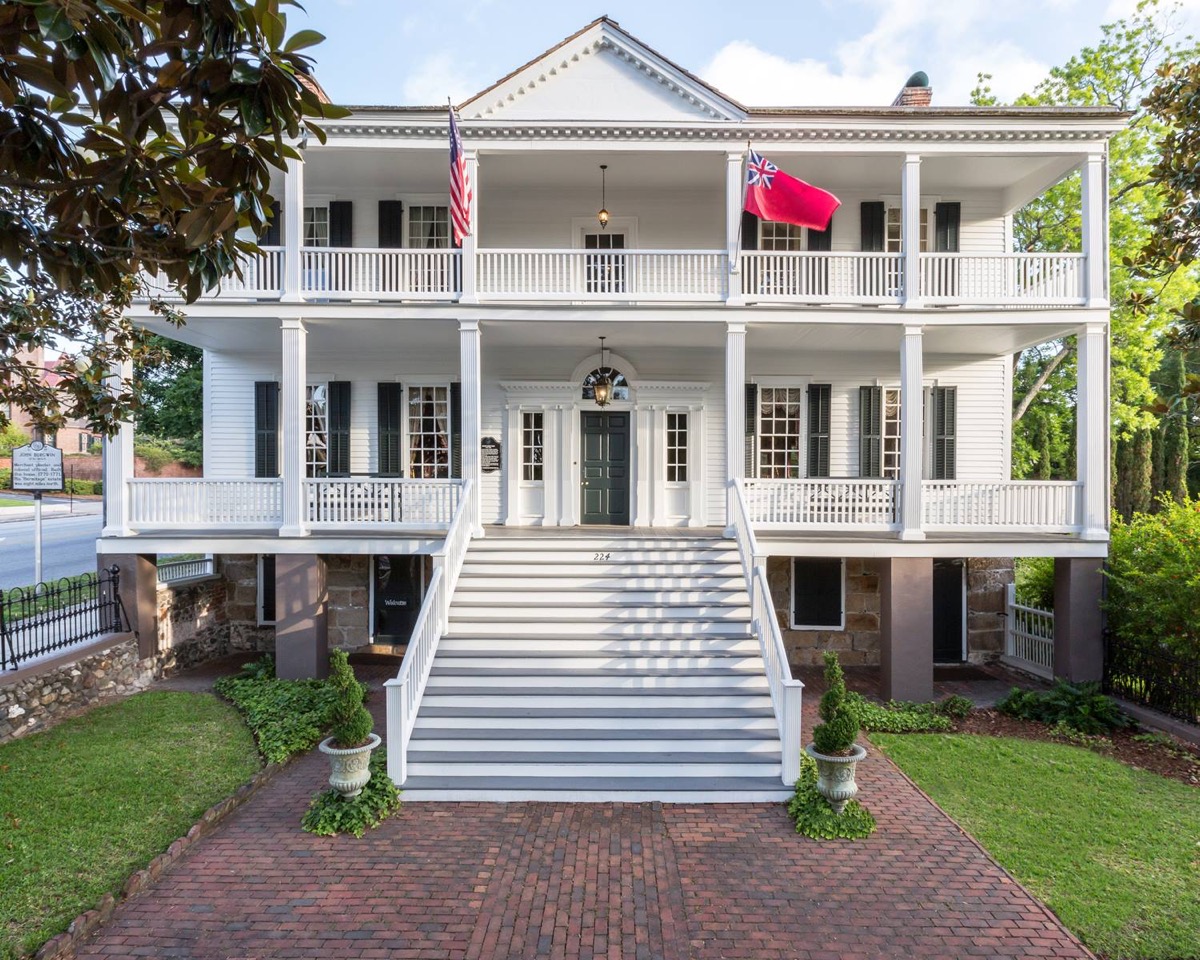
Dr. John Dillard Bellamy finished his 10,000-square-foot, 22-room mansion at 503 Market Street in early 1861, months before the Civil War. By 1860 he enslaved roughly 115 people across three counties, and it was enslaved and free Black artisans who built the place — the carpenter-foreman Elvin Artis, the carpenter David Sadgwar, the master plasterer William B. Gould.
Gould carved his initials into the plaster he was applying. In September 1862, he and seven other men rowed down the Cape Fear River in the dark, were picked up by the USS Cambridge, and he joined the Union Navy. He kept a diary through the war, one of only three known to survive from a formerly enslaved person. His initials are still in the wall.
When Fort Fisher fell in 1865, the Bellamys had already fled, and Federal troops moved in and used the house as their headquarters. So when staff describe a Union officer's boots overhead, they're describing the soldiers who took the home built by the people Bellamy held.
The hauntings stack up from there. Piano notes in a room with no piano. Doors that slam, alarms that trip in empty rooms. Ellen Bellamy's wheelchair, part of the museum collection, turning up in spots no one moved it to. The fourth floor — the old children's quarters, with its steamer trunks and a little wooden stage — is the part of the house people most want to come down from.
The strangest things found here weren't reported by ghost hunters. They were dug out of the brick slave quarters out back, a two-story building with four sleeping chambers that's now considered one of the best-preserved urban slave dwellings in the country. During restoration, workers pulled objects from the walls and from under a floorboard: cowry shells, beads, buttons, an animal jawbone, a pottery shard, pieces of a child's doll. Historians read them as ritual charms, things the people who lived there hid for protection.
Whoever they were protecting against, the house has never once gone quiet.