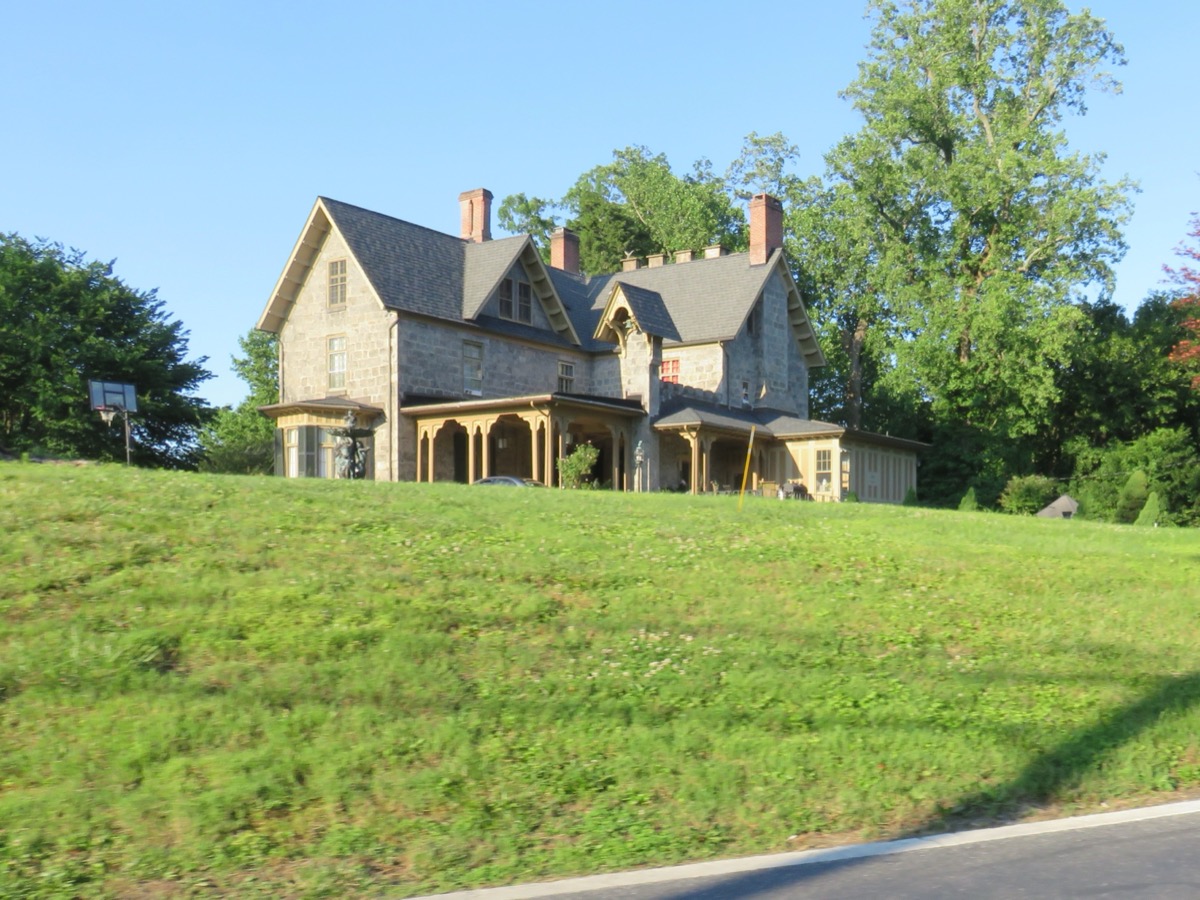
At Lilburn Mansion in Ellicott City, Maryland, the heavy dining-room chandelier swings by itself. The household never panicked. They addressed the ghost by name, the way you'd quiet a difficult houseguest named Margaret.
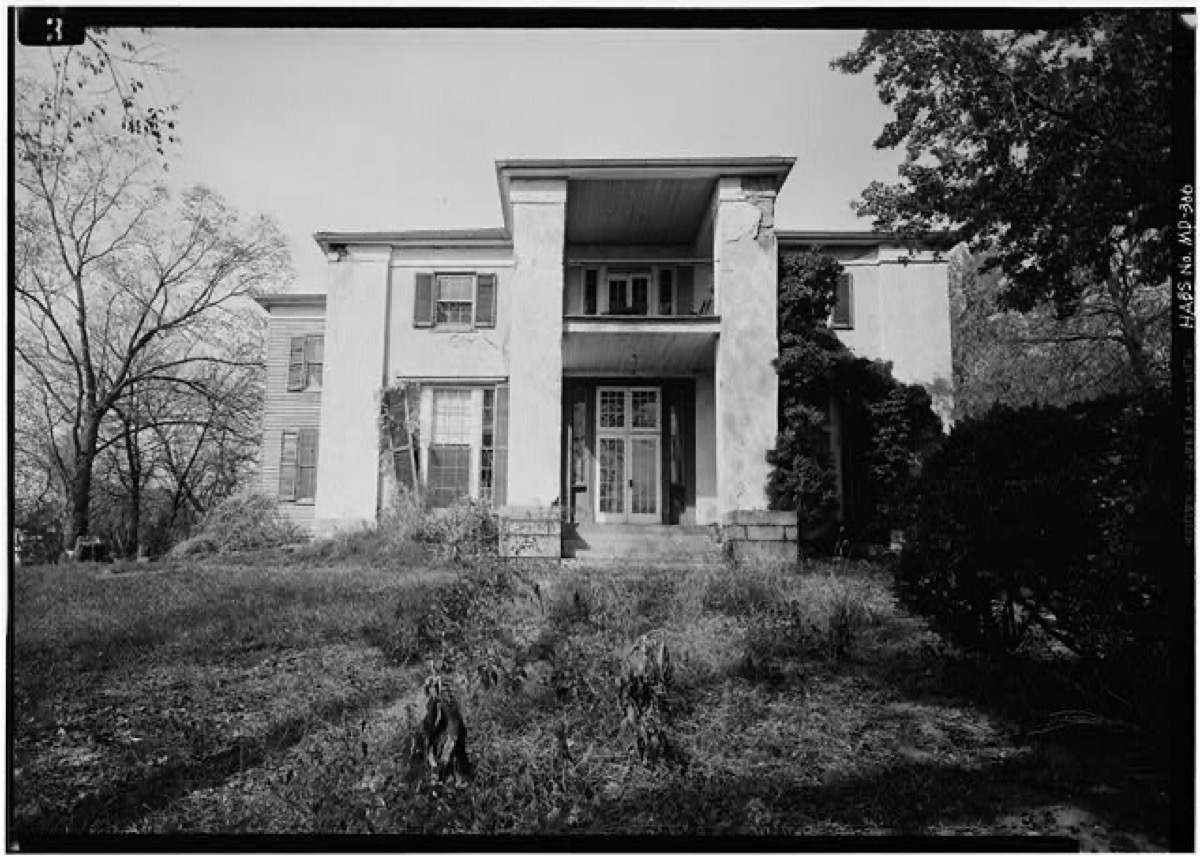
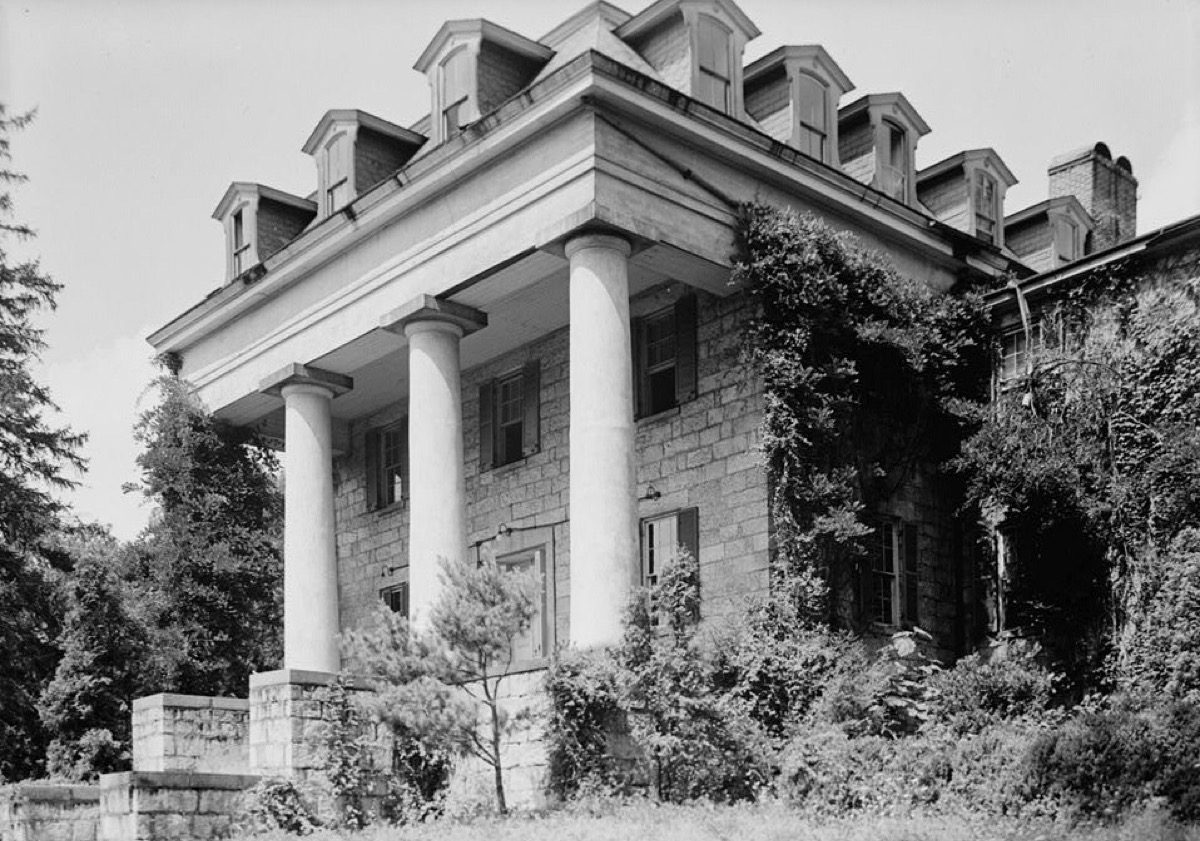
At Lilburn, a granite Gothic castle of more than twenty rooms in Ellicott City, Maryland, the heavy dining-room chandelier sometimes swings on its own. The family who lived there in 1960 watched it happen in front of a roomful of guests. They didn't run. They spoke to it by name.
"There was a chandelier in the dining room of that house that would swing," an elderly College Avenue neighbor told the Baltimore Sun in 1990. "They'd say, 'Now, Margaret,' and the chandelier would stop swinging." The ghost the neighbors called Margaret was treated less like a haunting than a houseguest you address to settle her down.
An Englishman named Henry Hazelhurst built the place around 1857. He ran a successful foundry in Baltimore, and he put up a house to match: ashlar granite block, a four-story Romanesque tower, a roofline of crenelations. Then the house took his family one at a time. His wife, Elizabeth, died in 1887. Three of his daughters followed. Julia died in 1893 at thirty-one, in labor with her first child, in the tower room. Margaret died in 1895 at thirty-six. Hazelhurst outlived his wife and most of his children, and died in 1900 at eighty-five.
The tower is where the strangest reports cluster. Footsteps climb its stairs over an empty house, and the sound of a small child crying comes from an upstairs bedroom. Windows there refuse to stay shut; one resident tied them closed with heavy rope and later found the rope untied and the windows open. In the library, where Henry spent his last years, the smell of cigar smoke drifts through the empty room, sometimes with a visible curl.
Margaret is not the only one people report. Housekeepers described a young girl in a chiffon dress playing in several rooms, and a man and a small child walking hand in hand down a hallway, the man taken to be Henry himself. The Baldersons, who owned the house in the 1960s, had a dog that went into a frenzied panic outside a small second-floor room, a former nursery, and would not set foot inside it.
The dark ran in the house long before the ghosts did. During the Civil War the Hazelhursts let the mansion serve as a hospital for wounded soldiers.
When the Maginnis family bought Lilburn in 1923, a Christmas fire gutted the front parlor. They rebuilt, and in the rebuilding they took down the original Gothic turret and put up a stone parapet. Locals say the reports got worse after that.
You can sleep there now. Lilburn rents on Airbnb, around 500 dollars a night, sleeps up to twelve. The chandelier still hangs in the dining room.