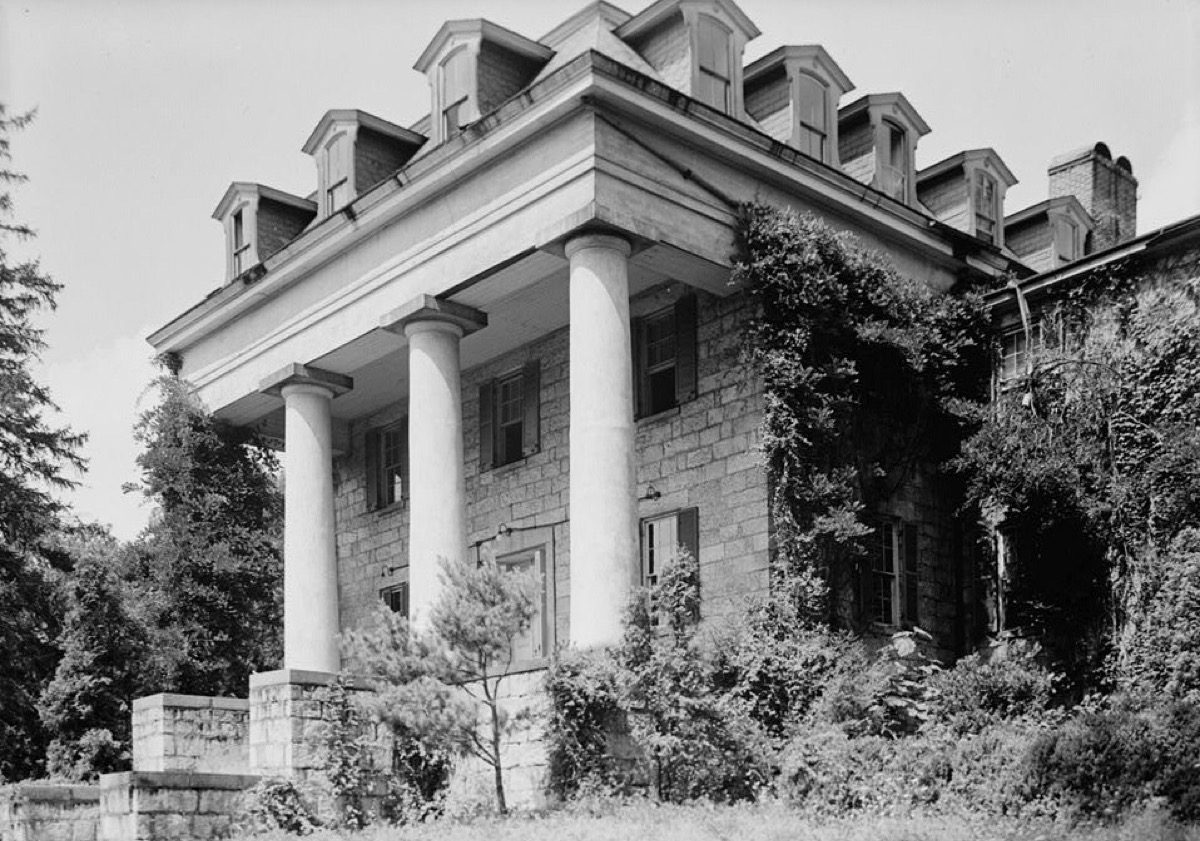
At the Patapsco Female Institute ruins in Ellicott City, Maryland, dog walkers keep seeing a girl in a Victorian dress watching from the treeline. They call her Annie. The girls' school closed in 1891 — somebody apparently forgot to tell the students.
At the ruins of the Patapsco Female Institute, on the hilltop above Ellicott City, Maryland, the dog walkers see her first. Or rather, their dogs do. A girl stands near the treeline in a high-collared Victorian dress, sometimes a nightgown, sometimes a ball gown, her hair up or down, and she watches. Local historian Rissa Miller, who leads ghost tours of the site, says she's "most commonly spotted by people walking their dogs." They call her Annie.
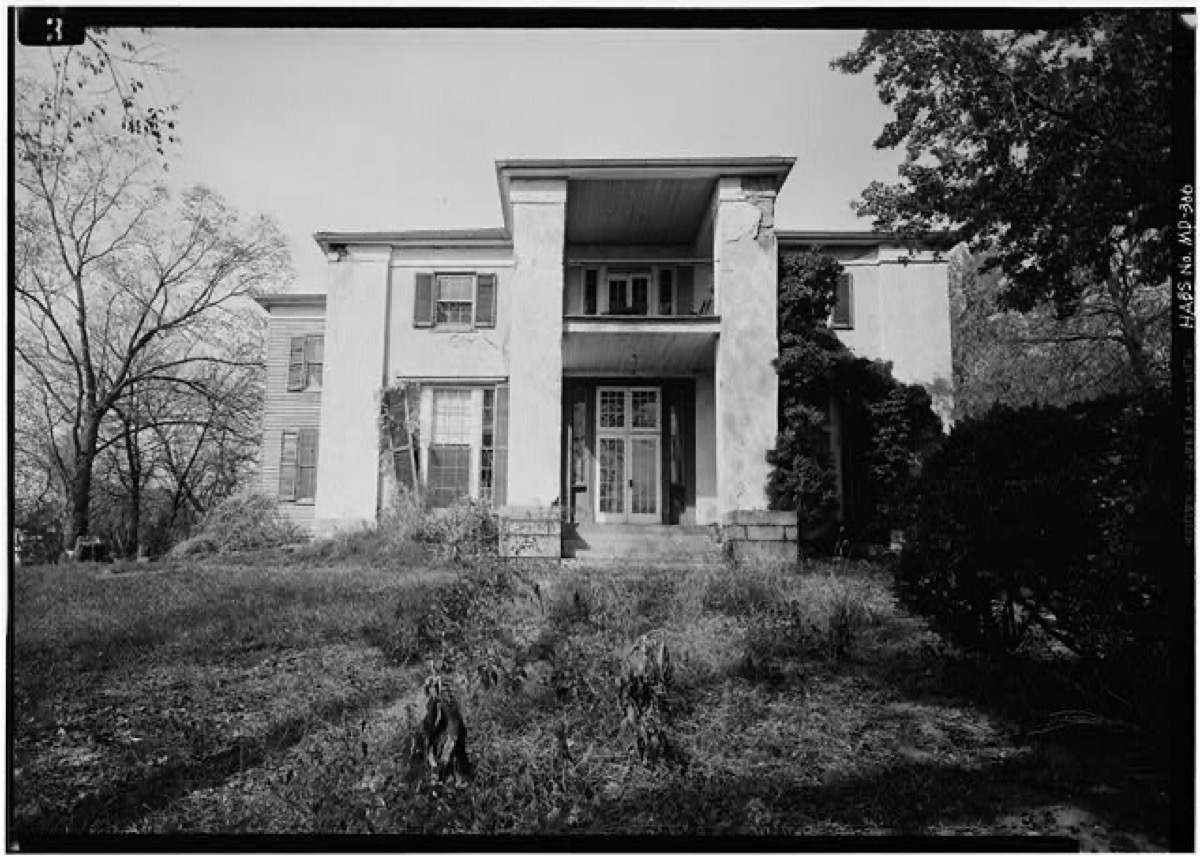
The school opened in 1837 as a Greek Revival finishing school for girls, built of rare yellow-tinted granite quarried from the hill it sits on. For young women aged 12 to 18, it taught botany, chemistry, languages, and math, and earned a national reputation. Jefferson Davis's daughter Winnie studied here. Thomas Jefferson's great-granddaughter ran the place. The Civil War thinned the Southern enrollment, the reputation faded, and the school closed in 1891.
After that the building led a string of other lives — a summer hotel, a hospital for wounded WWI veterans, a summer-stock theater — until 1958, when the county declared it a fire trap and the owner sold off every wooden part inside it. The paneling, the floors, the mantels, all of it gone to a wrecking contractor. What's left is bare granite. Four Doric columns of the great portico still stand.
Annie isn't the only one who stayed. There's a figure they call The Gentleman, a man in a 1940s suit who crosses the second floor and stares out the windows — except the second floor is gone, so he walks on air, and he never once looks back at you. Miller calls him "a scar on time-space." A colleague of one theater production manager watched him from below: a stern-looking man in an old-timey suit, standing at a window where no floor remains to stand on. The manager herself reported a sudden panic while locking up one night, her nerves held right in her throat. And there's The Shadow, rarer than the rest: a man-shaped darkness with no body to cast it, which vanishes the instant you look directly at it.
Miller has a theory about why so much seems to gather here. Rivers cross below the hill, which she says makes it a thin place, "where the spirit world is closer." And that yellow granite the school was built from is shot through with crystal quartz, a stone said to hold and absorb energy. "We've got these things that all seem to coalesce at the same spot," she says, "and it results in being extra haunted."
The girl on the hill has a legend attached — a homesick Southern student who died of pneumonia waiting for her parents to fetch her home. Miller will tell you it's almost certainly invented. There are no records of anyone dying on the property. But a ghost named Annie keeps turning up by the trees anyway, watching the dogs go by.