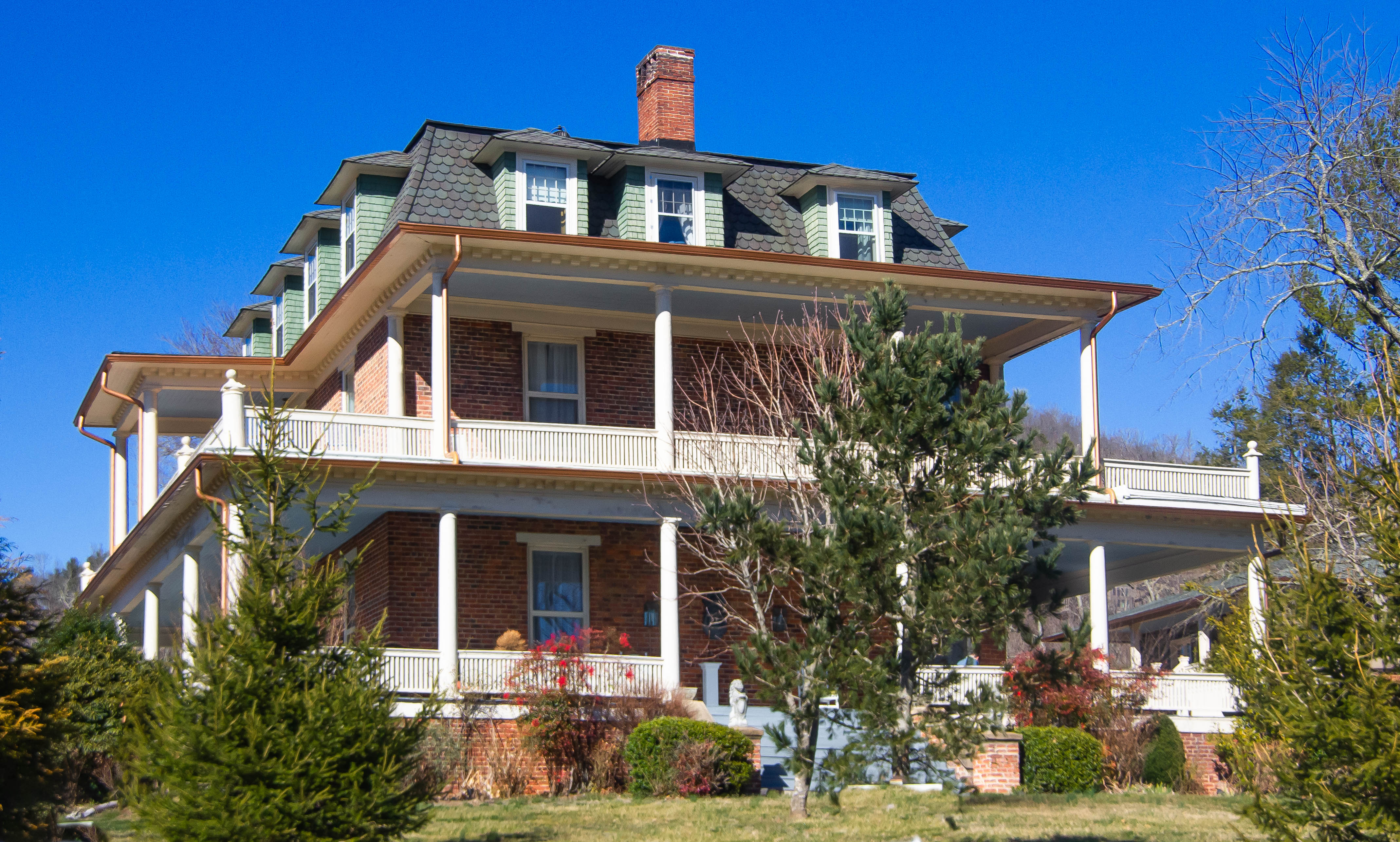
At the Reynolds Mansion outside Asheville, North Carolina, the innkeeper has an odd job: talking guests out of Guestroom Maggie, the most haunted room in the house. It was a Reynolds daughter's bedroom, and people keep choosing it anyway.
The Reynolds Mansion sits on a knoll just north of Asheville, North Carolina, a pre-Civil War brick house that takes in guests as a bed and breakfast. When someone books Guestroom Maggie, the owner does something most innkeepers never do. He tries to talk them out of it.
Maggie was the bedroom of Annie Lee Reynolds, an unmarried daughter of the family who died inside the house, and current and former owners call it the most haunted room in the building. "If somebody picks Guestroom Maggie, I try to move them," co-owner Billy Sanders told a local paper. "But most people will tell you it's the room they wanted to stay in."
Annie Lee doesn't keep to one room. "Usually you see her on the staircase," Sanders said, "or you'll see orbs or hear a child's voice." The child is a second spirit, a Reynolds girl said to have died of typhoid fever at six, who shows on the upper floors as a small orb of light. Guests report cold spots, a watched feeling, doors that swing open on their own. "I never say anything," Sanders said, "but many guests report similar experiences. That's just part of living here."
The house went up in the late 1840s for Colonel Daniel Reynolds and his wife, who raised ten children in it. It's one of fewer than ten pre-Civil War brick homes still standing in western North Carolina, and per the current owner, a team of 15 enslaved workers built it. The family held the place for generations. A grandson, Senator Robert Rice Reynolds, married into the family that owned the Hope Diamond; today the inn keeps a replica of the stone on display.
Around 1920, a Reynolds rented the house out as an osteopathic sanitarium, run by the woman remembered as Asheville's first female physician. The same family member also ran a funeral home, and the lore has him embalming bodies inside the house itself. Local ghost hunters have investigated the building more than once, and one writer spent enough nights there to publish a book about it.
By 1970 the place had gone to ruin. New owners bought it looking, in Sanders' words, "like a haunted house from a scary movie," restored it by hand, and reopened it as an inn in 1972. The National Register added it in 1984. The rooms are still named for the Reynolds family, and Maggie is one of them.
So every season, guests read the warning, hear the stories, and ask for Maggie by name anyway.