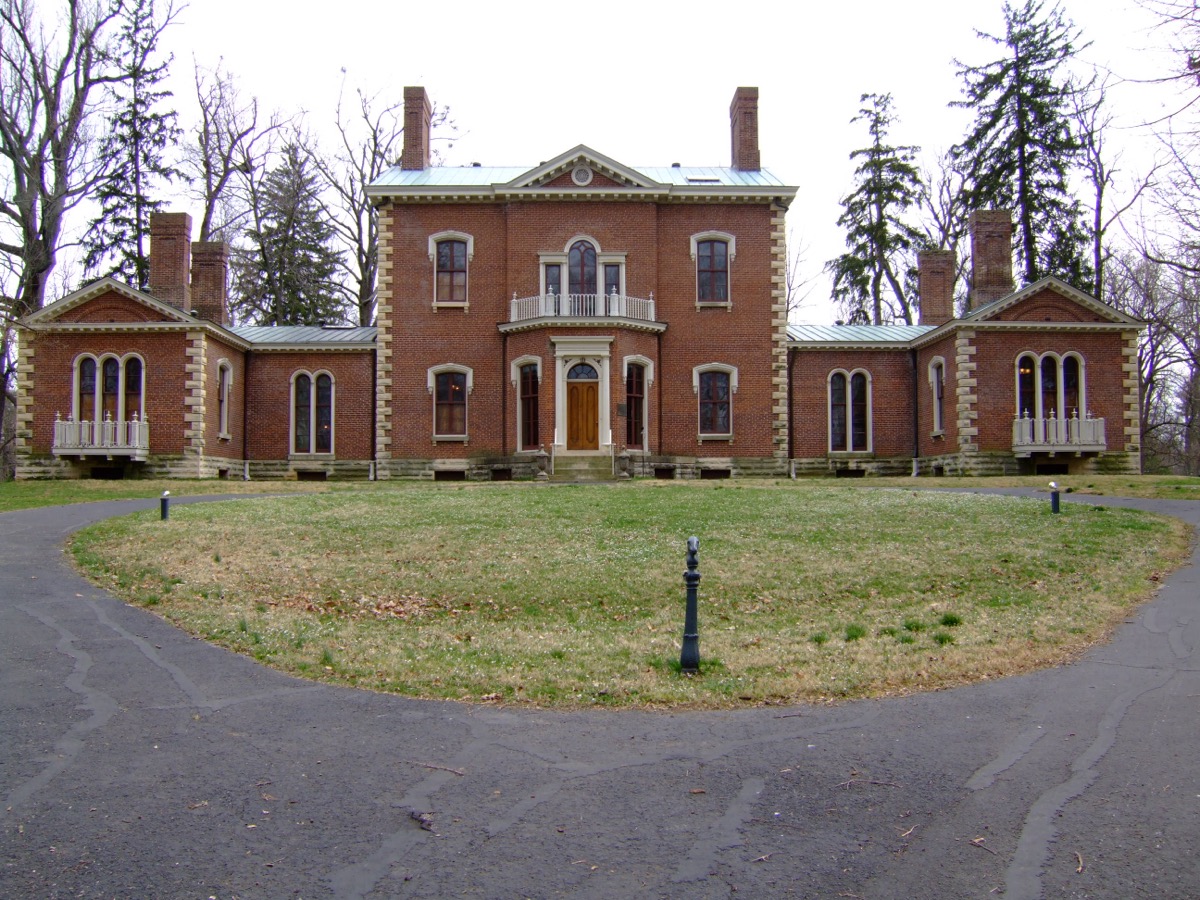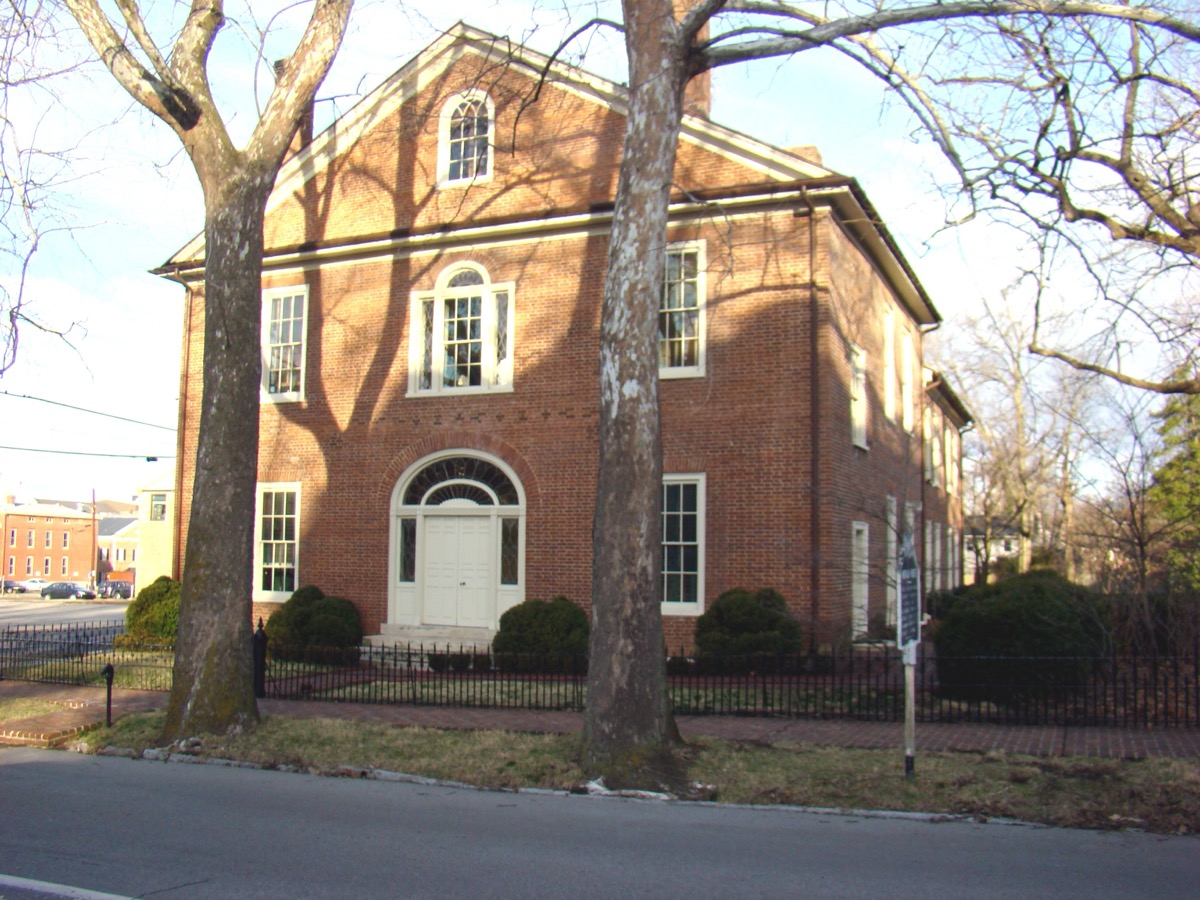
Lexington Cemetery in Kentucky keeps its best-known ghost under a small child-sized stone reading "Ever Faithful." She's Aunt Betty, an enslaved woman who ran the Hunt-Morgan household — and the family said she came back, in her red shoes, to sit by a dying child.
Lexington Cemetery in Kentucky has a famous mausoleum, a 120-foot column over Henry Clay, and the graves of senators and Confederate raiders. Its best-documented ghost is none of them. She rests under a child-sized headstone set cattywampus to the Hunt-Morgan family circle, reading "Bouviette James / COL / Ever Faithful."
The family called her Aunt Betty. She was enslaved by the Hunt-Morgans, ran their Lexington household, and raised the children, among them John Hunt Morgan, who grew up to ride for the Confederacy. From one of his Civil War raids, Morgan brought her back a pair of red leather shoes. They became the thing she treasured most, and the thing every version of her ghost story remembers.
She died in 1870 and was buried in the white family's plot rather than the segregated section. That was a deliberate honor, one it took the Morgans' standing to arrange. The story goes she asked for it herself: "Put me where I can keep an eye on them boys."
Then she kept her word. By the early twentieth century, the family told of a nurse sitting up with a gravely ill Morgan child through the night. The nurse looked up to find a Black woman in a plain dress and a bright headcloth, red leather shoes on her feet, seated beside the cradle and humming low. The figure was gone a moment later. The boy died. The family believed Aunt Betty had come to walk him out of the world.
It is called one of Lexington's most famous ghost stories, and the man who tells it most carefully doesn't tell it as a haunting at all. Historian Jonathan Coleman built a self-guided tour, "A House Divided," around her grave and the surrounding Civil War dead, Union and Confederate buried in the same ground. He reads the ghost as an artifact of when it surfaced. "In the 1920s, when this ghost story is appearing," he says, "white Southerners are in the process of mythologizing the Civil War and certainly mythologizing the institution of slavery." The loyal ghost in the red shoes, in other words, was a story a certain South needed to keep telling itself.
There is a second story here, and it has no name attached to it. Visitors to the cemetery's mausoleum report disembodied voices, strange noises, and screams from inside the walls, and a shadow that moves near the back of the structure. What they describe afterward isn't fear. It's anger. People say they walk away furious, that the place carries the feel of an imposing presence. Three separate haunted-places listings repeat the same detail in nearly the same words: a feel of anger, a large dark shape at the back wall.
No grave explains it. No name, no death, no story anyone has ever written down. Past the gateway that has read "The City of the Dead" since 1850, the cemetery's most documented ghost is a woman remembered for her kindness, and its angriest one is no one at all.