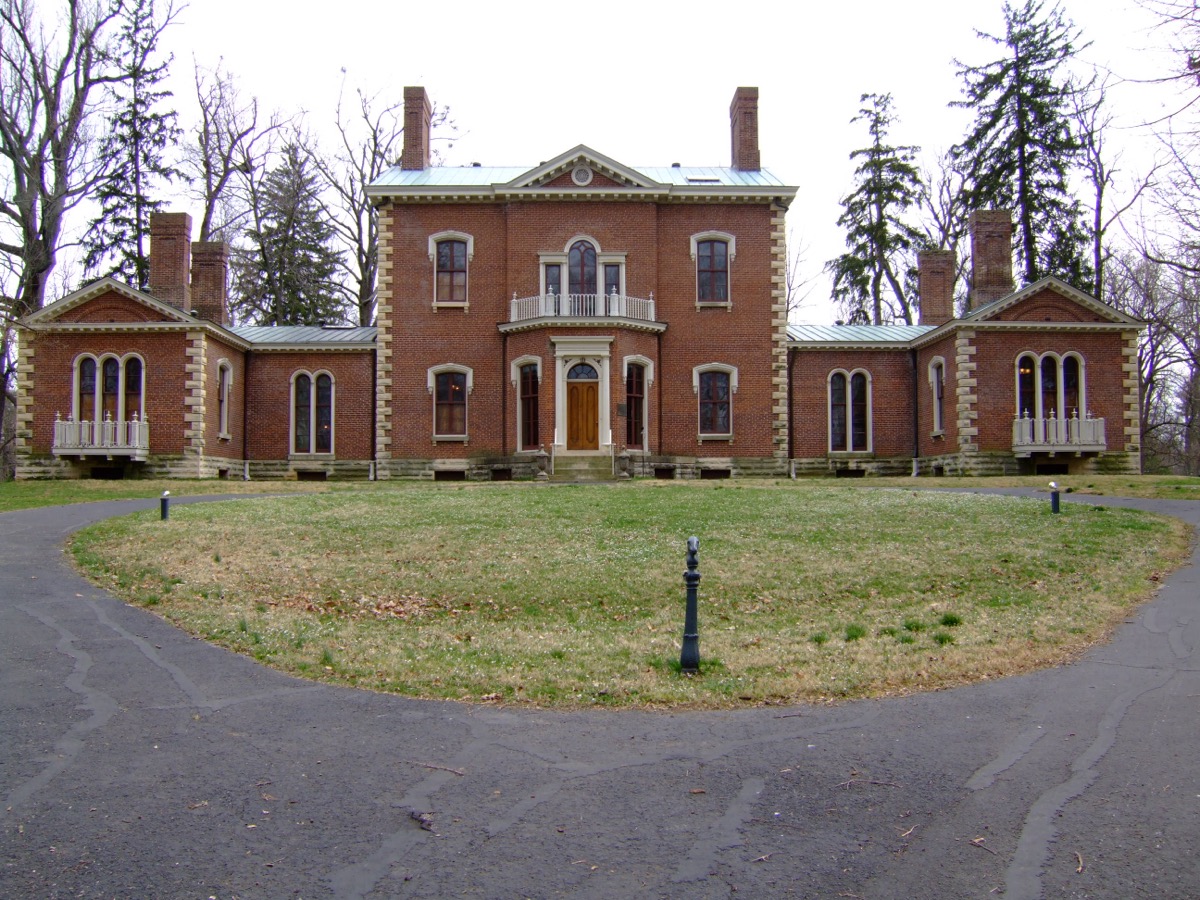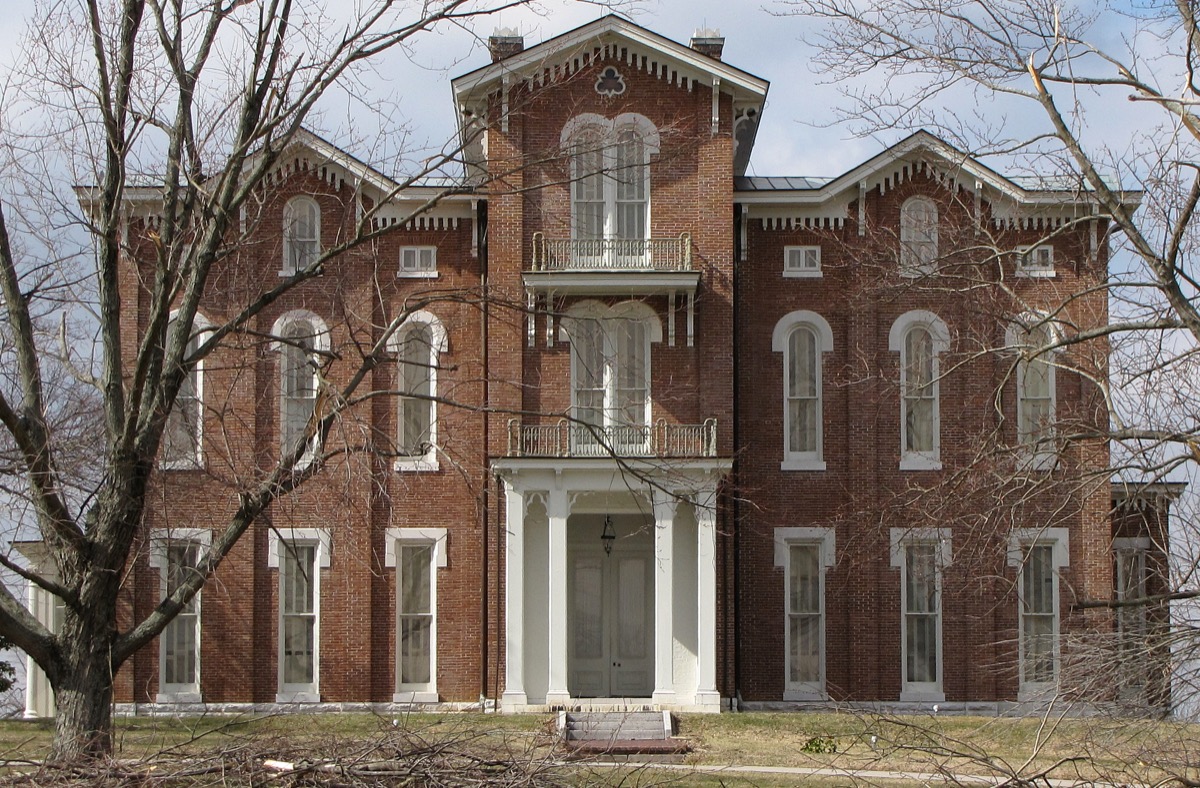
For years, drivers nearing White Hall in Richmond, Kentucky could see a woman's figure set into an upper window of the brick mansion. In 2007 the staff coated the glass with a UV blocker to protect the furnishings, and the image disappeared.
For years, people driving up to White Hall in Richmond, Kentucky could see her: the figure of a woman in an upper window of the three-story brick mansion, said to be the face and torso of an enslaved Black woman, looking out at the road. Visitors stopped being surprised by it. It was just part of the house.
In 2007 the staff coated all the windows with a UV blocker, to keep the sun from fading the furnishings and draperies inside. The image vanished. As Roadside America puts it, she's still there. You just can't see her anymore.
What the image actually shows, and which window it belongs to, has never been settled. The popular version is the enslaved woman looking out. The site's own curator has pushed back on parts of that reading, placing the sighting in the third-floor hallway instead. The legend keeps to its first telling.
The house behind the glass belonged to Cassius Marcellus Clay, the bowie-knife antislavery firebrand the locals called the Lion of White Hall. His father built the original brick core in the 1790s, seven rooms or so, named Clermont. Cassius and his wife later swallowed it inside a 44-room Italianate mansion of roughly 10,000 square feet, with central heat and an indoor bath. He published an abolitionist paper, fought duels over slavery, survived assassination attempts, and served as Lincoln's minister to Russia. He died in the house in 1903, at 92. Witnesses say he never really left.
Tour guides report doors and shutters opening on their own, furniture shifting with no hand on it, and piano music coming from a family instrument that no longer works. Rose perfume drifts through the rooms. So does pipe smoke. In the dining room, people have described a ghostly dinner party going on without them, the tinkle of glasses, low conversation, the smell of food. The presences vary by who's telling it. Cassius, a woman in black, a child, sometimes a baby. None of it pinned down past staff and visitor accounts.
The head guide, Stephanie Thurman, has heard her own name called in empty rooms. She isn't bothered. "As long as there are no messes for me to clean up," she said, "I don't really care."
In 2021 a paranormal group brought thermal cameras and a spirit box and worked the house in front of 60 people. Their lead investigator was honest about the night. "Most of it is just dead air," he said. "It can be very monotonous."
The woman in the window outlasted all of it. The instruments, the cameras, the crowd. She was undone instead by a routine coat of glass.