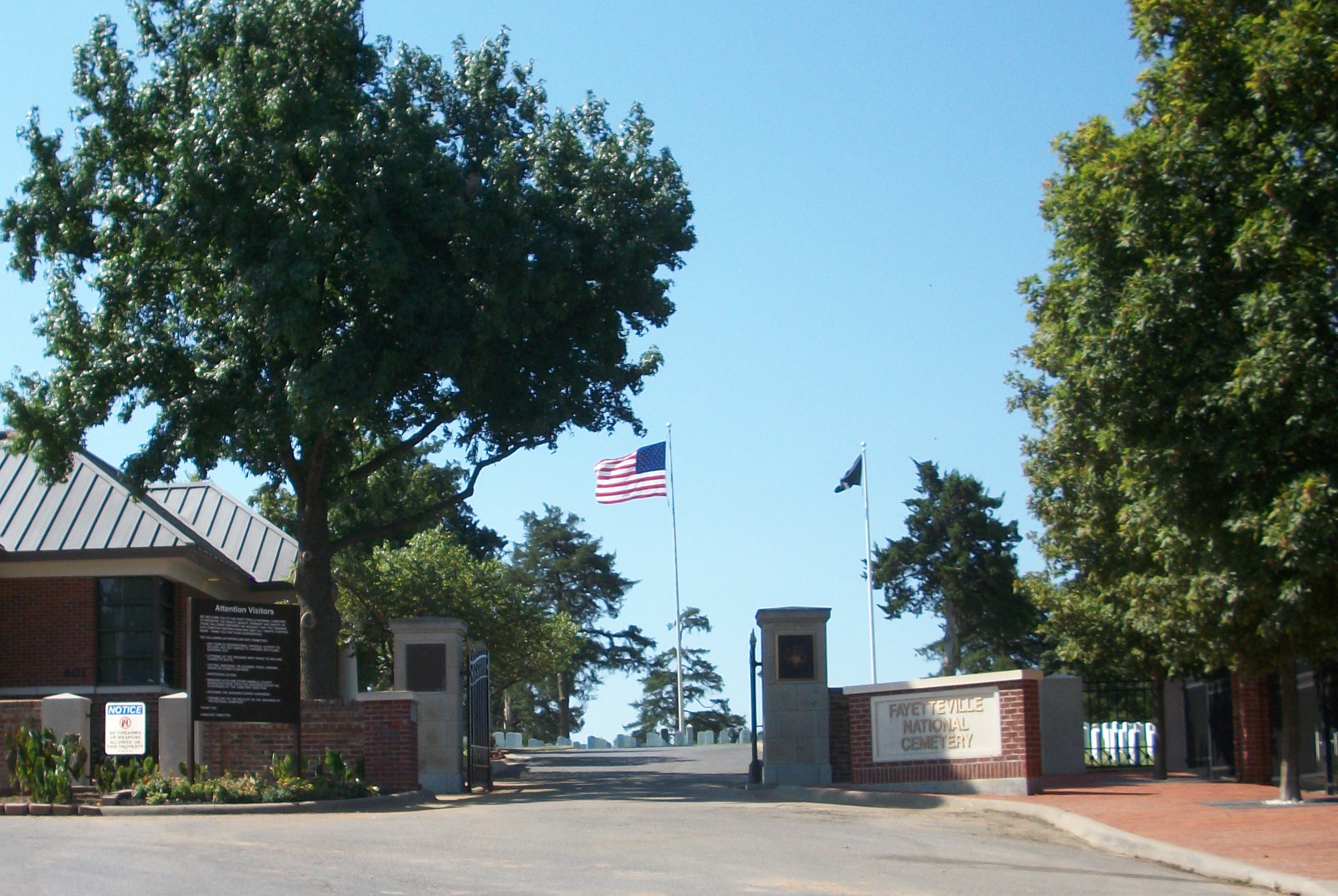
The Fayetteville Confederate Cemetery in Arkansas sits on a ridge locals called Ghost Mountain before a single soldier was buried there. The name came from a honeymooning bride who caught fire and ran screaming into the hollow — and she's still the ghost everyone repeats.
The ridge in Fayetteville, Arkansas where 800 Confederate soldiers are buried was called Ghost Mountain before a single one of them went into the ground. The ghost it was named for never fought in any war.
Sometime in the early 1850s, the story goes, a newlywed couple from Fort Smith were honeymooning in a cabin on the slope when the bride leaned too close to the fireplace. A spark caught her dress, and she ran screaming down into the hollow. Her husband found her body the next morning. By the time a newspaper columnist wrote it down in 1940, it had already split into versions — in some she runs with her dress on fire, in some she runs headless, in some phantom horses come crashing through the trees behind her. The town still tells it, and still says her cries carry up out of the hollow.
That was the hill's reputation before anyone thought to bury the dead on it. In 1873 a group of about forty women bought three acres up here and hired a man to dig Confederate bodies out of the battlefields at Pea Ridge and Prairie Grove, paying him by the body. The count reached around 800, laid out by home state, a bronze soldier at the center facing back toward the fields they were pulled from.
The hill kept earning its name. The story goes that in 1932, a drunk father near the cemetery, sick of his infant crying, threw the baby down the family well; when the mother climbed down a rope to reach the child, he cut the rope with an axe and killed them both, then ran and was never caught. People near the old well still report a woman screaming on full-moon nights.
No paranormal team has ever come through with cameras — no readings, no names. Inside the walls people report only the quiet things: distant battle cries, shadows moving between the stones at dusk. It's the burning bride who outlasts all of it, the one everyone still repeats, running down a hill that was hers before it was anyone's.
A hill with 800 buried soldiers, and a ghost who was here first.