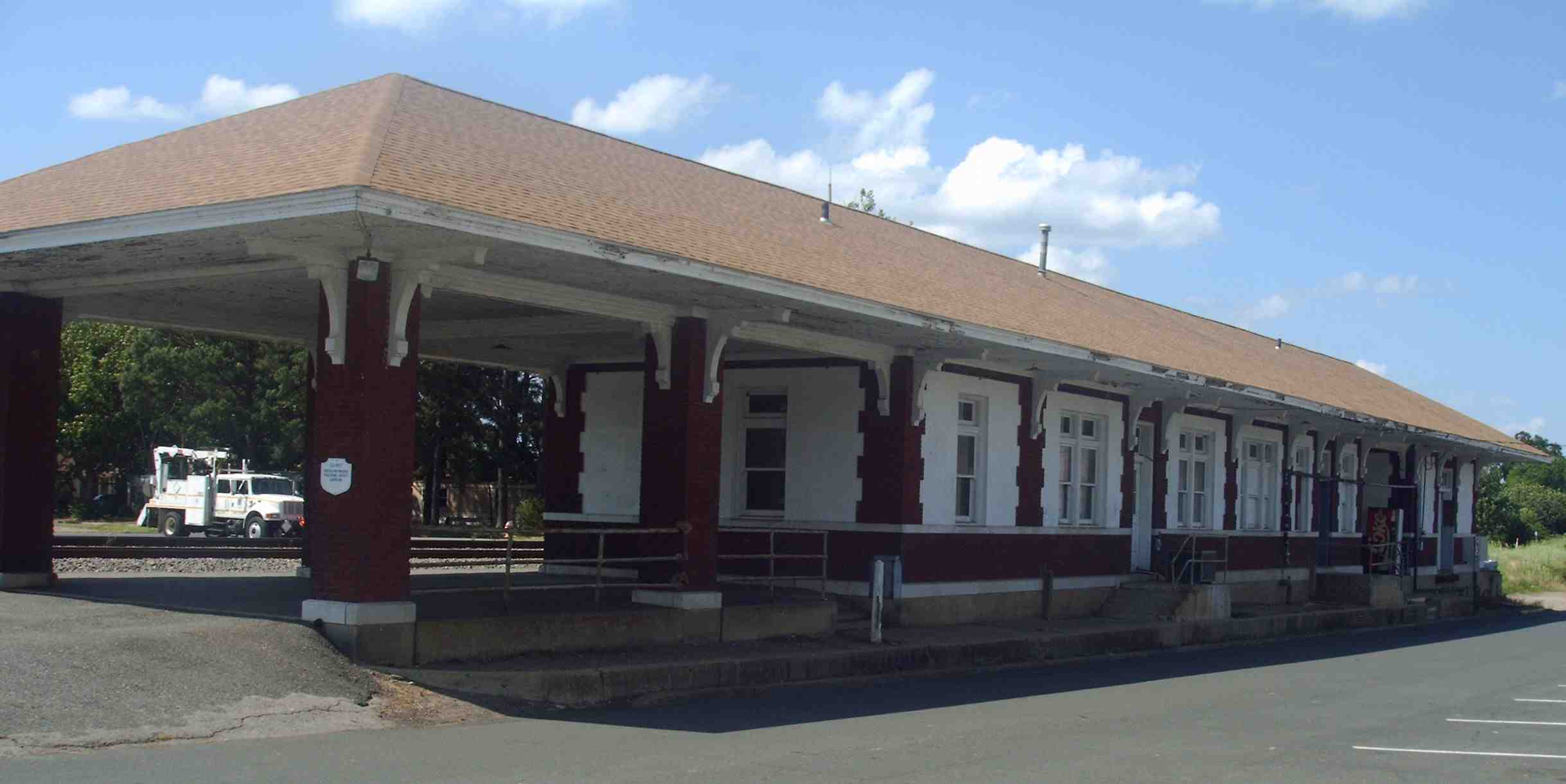
Gurdon Light

Gurdon Light

👻 other

Gurdon, Arkansas

About This Location

A mysterious floating light appears along a remote stretch of railroad tracks outside the town of Gurdon. The phenomenon has been televised, photographed, and is generally accepted as real.

👻

The Ghost Story

The Gurdon Light appears above a desolate stretch of railroad tracks near Gurdon, a small city in Clark County approximately eighty-five miles south of Little Rock. The phenomenon has been reported since the 1930s, making it one of the longest-documented ghost lights in the American South and arguably the most famous paranormal phenomenon in the state of Arkansas.

The legend most commonly associated with the light traces to a murder that occurred in December 1931. William McClain, a foreman with the Missouri-Pacific Railroad, got into a dispute with one of his employees, Louis McBride, over the number of days McBride was being scheduled to work. The argument escalated violently. McBride struck McClain on the head with a shovel, then beat him to death with a railroad spike maul — the heavy hammer used to drive spikes into crossties. The Gurdon Light was first sighted shortly after the killing, and the prevailing local belief holds that the light is the ghost of William McClain, walking the tracks with his lantern, searching for something — perhaps his killer, perhaps simply unable to leave the place where he died.

A second, older legend provides an alternative origin. According to this version, a railroad worker was performing maintenance outside of town one night when he accidentally fell into the path of an oncoming train and was decapitated. His head was never recovered. The light, in this telling, is the lantern his ghost carries as he walks the tracks looking for his severed head — a motif shared with the Crossett Light in Ashley County, the Maco Light in North Carolina, and the Bragg Light in Texas.

The light itself has been described by hundreds of witnesses over nearly a century of observation. It appears as a luminous orb hovering a few feet above the railroad tracks, roughly the size of a basketball or medicine ball. Its color shifts between blue, green, white, and orange, sometimes cycling through multiple hues during a single appearance. The light has a distinctive bobbing motion, as though being carried by someone walking. It appears in all kinds of weather — rain, fog, clear skies, summer heat, winter cold — a characteristic that undermines most simple atmospheric explanations. Most unsettling is its apparent responsiveness to observers. The light often disappears when approached, only to reappear behind the person who was walking toward it, as though it had circled around them.

Multiple explanations have been proposed. The most common skeptical theory attributes the light to refracted headlights from Interstate 30. This explanation is undermined by two facts: the site is more than two miles from the highway, and people began seeing the light several decades before Interstate 30 was constructed in the 1970s. Swamp gas — methane released by decomposing organic matter — has been suggested, but the light's appearance across all weather conditions contradicts the atmospheric conditions necessary for marsh gas ignition. The most scientifically substantive theory was advanced by Mike Clingan, who spent more time investigating the Gurdon Light than perhaps anyone else. Clingan believed the piezoelectric effect best explained the phenomenon — quartz crystals in the geological formations beneath Gurdon generate an electrical charge when subjected to tectonic stress, and this charge manifests as visible light above the surface. Clark County sits atop quartz-bearing formations, lending geological plausibility to the hypothesis, though it has never been conclusively demonstrated.

The Gurdon Light drew national attention in October 1994 when an NBC Unsolved Mysteries crew traveled to Clark County to film a recreation of the 1931 murder and document the light phenomenon. The segment aired on December 16, 1994, introducing the legend to a nationwide audience. The publicity brought a new wave of visitors to the tracks outside Gurdon, where the light continues to appear for those willing to walk the railroad grade after dark. The site remains unmarked and unofficial — there is no signage, no parking area, no visitor infrastructure — but locals in Gurdon can direct the curious to the spot, and the light's reputation ensures a steady stream of visitors on weekend nights.

Researched from 8 verified sources including historical records, local archives, and paranormal research organizations. Learn about our research process.

More Haunted Places in Arkansas

🏚️

Curran Hall

Little Rock

🍽️

The Ohio Club

Hot Springs

👻

Crossett Light

Crossett

🪦

Maple Hill Cemetery

Helena-West Helena

🎓

Caraway Hall - Arkansas Tech

Russellville

👻

Old Redfield Road

Sheridan

View all haunted places in Arkansas

More Haunted Others Across America

Historic Fort Wayne

Detroit, Michigan

Dogtown Common

Gloucester, Massachusetts

Old City Orphanage

Marquette, Michigan

Holy Name Cathedral

Chicago, Illinois