At the Sandford House in Fayetteville, North Carolina, a woman in Victorian mourning black has waited on the staircase since around 1900. The women's club that owns the house treats being touched by her as a rite of passage — a hand brushing your face the day you join.
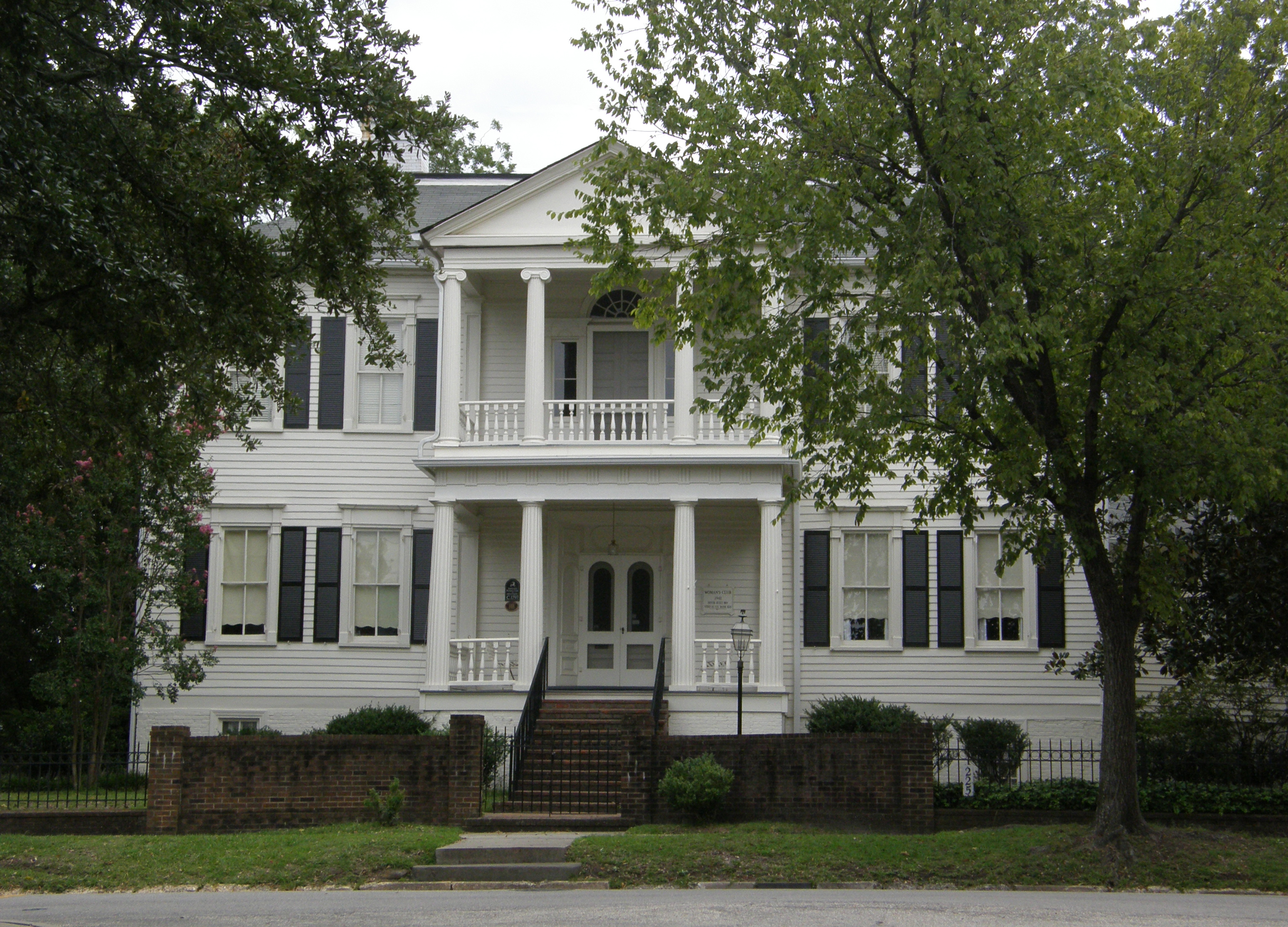
The Sandford House in Fayetteville, North Carolina belongs to the Woman's Club of Fayetteville, and the women who run it have a private welcome for newcomers. The first time you're in the house, the story goes, a hand brushes gently across your face, turning your head in surprise — and the older members tell you the Lady in Black has decided to get a look at you. They treat it as a rite of passage, not a fright.
She has stood on the main staircase since around 1900, dressed in heavy Victorian mourning black, described by the people who see her as gentle and sad and patiently waiting. The touch comes the same way: a finger across the cheek, or a hand resting on the shoulder from behind, depending on who's telling it. The rest of what happens in the house is just as quiet. Indentations press into chairs and sofa cushions, as though someone has only just stood up. Televisions and radios change stations with no one near them. There is no violence in any of it, no slammed doors, nothing thrown — only the small domestic signs of a woman moving through her own house.
Nobody agrees on who she is. One tradition names her Margaret Halliday Sandford, lady of the house after John Sandford bought it in 1832. He had been a cashier at the branch of the Bank of the United States the building was remodeled to hold a decade earlier, and the house took his name when he made it his home. Another tradition skips him entirely. It makes the Lady a young woman who fell for a Confederate soldier stationed in Fayetteville, and who led him to a tunnel beneath the house as Sherman's army closed in during the spring of 1865. He left to rejoin his regiment and never came back, and she went on waiting for him on the stairs.
No record ties any named death to the figure on the staircase, and no one has ever confirmed the tunnel was real. Both stories are folklore laid over a house built in 1797, sometimes dated to around 1800, that has since stood as a Union barracks, a bank, and the showpiece of Heritage Square — the downtown block it shares with an 1818 oval ballroom and an even older neighbor. "Legend has it that she continues to haunt the Sandford House," a local writer put it, "eternally dressed in her mourning attire, waiting on the staircase for her lover's return."
What stays the same across every version is the staircase. She's always there, scanning the room, waiting. And through all the lives the house has had, the women who care for it keep the one tradition that's theirs: the day you join, you let her decide whether to touch your face.