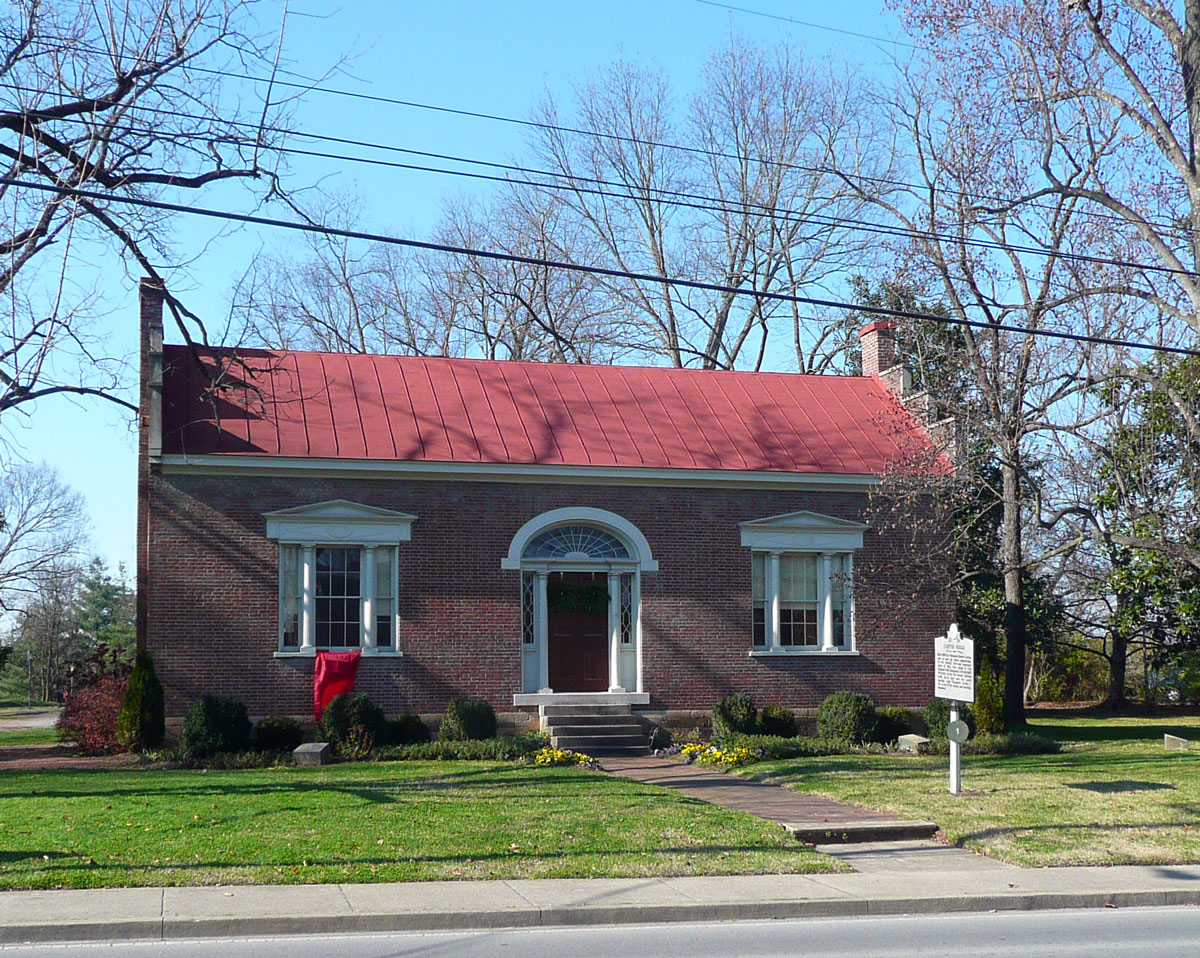
The most-named ghost at the Carter House in Franklin, Tennessee is Captain Tod Carter, shot nine times off his horse a few hundred feet from the house where he was born. His family carried him in and had two days to say goodbye before he died in 1864.
Visitors to the Carter House in Franklin, Tennessee keep reporting a young man in a Confederate uniform, standing in the room where the family's middle son took two days to die of his wounds. Most guides settle on one name without much hesitation: Captain Tod Carter.
Tod had enlisted in Company H of the 20th Tennessee Infantry and hadn't seen Franklin in roughly three years. On the afternoon of November 30, 1864, his army marched straight toward the town where he was born, and toward his father's brick farmhouse, which the Union had seized as a command post. He rode out ahead of his company on a horse named Rosencrantz. Later retellings put a cry in his mouth as he charged: "I am almost home! Come with me, boys!" The line traces to a family descendant's poem, though, not to the battlefield. He got within a few hundred feet of his own front door.
Nine bullets took him off the horse, one of them a fatal wound to the head. He fell roughly 175 yards from the house where he'd been born, close enough to see it, on the first day in three years he'd made it back.
He lay on the field through the night. The next morning a Confederate general, Thomas Benton Smith, led Tod's father and sisters across the ground in the dark to find him among the dead and wounded, and they carried him inside. A surgeon cut the bullet out. Fountain Branch Carter, 67 years old, had spent the battle down in the basement with his family, a neighboring family, and several enslaved people while it roared over their heads. Now he had his son back. Tod died on December 2.
He isn't the only one people report. Stand in the yard and look up, some say, and you might catch his sister Annie in an upstairs window. She lived in the house for decades after the war. Others say they've heard Rosencrantz still out there, hoofbeats moving through the trees with no horse to make them.
Those are the soft stories, passed hand to hand by guides and visitors. What isn't soft is the farm office and the brick smokehouse standing a few hundred feet from the house. Guides count more than a thousand bullet and shrapnel holes in their walls. No one had to witness those or pass them down. The battle punched them there itself, and they have never scarred over.