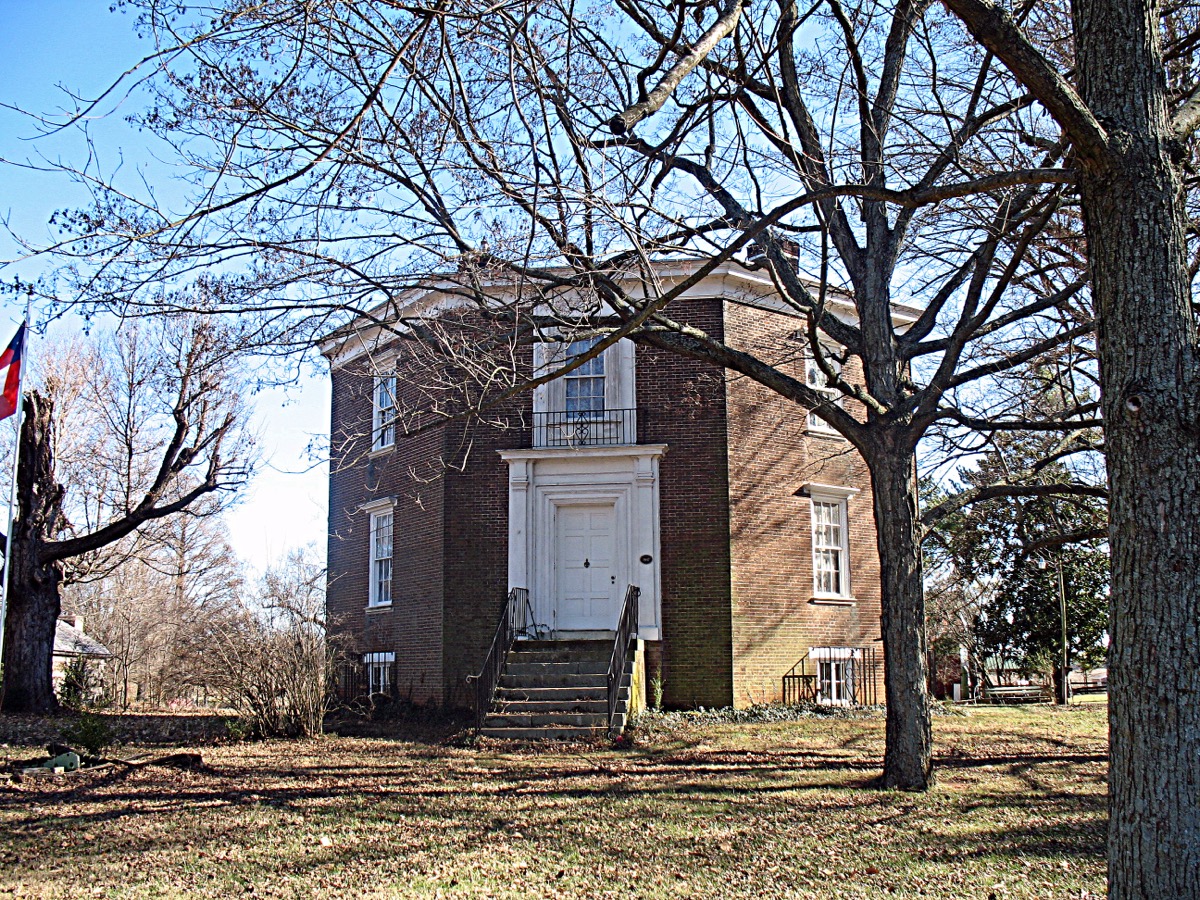
At Octagon Hall, an eight-sided brick house in Simpson County, Kentucky, investigators keep catching a child's voice in the basement asking to play. The tour says it's a girl who burned to death at the hearth. The census records say she grew up.
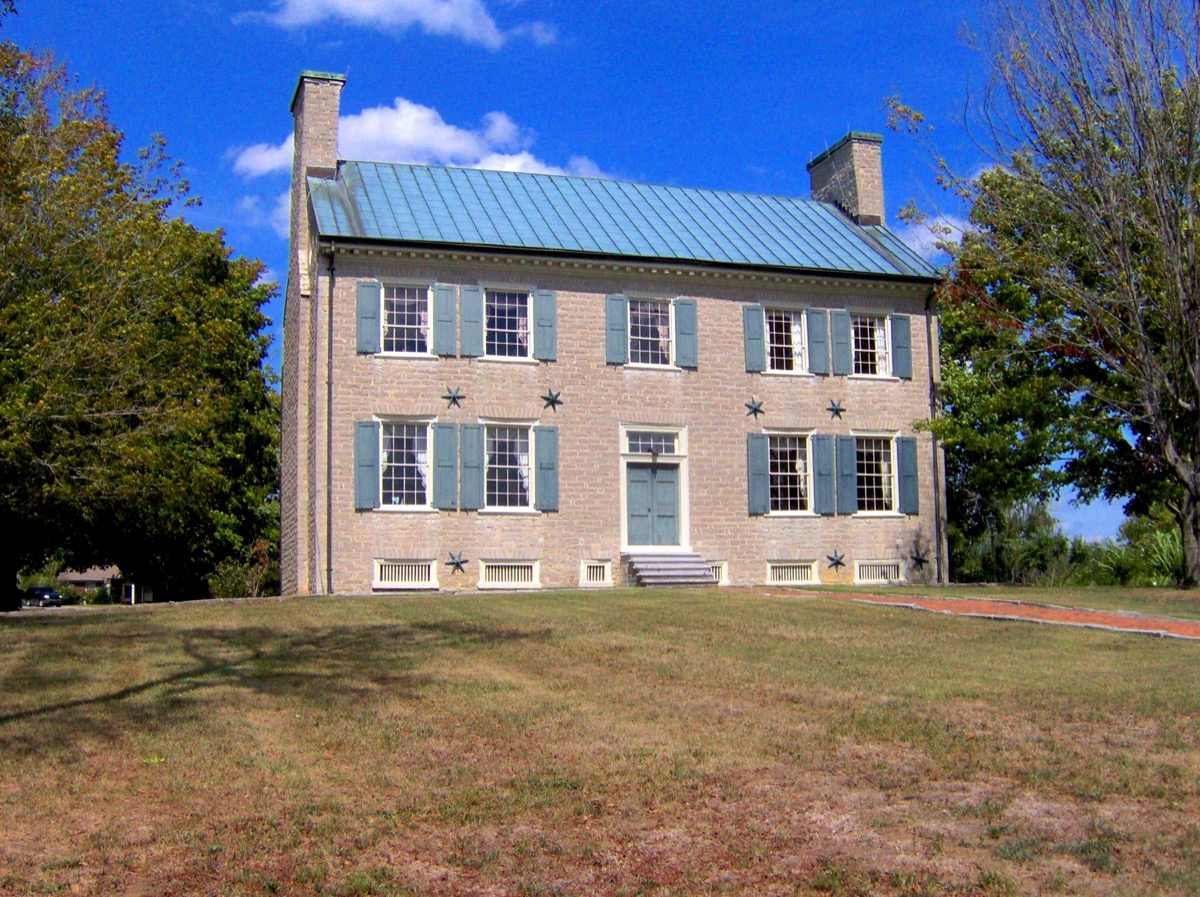
At Octagon Hall, an eight-sided brick house outside Franklin, Kentucky, the voice people keep catching in the basement belongs to a child. Investigators have logged it asking to play, calling for its mother, telling someone to go to sleep. The Paranormal Investigators of Milwaukee wrote down the phrases the way you'd transcribe a witness: "Would you play with me?" "Mommy." "I see you?"
The house has a name for her. They call her Mary Elizabeth Caldwell, and the story goes that she died here as a little girl when her dress caught fire at the basement kitchen hearth. She's said to be buried on the property, and most of the recorded EVPs in the house get attributed to her.
Except the family Bible records no such death. The 1860 census lists an 11-year-old Mary E. Caldwell alive in the house. The 1870 census lists her at 23. The Simpson County Historical Society's own family sheet questions whether the fire ever happened at all. So the signature ghost of one of Kentucky's most-investigated houses may rest on a girl who grew up.
The rest of what the house holds is on the record. Andrew Jackson Caldwell laid the foundation in 1847 and finished the octagon around 1859, built by the thirty-four people he enslaved by 1860, who quarried the limestone, made the bricks, and cut the interior woodwork. In February 1862, the Kentucky Orphan Brigade camped on the grounds while evacuating Bowling Green, thousands of soldiers on the property for a single night before retreating into Tennessee at dawn. The house became a field hospital for both sides. Amputations, the story goes, were done in the basement. The worse cases were carried upstairs.
That basement is where the investigations keep landing, and the house has been investigated a lot — Travel Channel filmed an episode here in 2018, and it turns up regularly on the cable ghost shows. The Milwaukee team logged the events with timestamps. A door swung open on its own at 1:33 AM. A wheelchair moved in the sick room at 11:28 PM. A roughly seven-foot shadow, they wrote, charged at them. Visitors report being touched by hands they can't see, a soldier's shape in the driveway, footsteps dragging across empty rooms.
A child's voice in the basement of a Civil War hospital is one thing. A child's voice belonging to a girl who appears in two census records, alive and growing older, is another. The tour answered the question a long time ago. The records keep reopening it.