Clayton House

Clayton House

🏚️ mansion

Fort Smith, Arkansas

TLDR

Porcelain dolls rearrange inside locked cases at Fort Smith's Clayton House, a museum the executive director says holds at least three ghosts.

The Full Story

The porcelain dolls won't stay put. They're America's first ladies in miniature, displayed in locked glass cases at the Clayton House museum in Fort Smith. Staff lock the cases. They walk away. They come back a few days later and find the dolls turned to face each other, repositioned, rearranged. The cases are still locked.

Executive director Mila Masur, in the role since 2017, says the dolls are the least of it. "We have at least three resident ghosts here in the house," she's told reporters. "A cat, a tall man in boots, and a woman in a brown dress."

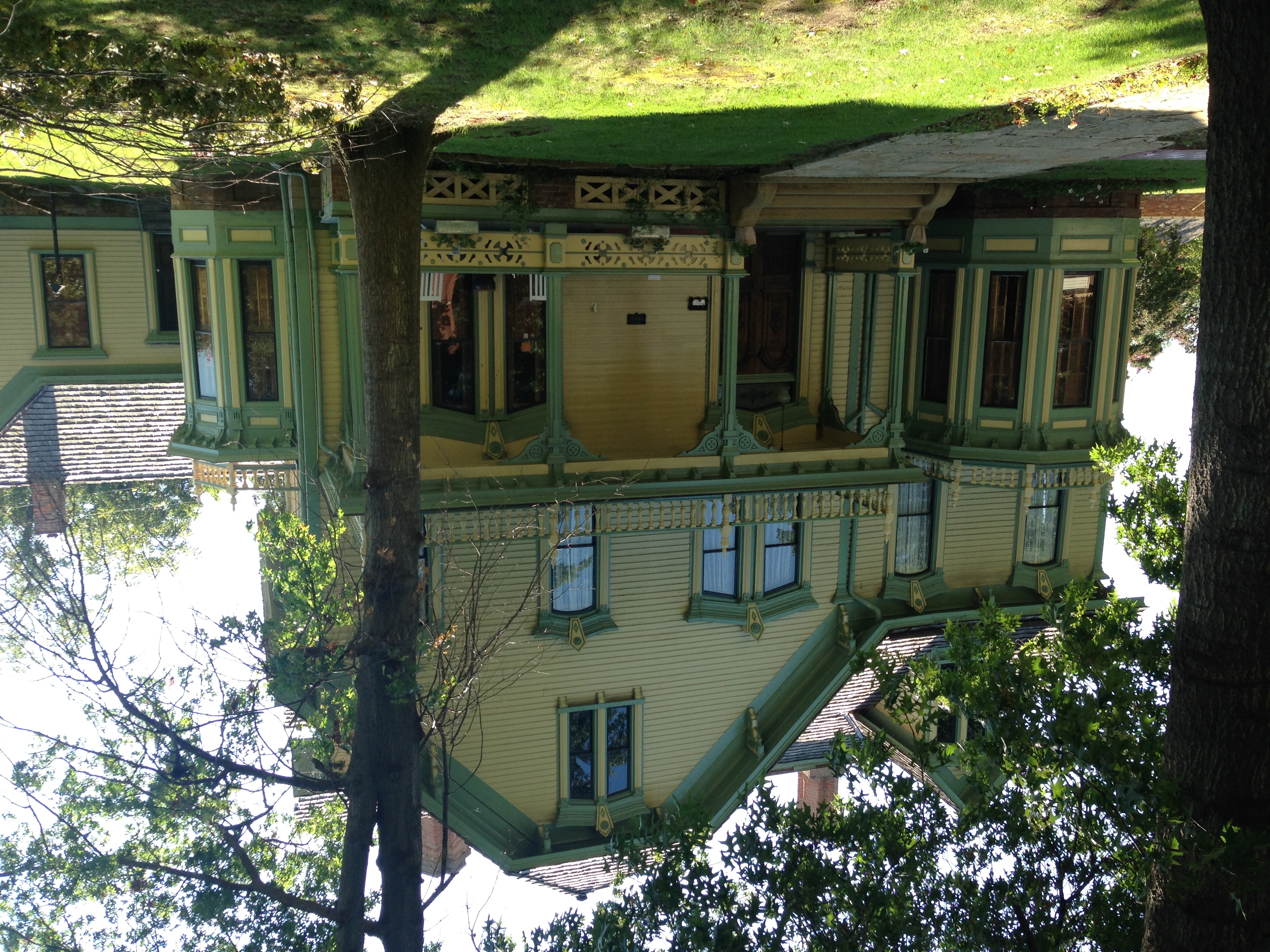
The house at 514 North 6th Street is a 6,000-square-foot Victorian Gothic Italianate, all paneled projecting bays and carved porch columns, with hand-carved limestone guttering on the outside and a black walnut central staircase inside. Every one of its eight main rooms has its own cast-iron coal-burning fireplace. It looks like a house a federal prosecutor in the 1880s might have wanted to own, which is exactly what happened.

William Henry Harrison Clayton bought a 1850s structure on the lot, doubled it in size, remodeled the whole thing in the Italianate style, and moved his family in in 1882. By then he'd already been U.S. Attorney for the Western District of Arkansas for eight years, appointed in 1874 by President Grant. His jurisdiction covered more than 74,000 square miles, including Indian Territory. He worked alongside Judge Isaac C. Parker, the man history nicknamed the Hanging Judge. Together, over Clayton's fourteen-year tenure, they prosecuted more than 10,000 cases. Clayton put 80 men on Parker's gallows for murder. The museum claims that record "is unparalleled in American jurisprudence," and as far as anyone has been able to check, that's accurate.

One of the people Clayton prosecuted was Belle Starr. In 1883 he tried her for horse theft before Judge Parker. She was convicted and served nine months at the Detroit House of Corrections. She was ambushed and killed six years later by a gunman who was never identified, the same year Clayton's twin brother John was assassinated through the window of a boardinghouse in Plumerville while contesting a fraudulent congressional election. The shooter in that case was never identified either. The 1880s were like that for the Claytons.

The house carried weight before Clayton ever owned it. During the Civil War, while it was still the Sutton property, it served as a Union army hospital. After Clayton sold up in 1897, it cycled through a social club, the Emma High family, and a long stint as a boarding house. By 1969 it was scheduled for demolition. Preservationist Julia Yadon stopped that, founded the Fort Smith Heritage Foundation, and restored the house room by room between 1970 and 1977. It's been a museum since.

The ghost most visitors notice first is the one they can't see. Curtains move in rooms with no open windows and no vents. Something rubs against your leg in a hallway and you look down expecting a tabby and find nothing. Paranormal Investigation and Research of Western Arkansas, the team that's investigated the house multiple times, captured an EVP that sounded like a cat meowing in a room where no cat lives.

The tall man in boots travels the second floor. Staff hear his footfalls overhead. They climb the stairs to check, and the rooms are empty. He doesn't appear, he just walks. Some visitors have reported seeing a tall figure who vanished when they got close, though those accounts are thinner and harder to pin down than the footsteps.

The woman in brown showed up in Clayton's study. Former director Martha Siler saw her there: gray hair pulled into a tight bun, a linen shirt, a brown skirt. A carpenter doing repairs in 2007 or 2008 photographed what looked like a woman in one of his images. Masur thinks she's probably Florence Clayton, William's wife, who raised six daughters and one son in this house over fifteen years. That identification is a guess. The brown dress is what people see.

PIRWA's EVP catalog from the house is broader than the cat. They've recorded a man shouting obscenities. They've recorded someone calling "Anna." The Claytons had a daughter named Ann.

A second team, NWA Ghost Connection, founded by Lori Davies, ran their own investigation. In a second-floor bedroom they reported flashlight responses during yes/no questioning, a session format where you ask a question and the flashlight clicks on for yes. Clayton House Registrar Sarah Pair told AY Magazine in October 2018 that the activity had been steady. "Mostly, it's flickers out of the corner of my eyes," she said, "like whenever I'm coming in and heading to the office it kind of looks like I'll see the shadows of someone's legs going up the stairs."

The 5News Arkansas crew that came through cataloged the more theatrical phenomena: doors slamming on their own, boots stomping in empty rooms, music playing in rooms with no source. And the dolls. Always the dolls. Locked behind glass, watched by security, repositioning themselves on their own time.

Clayton's study is still set up the way it was when he worked there, the room where he prepared cases that sent eighty men to die. The woman in brown was first spotted standing in it.

Researched from 9 verified sources. How we research.