Park staff at Stones River Battlefield outside Murfreesboro, Tennessee keep reporting a headless Union officer on horseback near the Round Forest. He is Lt. Col. Julius Garesché, whose head a cannonball sheared off in 1862, still riding the field he died on.
When a veteran park employee named Bill Reese ranked the ghosts reported at Stones River Battlefield, he handed the top spot to a Union officer who rides near the Round Forest with no head on his shoulders. Reese called him the "star" among all their reported sightings. Park staff, railroad workers, and Civil War reenactors have all described the same headless figure on horseback near the National Cemetery, outside Murfreesboro, Tennessee.
They even know his name. He was Lt. Col. Julius Peter Garesché, a West Point graduate and chief of staff to Union Maj. Gen. William Rosecrans. December 31, 1862 was the first day of the Battle of Stones River, and the first combat Garesché had seen in the whole war. He was riding beside his commander toward the Round Forest when a Confederate cannonball sheared off his head. The story goes that his body stayed upright in the saddle for several yards before it fell.
That evening, Gen. William B. Hazen came upon what was left of him. He wrote of finding "a headless trunk: an eddy of crimson foam had issued where the head should be." The hand was still warm. Hazen worked the West Point class ring off it, took Garesché's personal Bible, and left the field.
Rosecrans had watched it happen at his side. What he said afterward was, "I am very sorry. We cannot help it, brave men die in battle."
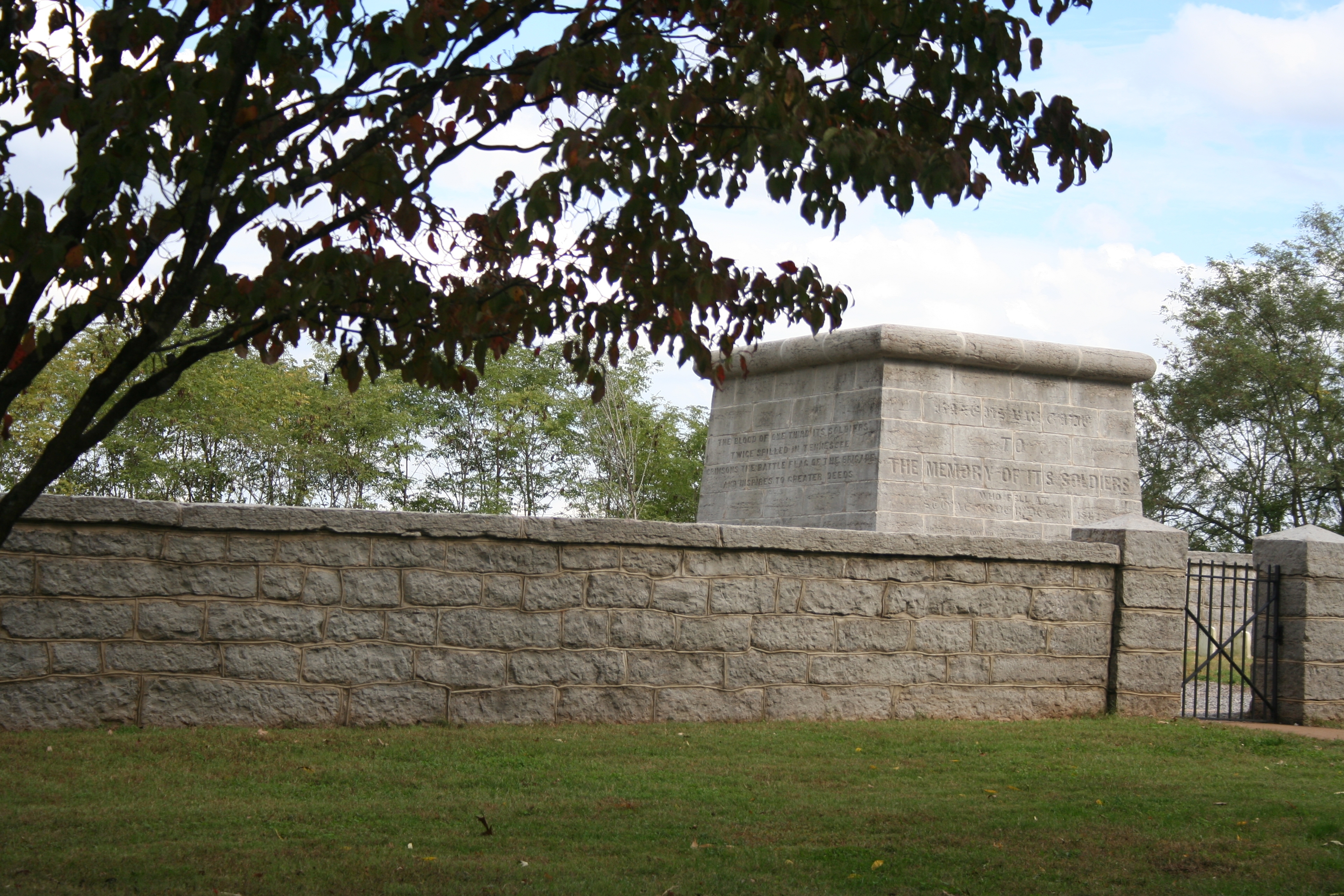
The Round Forest earned a nickname that day: "Hell's Half Acre," where Hazen's brigade held the Union left through assault after assault. Stones River became the deadliest major battle of the war by proportion, with nearly a third of everyone who fought here killed or wounded. More than 6,000 of the Union dead lie in the National Cemetery beside the field.
Garesché is not among them, and the sightings never settled. In 1978, a man named Jeffrey Leathers reported meeting a uniformed figure near one of the battlefield's tour stops, then watching it disappear. A former ranger's dog, Abby, would shake uncontrollably near the park flagpole. On hot summer days, staff and visitors describe cold spots on the ground, patches of grass that run maybe 10 degrees cooler than everything around them.
The man they keep seeing ride this Tennessee field is buried nowhere near it. Garesché lies at Mount Olivet Cemetery in Washington, D.C. His grave went one way. Whatever rides the Round Forest stayed behind.