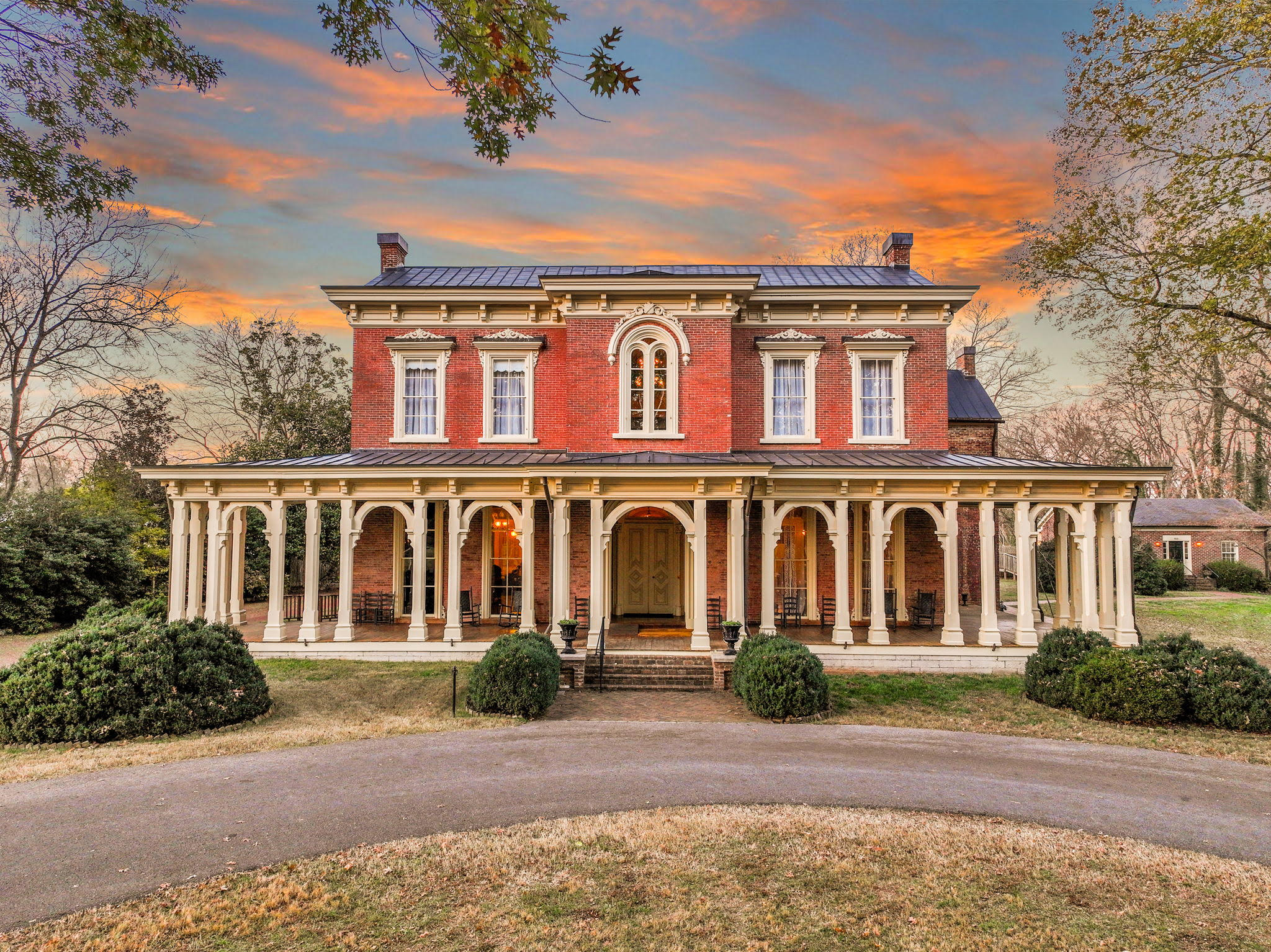
The director of Oaklands Mansion in Murfreesboro, Tennessee calls it the anti-haunted house and runs mourning-custom tours instead of ghost tours. But the mansion was already the creepiest house in town when it sat empty in the 1950s, long before anyone sold a ticket.
Every October, the staff at Oaklands Mansion in Murfreesboro, Tennessee drape the parlor mirrors in black cloth and set a coffin in the middle of the room. It isn't a haunted-house attraction. The executive director, James Manning, calls Oaklands "the anti-haunted house," and his night tours teach 19th-century mourning customs instead — how an 1860s Tennessee family washed a body, sat with it, and grieved by candlelight. What he offers, he says, is "a real life experience in an old mansion that isn't frightening."
The trouble is that the house doesn't need the props. In a back hallway hang wreaths of "hair art" woven from real human hair, and a postmortem portrait of the infant Lavinia Maney, painted after she died as a baby. A case nearby holds Dr. James Maney's own bone saws and tourniquets. This was a doctor's house, and for a stretch of the Civil War it served as a field hospital.
That history keeps arguing with Manning's framing. On July 13, 1862, Confederate cavalry under Nathan Bedford Forrest raided the Union troops occupying the estate, and Forrest accepted their surrender inside the house; afterward, as accounts of the raid have it, both armies sat down together to a meal of black-eyed peas and sweet potatoes. Colonel William Duffield was carried in badly wounded, and the Maney family nursed him back to health; in thanks, his relatives later sent them a silver tea service. The Maney children watched a battle unfold from the second-floor hallway window. Two of the eight died of illness inside these rooms in 1863.
So there is lore, whatever the director says. Ghost-tourism accounts hold that some of the children who died here still wander the halls, and that women widowed by the war are heard weeping in the halls at night. In every telling the children and widows stay nameless, and no ghost hunter has ever brought a camera through the door to prove otherwise. The stories stay collective and unproven, the way Oaklands' own director prefers them.
But the reputation is older than the museum. Long before anyone charged admission, Oaklands sat empty through the 1950s, peeling and abandoned, already known as the creepiest house in Murfreesboro. The educational director tells of teenagers daring each other to run up to the dark windows and throw rocks. The last family had moved out, the city hadn't bought the place yet, and the museum's whole apparatus — the ticket desk, the guided tour, the coffin staged in the parlor — lay years in the future. The house was just standing there, and the town had already decided what it was.