A woman climbing the boulders at Devil's Den in Gettysburg, Pennsylvania looked up to find a ragged, barefoot man beside her. He pointed at her University of Texas sweatshirt, said "First Texas," and was gone. The 1st Texas really did charge these rocks.
At Devil's Den in Gettysburg, Pennsylvania, a woman climbing the boulders alone looked up and found a man standing beside her. He wore a floppy slouch hat, his hair hung past his shoulders, his clothes were ragged, and his feet were bare. He pointed at the University of Texas sweatshirt she had on, said two words, "First Texas," and then he was gone. Not walking away. Gone where he stood.
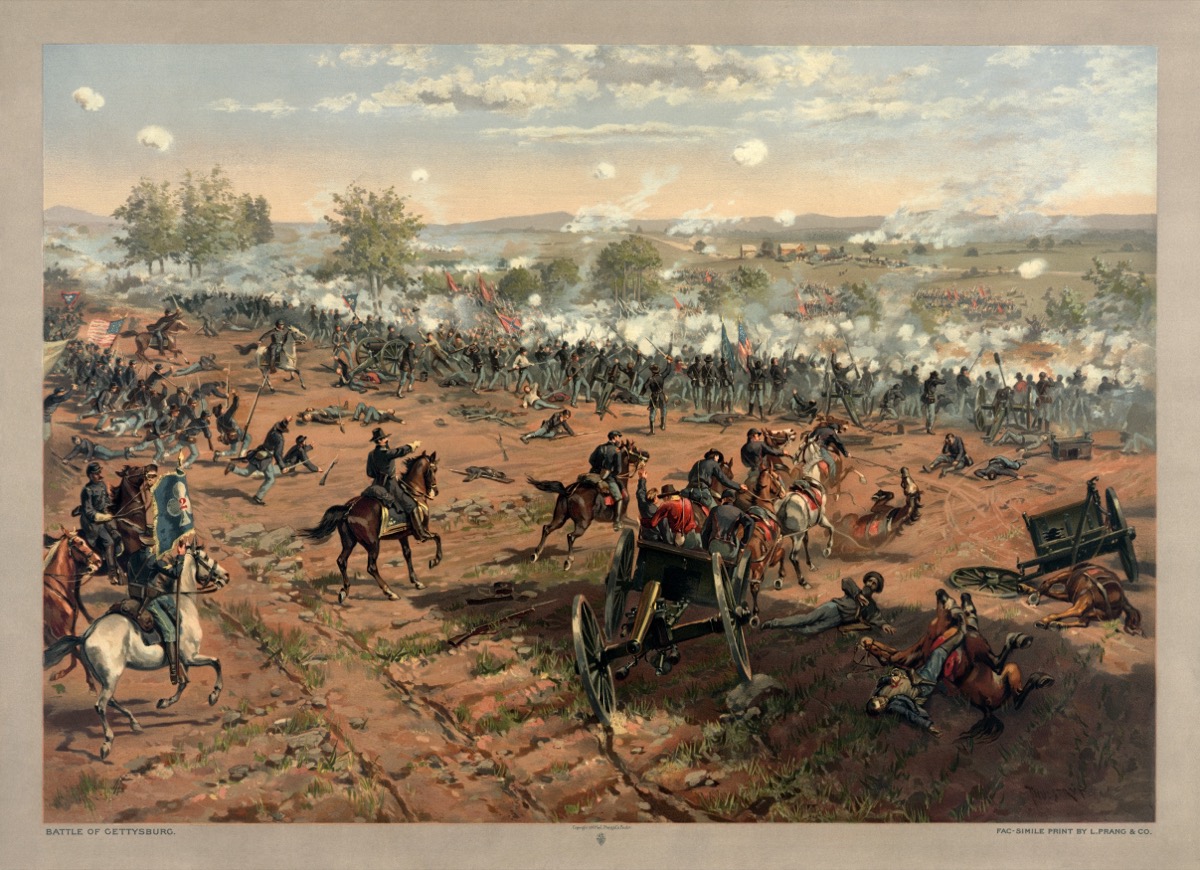
She had no reason to know what those words meant. But the 1st Texas Regiment charged these rocks on July 2, 1863, the second day of Gettysburg, and after the long march north, Hood's Texas Brigade came in barefoot and long-haired, worn down to exactly the figure she described. The account was collected by Mark Nesbitt, a former park ranger who spent years writing down what visitors here told him. A ranger who heard her description said it plainly: "I can't believe she's describing exactly what a Texan looked like at the battle of Gettysburg."
The place was called Devil's Den long before the soldiers came. Locals named it for a large snake, "The Devil," said to live deep in the crevices between the rocks. Then the fight for the Den became one of the bloodiest stretches of the second day. Hood's Texans and the 3rd Arkansas stormed the boulder maze and the low marshy ground to the east, along Plum Run, a place that earned the name the Slaughter Pen. More than 1,800 men were killed, wounded, captured, or lost there. Colonel Augustus Van Horne Ellis of the 124th New York mounted his horse to rally his men and was shot through the head. His statue tops the regiment's monument near the rocks now, the only statue of a regimental commander anywhere on the field.
The boulders keep one other strange habit. Visitors report cameras and phones draining dead, photographs coming back blank, figures showing up in frames that no one saw standing there. And there is a reason this place distrusts a lens. Days after the battle, a photographer's team dragged a dead Confederate soldier more than 40 yards across these rocks to pose him in a stone-wall sniper's nest for a famous picture. The rifle was likely a prop. The staging held undetected for nearly a century.
The barefoot man keeps his post through all of it. Years before the woman in the sweatshirt, another visitor met him here at dawn. He pointed off into the distance and told her, "What you're looking for is over there." Then he was gone too.