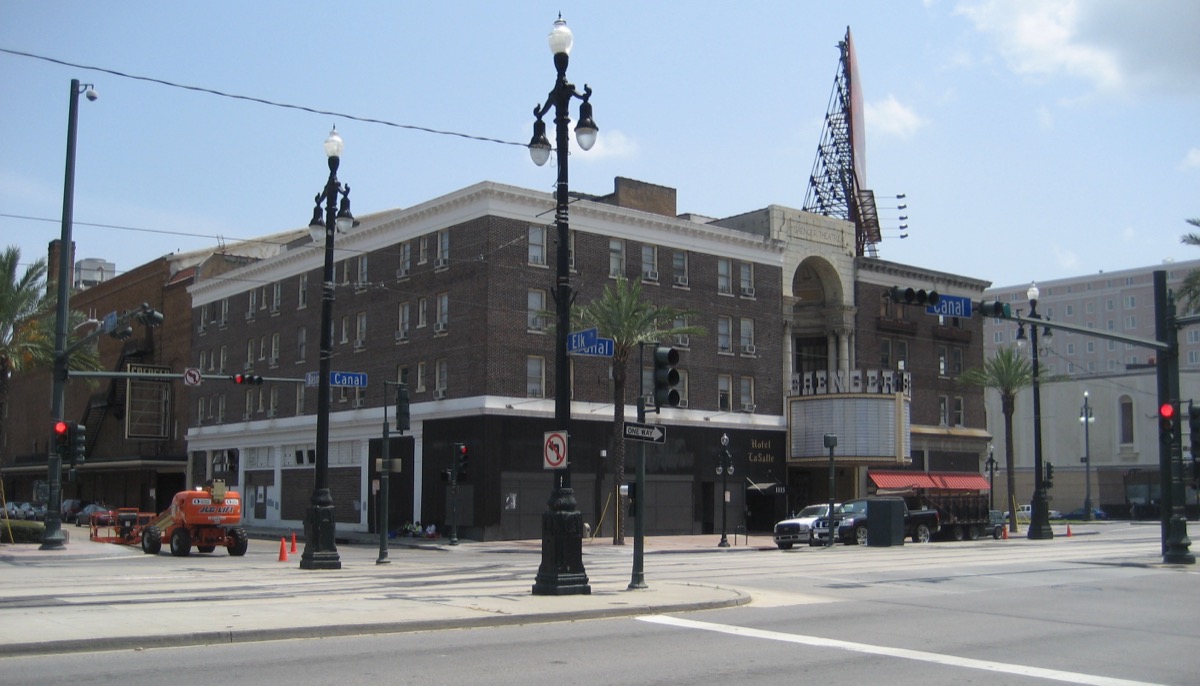
At the Saenger Theatre on Canal Street in New Orleans, the spook is oddly domestic for a 2,600-seat palace: staff say a whispering voice in the empty balcony calls longtime employees by name, and a man sometimes sits alone in the house after everyone's gone.
The Saenger Theatre on Canal Street in New Orleans is a working Broadway house, and the staff there say it keeps a voice in the balcony. Nothing dramatic, by their account. A whisper from the empty mezzanine, footsteps walking down the aisle that stop when you look up, and now and then a man sitting alone in a balcony seat in an otherwise empty house.
The detail the staff fixate on is the smallest one. The voice calls people by name. Not anyone — the longtime employees, the ones who've been there years, as if the presence has been around long enough to learn who they are. A former house manager, the story goes, heard her own name shouted twice across the theater in 2014 and found no one there.
It's a strange thing to haunt. The Saenger opened on February 4, 1927, with a parade down Canal Street and a top ticket of 65 cents, and Emile Weil built it as an "atmospheric theatre" — an Italian courtyard at dusk, the ceiling painted dark blue and pricked with 150 lights set in the shapes of real constellations, machines drifting painted clouds and sunrises across the plaster overhead. For grandeur like that, you'd expect a grand ghost. Instead the staff describe whispers, footsteps, and doors slamming shut with no one near them.
Where the figure comes from, no one can really say. The version most often repeated traces it to a worker who fell from the rafters above the stage in the building's early years — though no record of any such death has ever turned up, and the story carries an "allegedly" wherever it's told.
The building has survived worse than a ghost. The Robert Morton "Wonder" organ that played at the opening once outlasted an early Mississippi flood, when the organist Rosa Rio raised its console platform out of the rising water. Katrina was less kind. The floodwaters in 2005 came a foot above stage level, drowned the basement and the orchestra seats, and silenced the organ for good; it sits in off-site storage still, unrestored. An eight-year, $53 million restoration brought the room back to its 1927 self from historical photographs, trimmed the house from 4,000 seats to 2,600, and added new fiber-optic stars to the ceiling, and the Saenger reopened in 2013.
And the activity, staff say, runs quietest during a normal show week. It picks up in the dark — during tech rehearsals, in the empty house, when there's no one left for the voice to name but them.