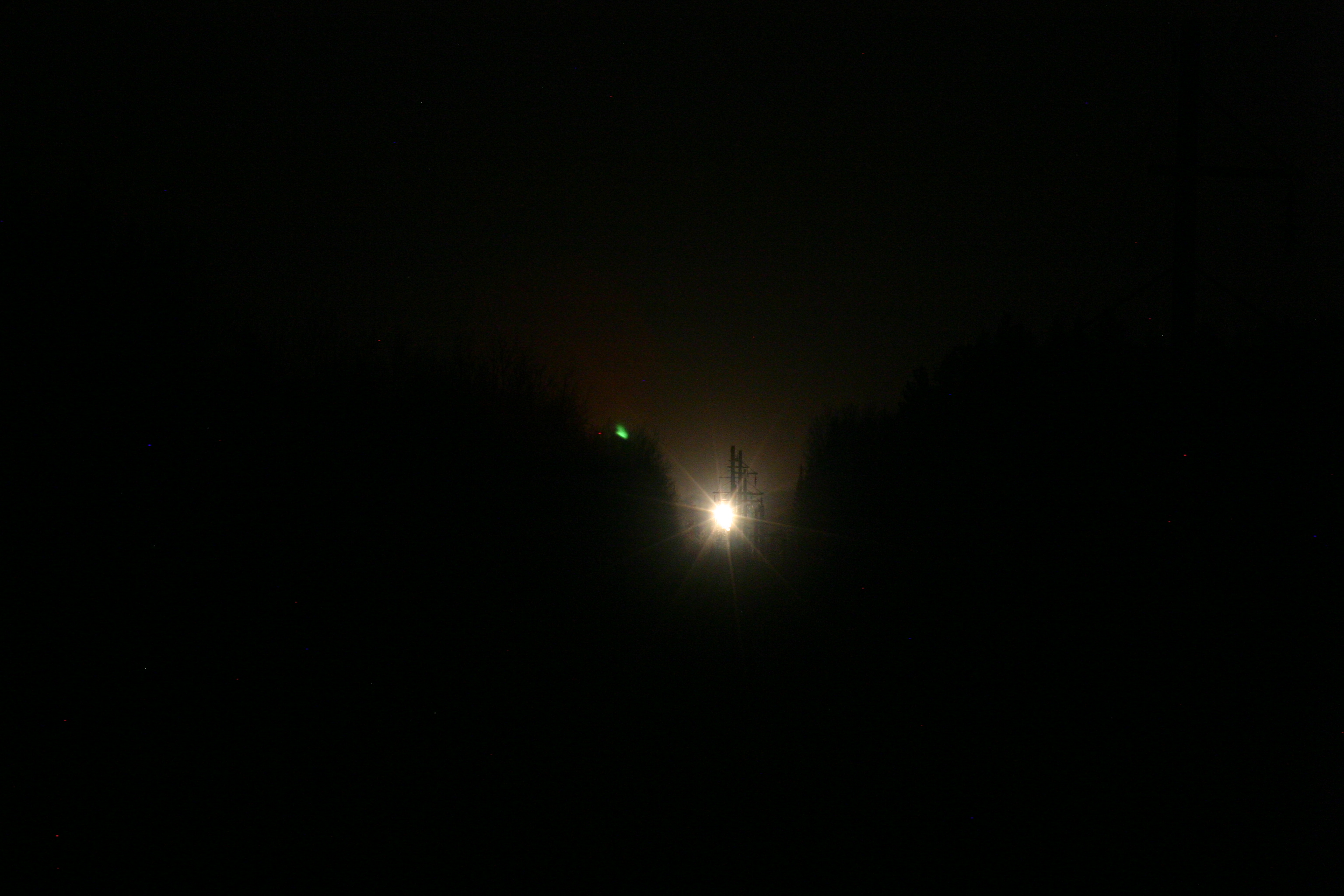
The Paulding Light has glowed in a valley near Watersmeet, Michigan since 1966, said to be a dead brakeman's lantern. In 2010 a team of students made it appear on command and proved what it was. Families still drive in to watch it anyway.
In a dark valley near Watersmeet, in Michigan's western Upper Peninsula, a light shows up. People have driven out to a pull-off on Robbins Pond Road to watch it since 1966, when a group of teenagers reported it to the local sheriff. It floats out over the trees, sometimes pale, sometimes flaring up bright. It also goes by the Lights of Paulding and the Dog Meadow Light.
The story most people tell is about a railroad brakeman. He was killed, they say, trying to stop a train from hitting railcars stalled on the tracks, and the light is his lantern, still swaying out there in the dark. Others say it's the ghost of a murdered mail courier, or a grandparent walking the valley with a relit lantern, looking for a lost grandchild.
In 2010, a Michigan Tech student optics group went out to find what it actually was. They parked a car on a stretch of US-45, about 4.5 miles northwest, and radioed a team watching from the overlook. Every time the car crested a particular hill, the ghost light brightened. Every time it dropped behind the hill, the light went out. To pin it down, they sent a member onto US-45 with the hazard lights flashing, and the overlook team confirmed they could see it. Through a telescope they could read the headlights of passing cars, and even an Adopt-a-Highway sign in the line of sight.
The light was traffic. A layer of still air over the valley, most stable near sundown, was bending the headlights and tail lights 4.5 miles back toward the watchers, the same way a hot road throws up a mirage. The brighter flares had an answer too. "I think that the occasional spectacular lights happen when a cop pulls someone over," said Jeremy Bos, who led the investigation. And the light that holds still and then seems to wander is the eye itself, inventing motion out of a single point in the dark.
It was about as airtight as a debunking gets. It changed nothing. The sign telling the legend is still up. Families still drive in from out of state and set up lawn chairs. And longtime watchers still tell reporters the students didn't see the real Paulding Light. Bos went back in 2017 and made the point plainly: unless the road moves or the highway gets rerouted, the light will always be there.
That, in the end, is the part that unsettles. The valley keeps producing the light on schedule, and people keep coming to read a dead man's lantern into it. "It's hard to change a belief," a Michigan Tech psychologist said in 2017, "especially when one is invested in that belief emotionally."