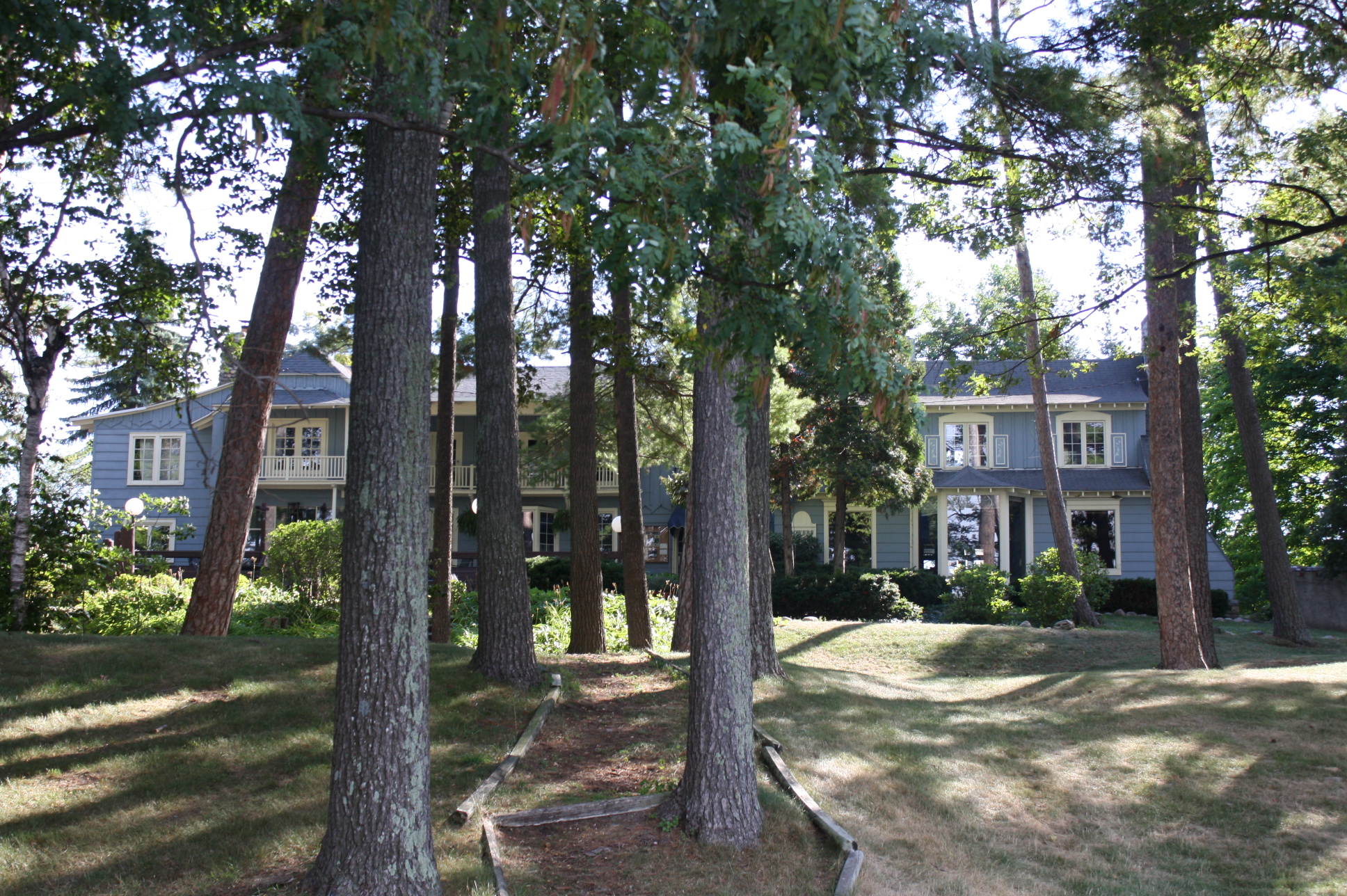
Staff at the Bowers Harbor Inn near Traverse City, Michigan keep seeing a calm, elegant Victorian woman in the downstairs mirror and on the stairs. The legend says she hanged herself in spite. A local historian pulled the records and found almost none of it was true.
At the Bowers Harbor Inn, a mansion-turned-restaurant on Old Mission Peninsula near Traverse City, Michigan, the woman staff keep seeing is calm. She is elegant, dressed in late-Victorian clothes, and she turns up most often in the mirror of the downstairs ladies' room, on the staircase, and in the dining rooms after closing. Waitstaff describe a woman standing behind them in the glass who isn't there when they turn around.
That gentleness is the problem, because the legend says she should be furious.
The story everyone told was this: a jealous, heavyset wife named Genevieve Stickney, after her husband left his fortune to a young nurse, hanged herself in the mansion's elevator shaft. In 2014, historian Julie Schopieray went looking for her in the paperwork — birth records, the marriage license, the will, a passport. The woman's name was never Genevieve. It was Jennie Eveline Stickney. "It was never Genevieve," Schopieray found; the wrong name appears only on a death certificate signed by a physician who didn't know her.
She didn't hang herself either. Jennie died in March 1947 of heart disease and diabetes, in the couple's winter suite at a Grand Rapids hotel. And she died first — her husband Charles outlived her by two years, the exact inverse of the widow-takes-her-own-life premise the legend leans on. The elevator that the story turned into a gallows was installed because Charles used a wheelchair, likely the first residential elevator in the region. The couple had no children. They left their money to a nurse out of gratitude, not the scandalous affair the legend invented.
"Sadly, this spiteful gossip became the local legend," Schopieray wrote.
Jennie had bought the farm on Old Mission Peninsula in 1909, and the place was a working fruit operation. She was known for the jams, jellies, brandies, and pies she made from the harvest and served to guests. The mansion took its present form in the late 1920s, after a fire, designed by a firm that included her own nephew. Nothing about the documented woman — the cook, the farm wife, the widow who died quietly of an old woman's diseases — matches the figure the legend built.
The building now holds the Mission Table restaurant and the Jolly Pumpkin brewpub in the old barn. Staff still report lights switching back on after closing, the elevator moving on its own, doors popping open, faucets running by themselves.
Every dramatic detail of the legend has been dismantled on paper. The woman in the mirror stayed anyway, and she looks nothing like the one the story made up.