The Castle Museum in Saginaw, Michigan keeps a foggy woman staff call the Lady in Gray, seen most in the basement and the archive room. She has no death story, no name. The building was only ever a post office.
The Castle Museum in Saginaw, Michigan keeps a woman that nobody can name. Staff call her the Lady in Gray, a foggy female figure they see most often in the basement and the archive room. Employees are the ones who report her, usually when they're down there alone with the collection.
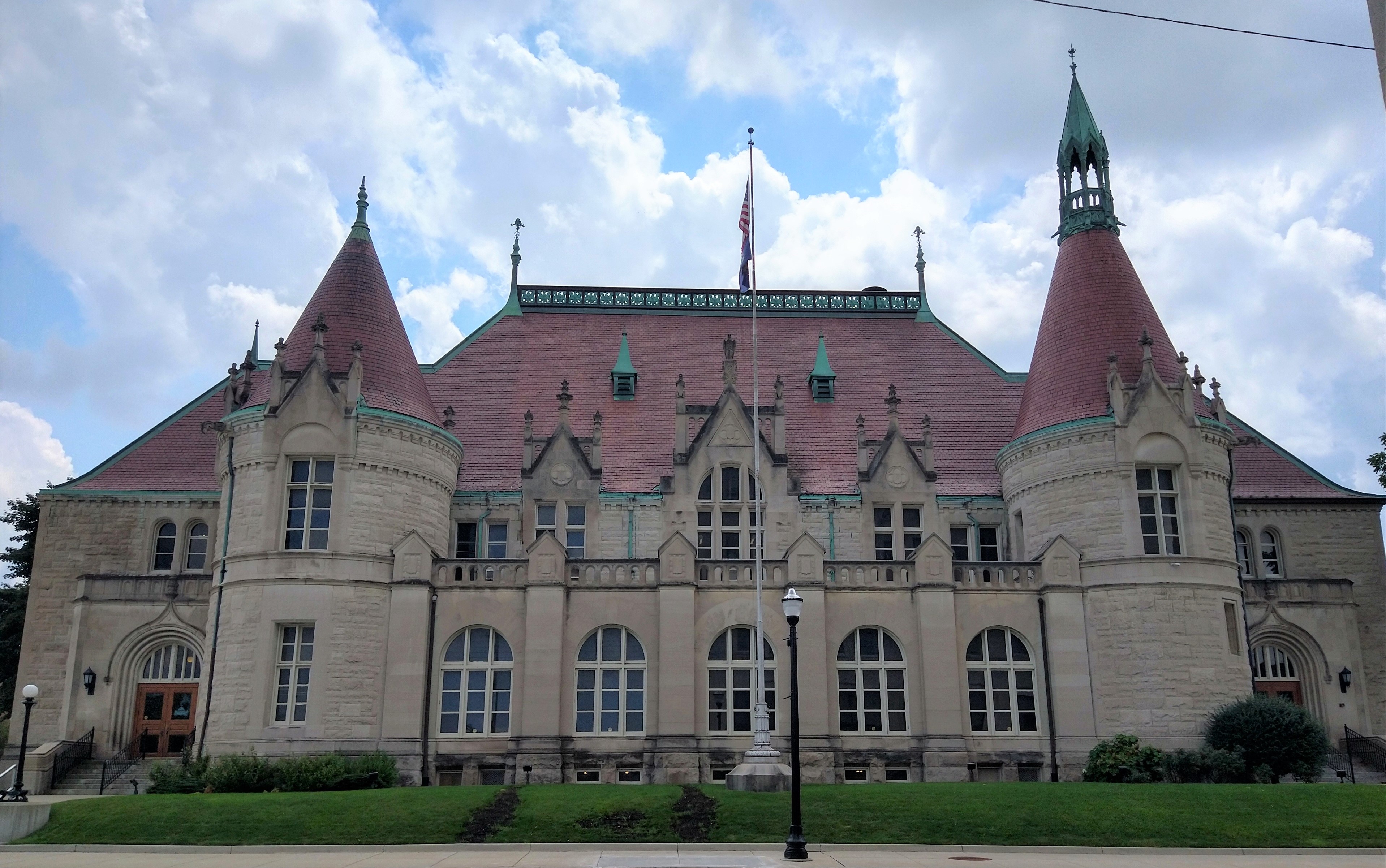
The strange part is what the building was. It was never a mansion, never a hospital, never anything that should leave a ghost behind. It opened on July 3, 1898 as a United States post office. William Martin Aiken, the Supervising Architect of the Treasury, built it to look like a French château dropped into downtown Saginaw, corner turrets and a steep red roof and high arched limestone windows, because he wanted it to evoke the French fur trappers who first settled the valley. For decades, the only thing inside it was the mail.
It nearly came down twice. A demolition proposal in 1937 turned into an expansion instead, new wings and a mail-sorting room added while the Federal Avenue facade was kept; a tower on the South Jefferson side was taken down during the work. After the postal service moved out, the place became known as the Castle Sub Station, and when a federal office building went up around 1970, the community fought for the old post office a second time. It was handed to Saginaw County and reopened as a museum.
It holds more than 150,000 artifacts now, a 1914 Saginaw cyclecar and the county's lumbering history, listed on the National Register of Historic Places since 1972. Through all of it, no one died here that the record can find. No fire, no murder, no tragedy. A working post office, then a museum, and that is the entire documented story of the building.
The Lady in Gray came anyway. Lights switch on and off on their own. A woman's voice turns up in a room with no one speaking. In March 2019, two visitors were climbing the circular staircase toward the lookout portals in the tower, a staircase reopened after roughly 40 years closed off, when both of them, at the same moment, felt suddenly sick. "The feeling was so strong that we were unable to continue," one wrote. They turned back and left the area, and the moment they did, it passed. "The nauseousness cleared up as soon as we left."
The building has held onto her for years. Nobody has ever matched a name to the woman, or found a reason for her to be there at all.