Bara-Hack

👻 other

Pomfret, Connecticut · Est. 1778

👻

The Ghost Story

Deep in the Ragged Hills of northeastern Connecticut, down an old cart path through dense forest, lie the ruins of Bara-Hack—the "Village of Ghostly Voices." The name, Welsh for "breaking of bread," honors the heritage of its founders, though the settlement's haunted reputation has long outlasted any bread broken there.

In 1778, Jonathan Randall and Obadiah Higginbotham fled the Randall homestead in Cranston, Rhode Island, after British advances during the Battle of Rhode Island made coastal living too dangerous. Randall had purchased 220 acres in Pomfret two years earlier; Higginbotham bought adjoining land from John Trowbridge. Together they carved a self-sufficient community from the wilderness along the picturesquely named Nightingale Brook.

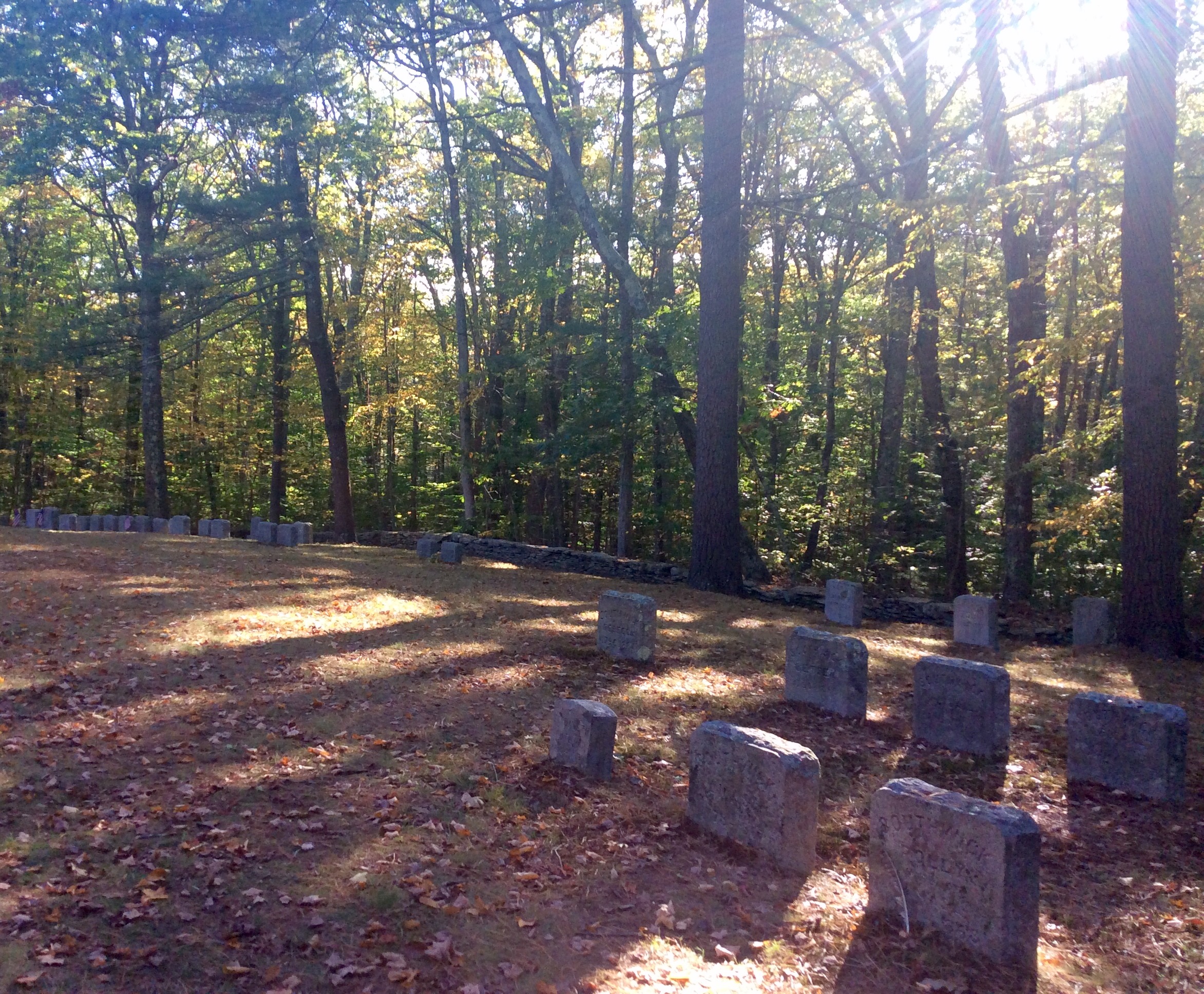
The families built homes, a waterwheel-powered gristmill, and established Higginbotham Linen Wheels—a company producing flax spinning wheels for the textile trade. The settlement grew to include fine family homes, slave quarters, and a shared cemetery now known as the Randall-Botham burial ground. According to "Early Homesteads of Pomfret and Hampton," the Randalls were quite well-to-do and brought enslaved people with them from Rhode Island, some of whom are buried in unmarked graves in the family cemetery.

The haunting began while Bara-Hack still thrived. The Randall family's enslaved workers reported the first supernatural encounters: at dusk, they saw ghostly figures reclining in the branches of an elm tree near the burial ground. They believed spirits gathered there after dark and refused to venture out at night. Over the decades, sightings of a phantom infant and other apparitions in that same elm became local legend.

Some attribute the haunting to an older source. Before European settlement, the Nipmuc people inhabited these lands. As colonists encroached, the Nipmucs allegedly attempted to frighten settlers away with nighttime chanting and whooping in the woods. When intimidation failed and they were driven from their ancestral territory, tribal elders are said to have cursed the land.

The settlement thrived modestly for nearly a century, but industrialization and larger textile mills rendered small-scale spinning wheel production obsolete. The founding families died off or moved away. The last resident was Betty Randall, who died in 1893 and became the final person buried in the cemetery. By then, Bara-Hack was already abandoned.

But the sounds of daily life never stopped.

Visitors began reporting auditory phenomena: children laughing at play, mothers calling their names, dogs barking, cows lowing, and the rumble of heavy wagon wheels along roads that had long since vanished into forest. In 1927, Pulitzer Prize-winning author Odell Shepard visited and wrote: "Although there is no human habitation for a long distance round about... there is always a hum and stir of human life." He noted that sounds "were able in this place to get round that incomprehensible corner, to pierce that mysterious soundproof wall that we call Time."

The most extensive investigation came in 1971-72, when seminary student Paul F. Eno led a team of researchers to Bara-Hack. Harry Chase, a longtime Pomfret resident, escorted them down the overgrown cart path to the ruins. During four visits over two years, Eno's group experienced phenomena that launched his five-decade career in paranormal research.

Upon entering the settlement, they felt an overwhelming sense of depression. Though the village site was over a mile from any inhabited home, they heard dogs barking, cows lowing, and human voices from the dense woods. Children's laughter echoed through the trees—but when they attempted to record it, the tape captured nothing.

Most remarkably, Eno documented visual phenomena in the cemetery. "For more than seven minutes we watched a bearded face suspended in the air over the cemetery's western wall," he wrote in Fate magazine in 1985, "while in an elm tree over the northern wall we clearly saw a baby-like figure reclining"—the same phantom infant the enslaved workers had witnessed two centuries earlier.

Today, the elm has succumbed to age, but the stone foundations, millpond bridge, and cemetery remain. Bara-Hack is closed to the public—private property owned by the Townshend family, who grew weary of ghost hunters trespassing. Those wishing to visit must contact Pomfret Town Hall for permission, though approval is rare. The voices, it seems, prefer their solitude.

Researched from 12 verified sources including historical records, local archives, and paranormal research organizations. Learn about our research process.

More Haunted Places in Connecticut

🏛️

Boothe Memorial Park

Stratford

🏚️

Whitehall Mansion

Mystic

🏨

The Griswold Inn

Essex

🎭

Palace and Majestic Theaters

Bridgeport

🏛️

Mark Twain House

Hartford

🎭

Garde Arts Center

New London

View all haunted places in Connecticut

More Haunted Others Across America

Blanchard Springs Caverns

Mountain View, Arkansas

Freetown-Fall River State Forest

Freetown, Massachusetts

St. Elmo Ghost Town

Nathrop, Colorado

The Cuban Club

Tampa, Florida