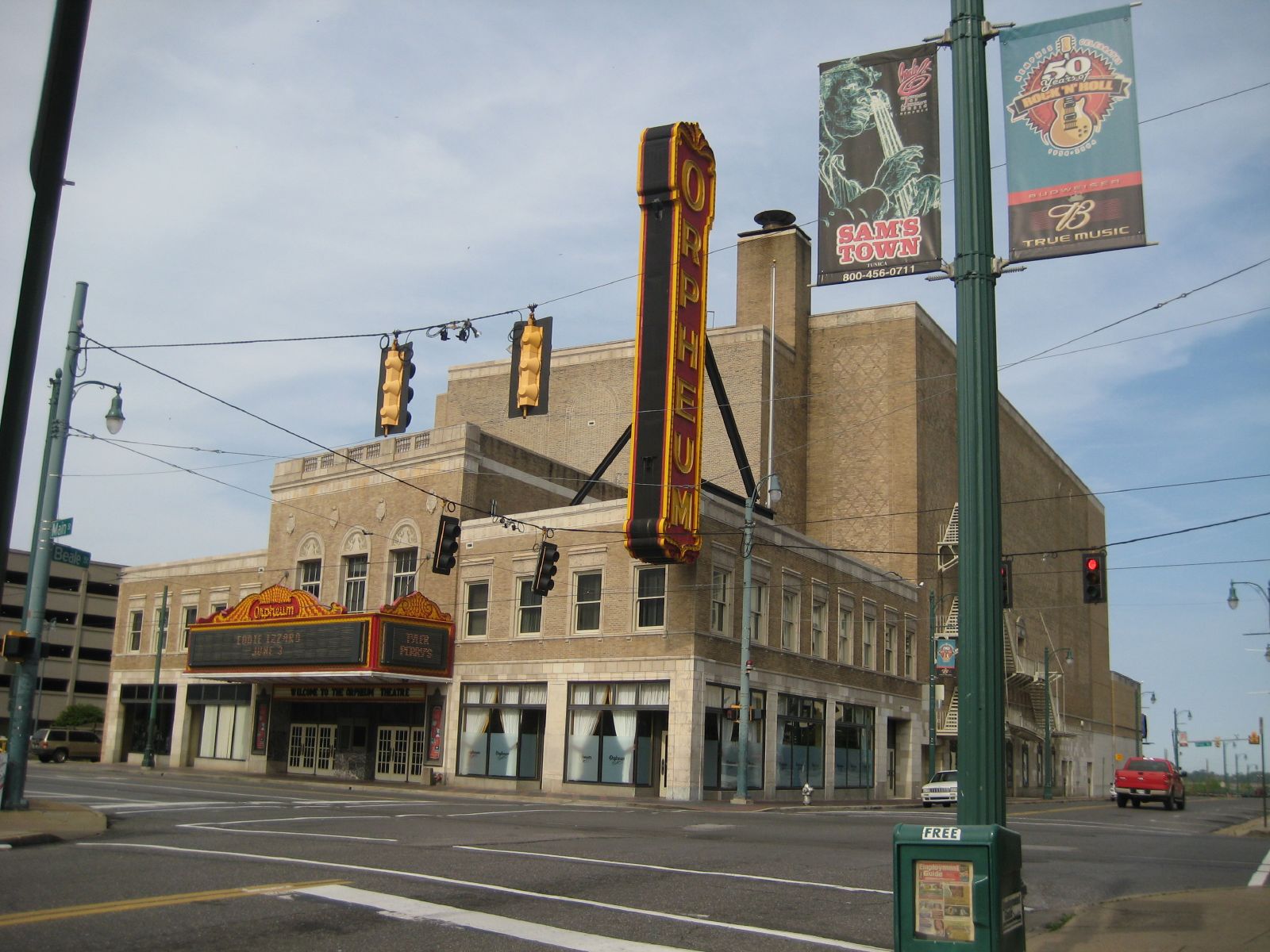
For 50 years, performers and ushers at the Orpheum Theatre in Memphis have run into a girl in a white dress on empty nights. Her name is Mary, she has her own seat number, and the people who work there treat her less like a ghost than a colleague who never clocked out.
Seat C-5 on the mezzanine at the Orpheum Theatre in Memphis is taken. It belongs to a girl named Mary — about 12, brown hair in braids, a white dress gone out of fashion a century ago. Performers and ushers have found her there on empty nights for roughly 50 years, close enough to bump into. In the way the staff tell it, she isn't so much a haunting as a colleague who never clocked out: she runs the aisles, opens doors, and plays the house organ when the bench is empty.
Where she came from, nobody can prove. The story has her as a child killed near the theatre in the 1920s, and even that splits two ways: some say she was struck on Beale Street out front around 1921, others that she died in the fire that gutted the building in 1923. A death certificate or a period newspaper account would have put a real name to the girl, and none has ever come to light. The backstory itself traces to a 1979 session, when a Memphis State University parapsychology professor named Lee Sutter is said to have worked a Ouija board in the dark house while the organ played, and the board spelled out "Mary" and a tale of a street accident. That night made the girl; there's nothing under her but the story it told.
The most-repeated sighting comes from the same spring. In April 1979, a woman named Teresa Spoone stood in the lobby while organist Vincent Astor played "Never Never Land," the song from Peter Pan. She said a young girl's shape danced near the entrance as the room went cold, and that the child seemed to know her. "It was like she was calling me," Spoone said. "That really scared me because I felt like if I went near her I'd never come back the same."
People had been taking Mary seriously well before that. A touring company doing "Fiddler on the Roof" grew uneasy enough in 1977 to ask for a séance on a balcony above the stage. A repairman, the story runs, gave up on a pipe organ he'd called unfixable, stepped out for coffee, and came back to find it playing. Staff say Mary has company up there too. The figure who waits in the seats to walk her out goes by David.
The through-line in all of it was Astor. He came to the Orpheum in 1976 as its organist and historian and told Mary's story for the rest of his life, cold spots and all, at the same Mighty Wurlitzer she was said to play. He died in January 2023, at 69. The seat is still C-5. The man who spent 47 years telling you who sits in it is gone.