A woman in white has drifted Old Gray Cemetery in Knoxville since the 1880s, always seeming to search for something. Underneath the legend sit a real 1879 murder scandal and three ruined lives, and one grave here is missing its marker.
By the full moon of April 1889, grown men in Knoxville had begun reporting the same figure the city's schoolchildren had described for years: a woman in white, drifting the grounds of Old Gray Cemetery and the pine woods beside it, north of downtown. One of the men left an account. "I saw a woman in white leaning against one of the trees," he said. "She seemed to be looking for something, but as I approached her, she suddenly vanished."
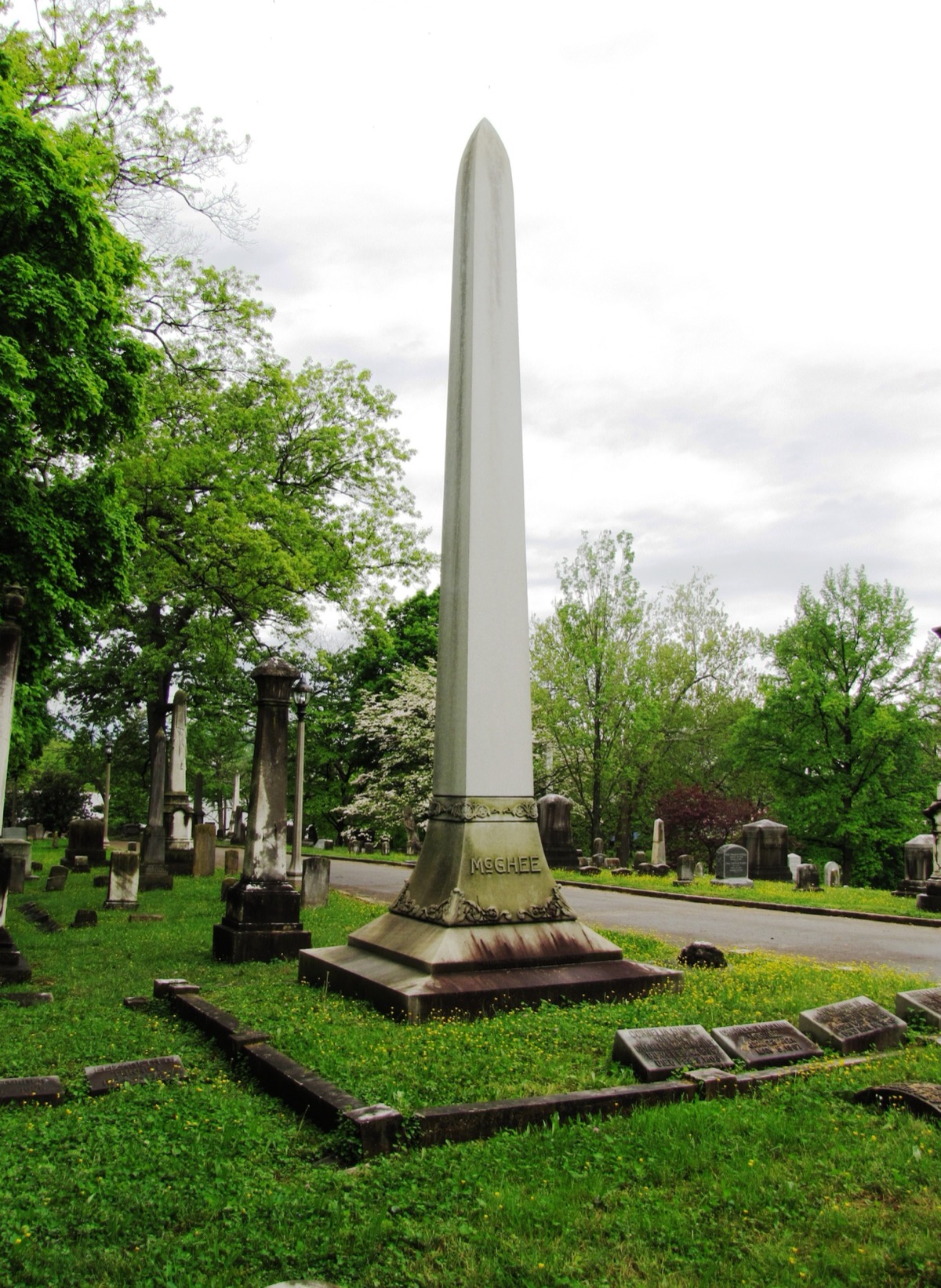
Old Gray is a genteel place. It's a garden cemetery downtown, full of Victorian monuments, that the city used as a public park in its early years and still keeps as an arboretum. What sits underneath its most-told ghost is nothing so pleasant.
On the evening of August 25, 1879, a brick manufacturer named Martin Woody was shot in the lower stomach inside the boarding-house room of Annie Lowe, a young woman from Coal Creek who had buried her infant the week before. Woody was Annie's married lover. "I'm a dead man," he said, the story goes, and he was right. After she shot him, Annie turned the pistol on herself, near the heart, and lingered in agony for more than 20 hours before she died.
Woody's widow outlived the scandal, but not by much of a life. Mary Crush Woody spent two decades addicted to morphine and shut out of the polite Knoxville society she'd once belonged to. She was found dead in her bedroom in March 1899 and buried at Old Gray, beside her husband.
The Lady in White, who first appeared to schoolchildren in the 1880s, folds all three of them into one searching figure: the dead mistress, the ruined widow, and the man they shared. She isn't the only shape people report here. Teenagers in the mid-1900s gave the cemetery a darker one, a robed apparition they called Dark Aggie, said to whisper your name before it appears near sundown and chase you toward the gate. But that name is borrowed, lifted from a famous statue in Maryland, and the story is thin. The woman in white is the one with a real grave underneath her.
And that grave is where the story turns strange in a way no legend arranged. Mary Crush Woody lies beside her husband. But Martin's marker isn't there. His gravestone disappeared from Old Gray at some point, and no one records when it went, or who took it, or why. The Lady in White was always the same figure, searching the grounds for something. Whatever she's after, the cemetery is genuinely missing a stone.