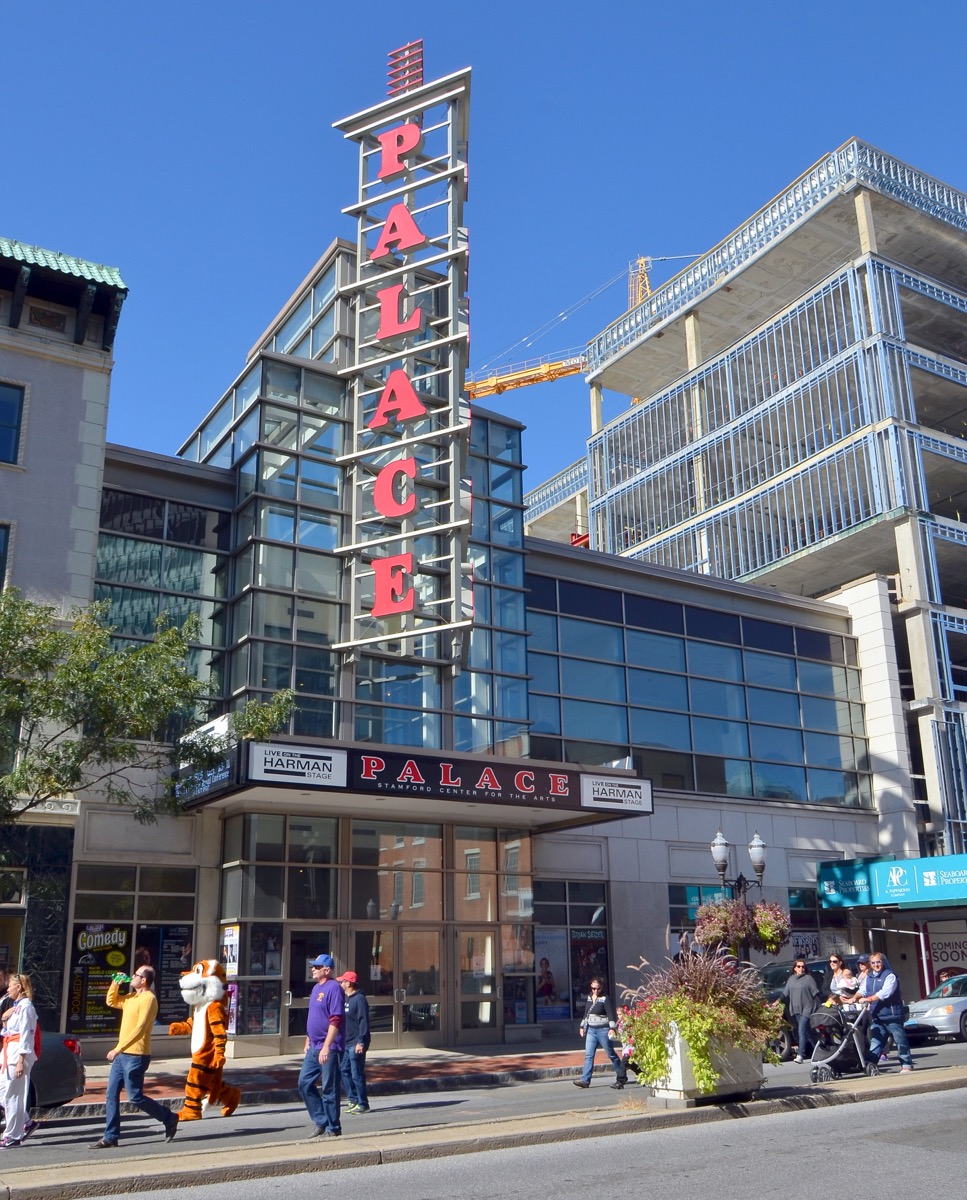
The Palace Theatre in Stamford, Connecticut is a working stage with a season booked through 2026 — and an owner who died in 1978 and reportedly never left. Staff say Mary Vuono still walks the aisles, so they keep a light burning for her.
The Palace Theatre in Stamford, Connecticut, keeps a light burning in the dark house every night, and the staff have a name for who it's for. They call her Mary. She built the place, ran it for decades, and by their accounts she still makes her rounds.
Mary C. Vuono started small. She took over the 400-seat Strand in 1914, and in 1920 her family bought the old Stamford Opera House for around $200,000. Then she wanted something grander. In 1927 she hired Thomas W. Lamb — the architect behind Madison Square Garden — to build the Palace next door, on the lot where the Grand Opera House once stood. It opened June 2, 1927, billed as "Connecticut's Most Magnificent." The Three Stooges played it. So did Lucille Ball and Jimmy Dorsey.
Vuono ran her theaters until she died in 1978. The Palace went dark two years later, in 1980. By some accounts she lived above the theater, though that detail rests on local lore rather than any record. The building was restored and reopened for live performance in 1983, and it's been a working stage ever since.
The staff say she's still here. They report whistling in halls that should be empty. Shadows that move where the lights can't account for them. And the strangest one: the spring-loaded seats folding down and snapping back up in empty rows, sometimes in sequence, as if someone is walking the aisle and sitting briefly in each chair.
The theater leans into it rather than denying it. Its director has said that all theaters leave a light on for their ghosts, and that the Palace believes it's one of those theaters — that Mary has been "very friendly, just making sure that we're taking good care of her home."
In 2012, a paranormal group spent four hours in the building with around 40 people, searching for the haunting. They never made their findings public.
So the light stays on. Not as a memorial — as a courtesy. For the owner who's still making the rounds.