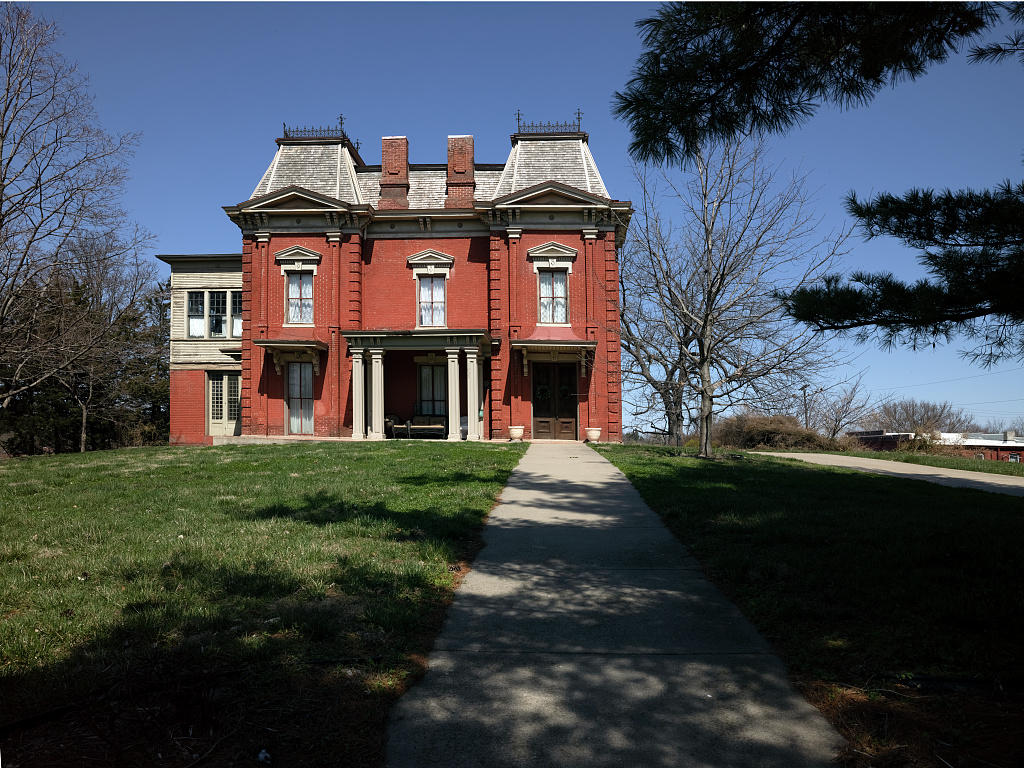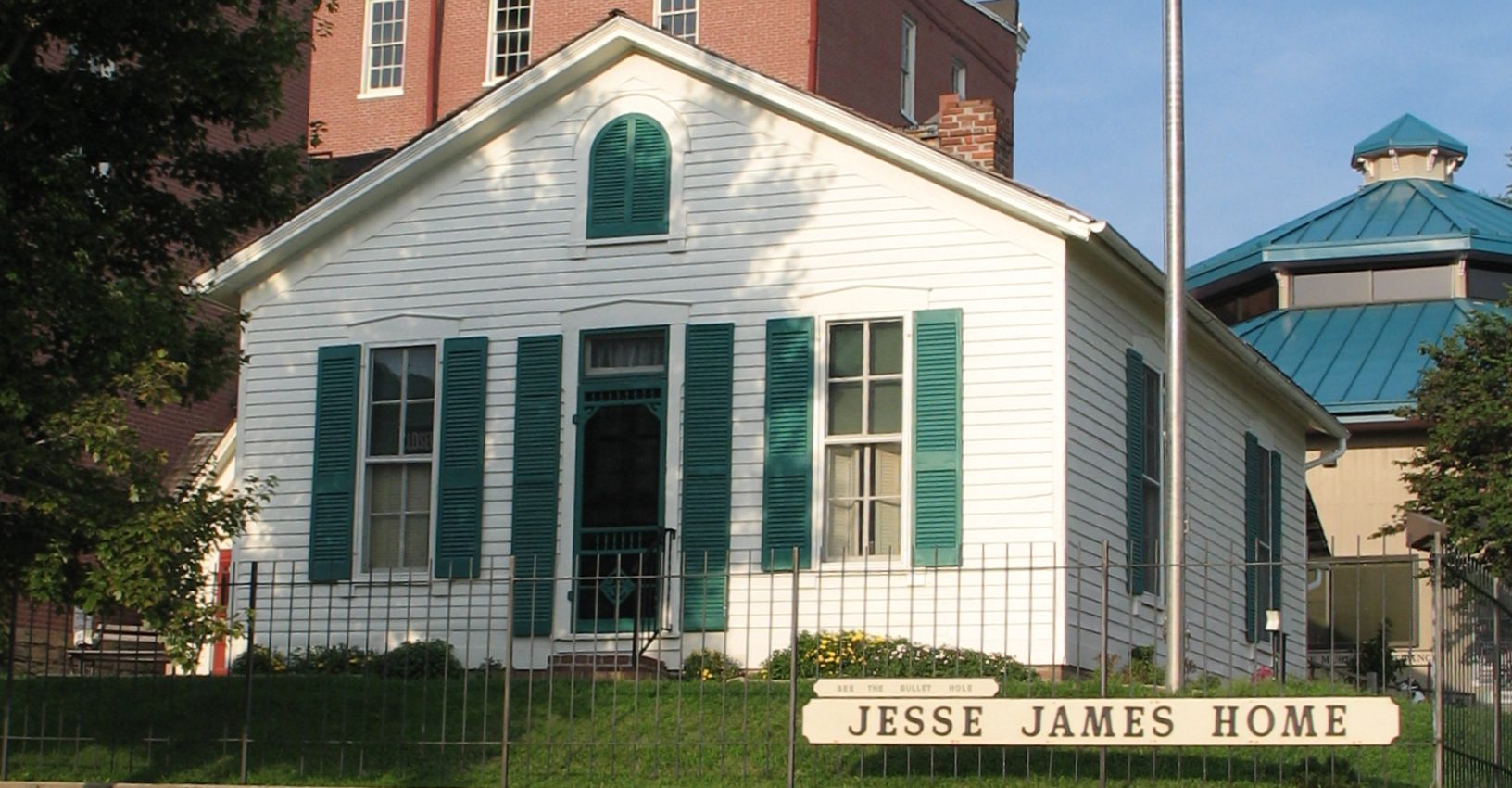
The Jesse James Home in St. Joseph, Missouri keeps the room where Bob Ford shot the outlaw in 1882. The haunting isn't a ghost who paces. It's a house that seems to lose its own century — once, a visitor opened the front door onto a field that wasn't there.
A "God Bless Our Home" needlepoint hangs over a bullet hole in the north wall of the Jesse James Home in St. Joseph, Missouri. That needlepoint is the reason the most wanted man in America was standing on a chair, gun belt off, with his back to the room, on April 3, 1882. He was straightening it. Bob Ford shot him once behind the right ear to collect a $10,000 reward, and James's own family was in the house when he dropped.
Visitors have groped at that bullet hole for 50-odd years, working it into a fist-sized blob, until the museum sealed it behind a screwed-down pane of glass. Here's the part that comes later: the hole isn't from the shot that killed him. In 1995, forensic scientists exhumed the body and found a single entrance wound behind the right ear and no exit wound. The fatal bullet never left the skull. The wall hole came from a different gun entirely. The museum displays the rest of the autopsy plainly now — coffin handles, a bullet pulled from his right lung, a cast of the skull with the entry wound in it.
The haunting people tell about this house isn't a ghost of Jesse at all. It's a glitch in the building's own time. The story that stuck comes from one visitor in the early 1990s who couldn't see a bullet hole her friend was pointing at, bumped into furniture that wasn't there, watched two figures flicker through a kitchen that no longer exists, and then opened the front door onto a vanished street. No pavement. Only grass, an open field, and a dirt road running off into it, as though 1882 had risen back up through the floor. One woman, one account, no name, never matched by anyone since. But it fits what the place is: not somewhere a ghost paces, but somewhere that misplaces its own century.
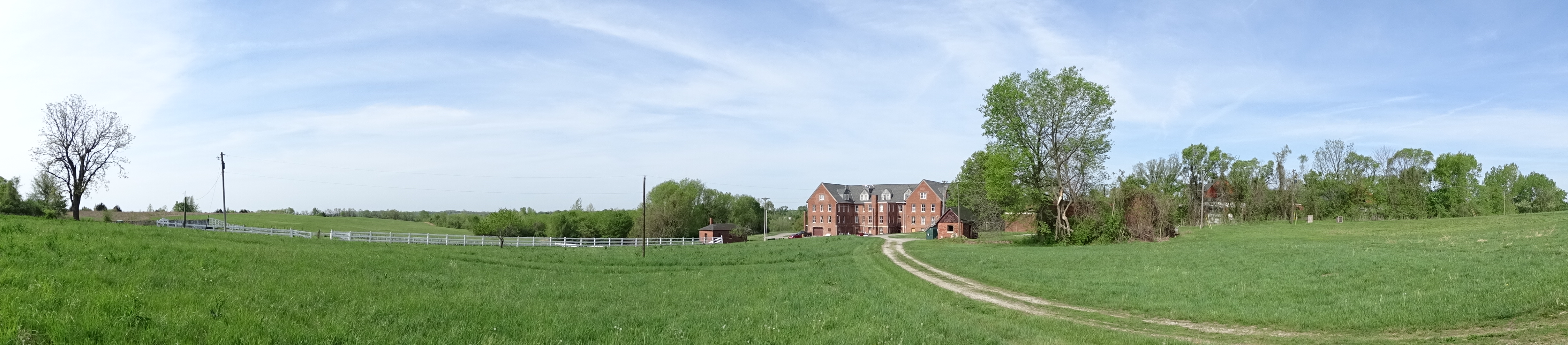
The lore doesn't stay inside the house, either. At the family farm in Kearney, where James was first buried in the front yard, staff and visitors report low voices, horses that won't settle after dark, and lights moving through the farmhouse with no one in it. Joe Nickell, a skeptic who looked into all of it, put the farm down to wind, imagination, and outside light catching the window glass. "Before trying to explain something," he wrote, "first be sure that it really occurred."
The crime scene itself never stayed put. The house started on Lafayette Street, moved to the Belt Highway in 1939 as a tourist draw, then moved again in 1977 to the grounds of the Patee House Museum. The street that woman watched vanish has, by now, gone somewhere else too.