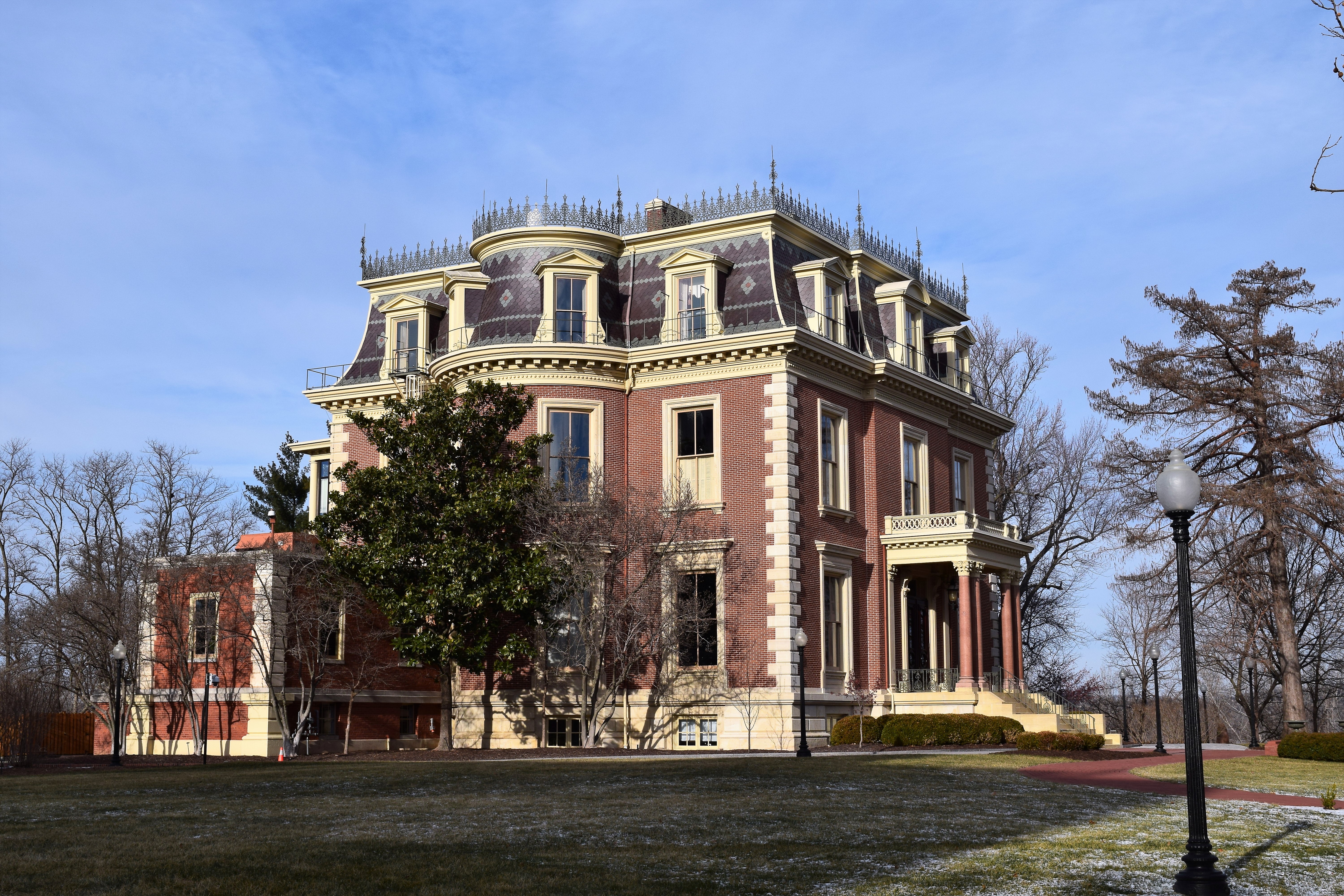
A workman at the Missouri Governor's Mansion in Jefferson City came down from the attic in 1983 and asked about the little girl who'd kept him company up there. He was told the governor had no children. He never went back to finish the job.
In 1983, a repairman working in the attic of the Missouri Governor's Mansion in Jefferson City came down and asked about the little girl who'd been playing up there with him all day. He was told the governor at the time, Kit Bond, and his wife had no children. He left and would not go back up to finish the work. As the story is told, the girl in the attic hasn't been seen since.
The staff know who he means. They call her Carrie.
Caroline Allen Crittenden was nine years old when diphtheria swept the town in 1882, the year her father, Thomas Crittenden, served as governor. She caught it and died inside the mansion. The official mansion record names her the only child ever to die in the building. Her three brothers were grown by then; she was the one still small enough to run the halls and play in the attic. Some accounts put the year at 1883, but the mansion's own record says 1882.
Her short life ran straight through one of the state's bloodiest feuds. Her father was the governor who put a price on Jesse James — popular accounts say $10,000 — and one of James's threatening letters named Carrie herself, a threat to take the governor's daughter. Robert Ford shot Jesse in the back on April 3, 1882. Six months later, Frank James walked into the mansion's library, the room where Carrie's father ran the state, and surrendered to him in person. Carrie was gone by then. She never saw the feud she'd been dragged into come to its quiet end.
What people report now is small and domestic, and it clusters in the attic and upper floors, near where the repairman said he'd seen her. There are many accounts of a child's rocking horse found rocking on its own in one of the attic bedrooms, though no one claims to have caught it in the act. Objects move on their own. Per the Haunts of Missouri account, there are "ripples of laughter that seem to move up and down the stairs, and footsteps that are heard in carpeted areas where actual footfalls would be silent." The mansion's docents point to Carrie as the one behind it.
Out front stands a bronze fountain, raised in 1996, with a little girl at the top of it. It was dedicated to the health of Missouri's children, and the girl is Carrie. Most people in Jefferson City have forgotten she's there. The one child who died in the house has been standing over its lawn for decades, and the town walks past her.