TLDR
James Harrod vanished hunting in 1792, body never found. The pioneer cemetery holds Ann McGinty and 30 others. Quiet haunting, heavy history.
The Full Story
James Harrod walked into the woods on a hunting trip in the winter of 1792 and never came back. No body, no grave, no note. Whether he got lost, was killed by his hunting partner over a land dispute (his own wife's long-standing theory), or was taken by Native raiders, nobody has ever produced a definitive answer. He founded the town. He built the fort. He disappeared. Of all the unsolved Kentucky pioneer mysteries, his is the cleanest.
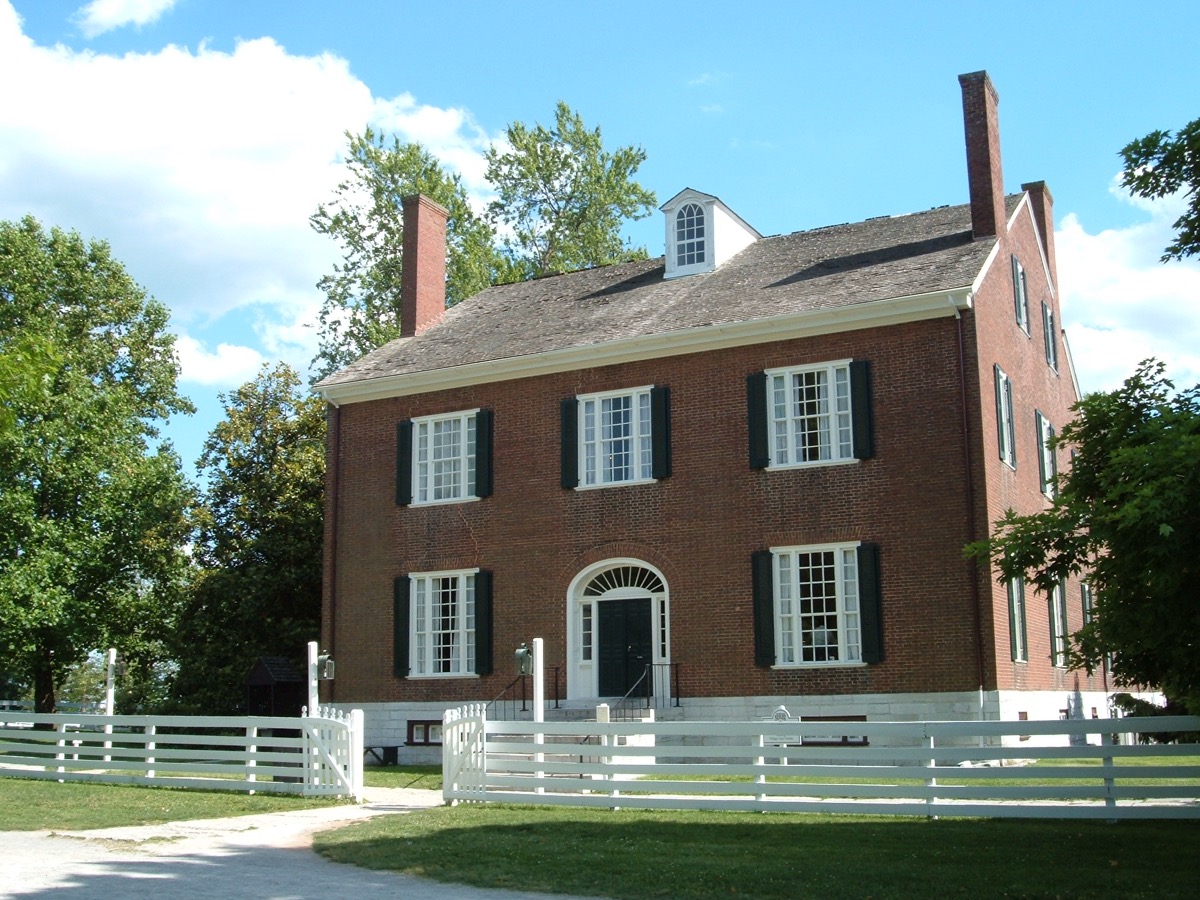
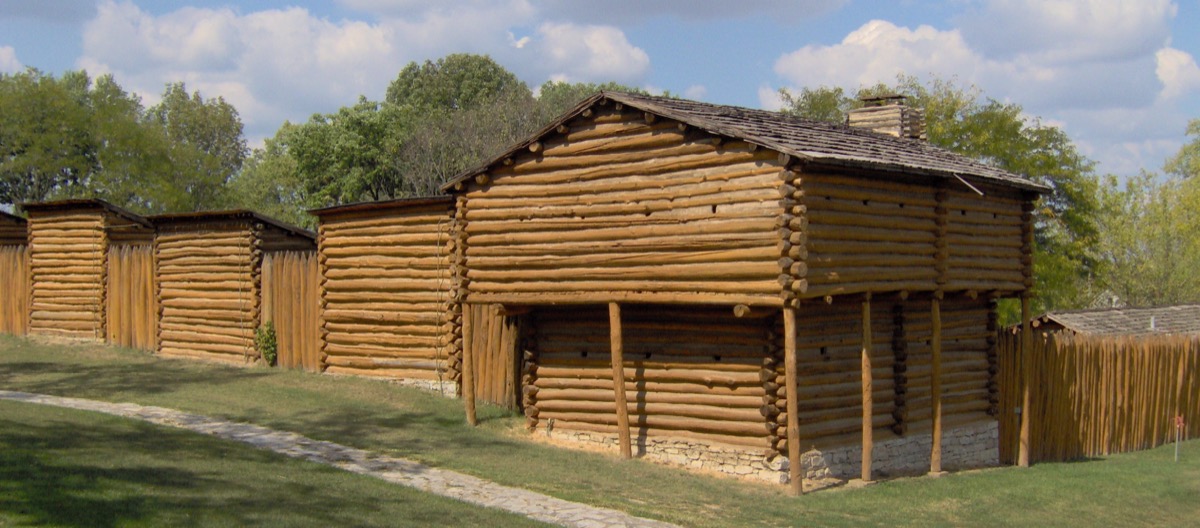
Old Fort Harrod State Park is the reconstruction of that fort, built in 1774 on the site of the first permanent English settlement west of the Alleghenies. The original stockade is gone. What you get now is a careful full-scale replica, the Mansion Museum, the Lincoln Marriage Temple enclosing the log cabin where Thomas Lincoln and Nancy Hanks got married in 1806, and the Fort Harrod Pioneer Cemetery, which is the oldest settler graveyard west of the Appalachians.
That cemetery is where the ghost stories pool. There are thirty-one marked graves, and more unmarked. Ann McGinty is buried there, who brought the first spinning wheel into Kentucky and married four men, each of whom died before her. She died herself in 1815. Her grave is one of the ones people stop at on the ghost walks the town runs out of the fort on Saturday evenings. Guides don't claim she's a specific ghost. They do tell you what people have reported near her stone, which is generally cold air in summer and the occasional glimpse of a woman in a long dress that visitors assume is a costumed interpreter until the interpreter is clearly somewhere else.
The fort itself has the less specific kind of haunting. People hear footsteps on the upper walkways of the stockade when the site is closed. Security has gotten calls about figures on the blockhouses that vanish by the time anyone gets there. One of the McGinty Blockhouse interpreters, who works a loom for tourists during the day, has said on record that she sets up in the morning and finds tools moved from where she left them. Not dramatic. Just moved.
The real weight at Fort Harrod is historical. The pioneers who lived inside those walls were on the frontier of a violent century. Shawnee and Cherokee raids killed settlers and settlers killed them back. Children died of exposure. Women died in childbirth. Men died from axe wounds and musket balls and the simple fact of being in a brand-new settlement a thousand miles from a real doctor. Thirty-one marked graves is a fraction of the real death count on this ground.
Harrodsburg runs a Haunted Frontier event at the fort every October, where costumed reenactors in buckskins and bonnets walk visitors through the stockade by torchlight and tell the hard stories. Sleepy Hollow comes in around the same time, with a fresh staging of the headless horseman. These are performances, not hauntings. But the park books them here because the setting is already charged. You don't need a costumed Ichabod to make a 250-year-old cemetery feel weird. Torches do most of the work.
If you want a place where the ghosts announce themselves, this isn't it. Fort Harrod is a place where the history is heavy enough that you walk out quieter than you walked in. Ann McGinty's stone is the one the Saturday ghost walks circle back to, four husbands and a spinning wheel and a death date of 1815 on one piece of carved limestone. Most visitors read it twice before they move on.
Researched from 6 verified sources. How we research.