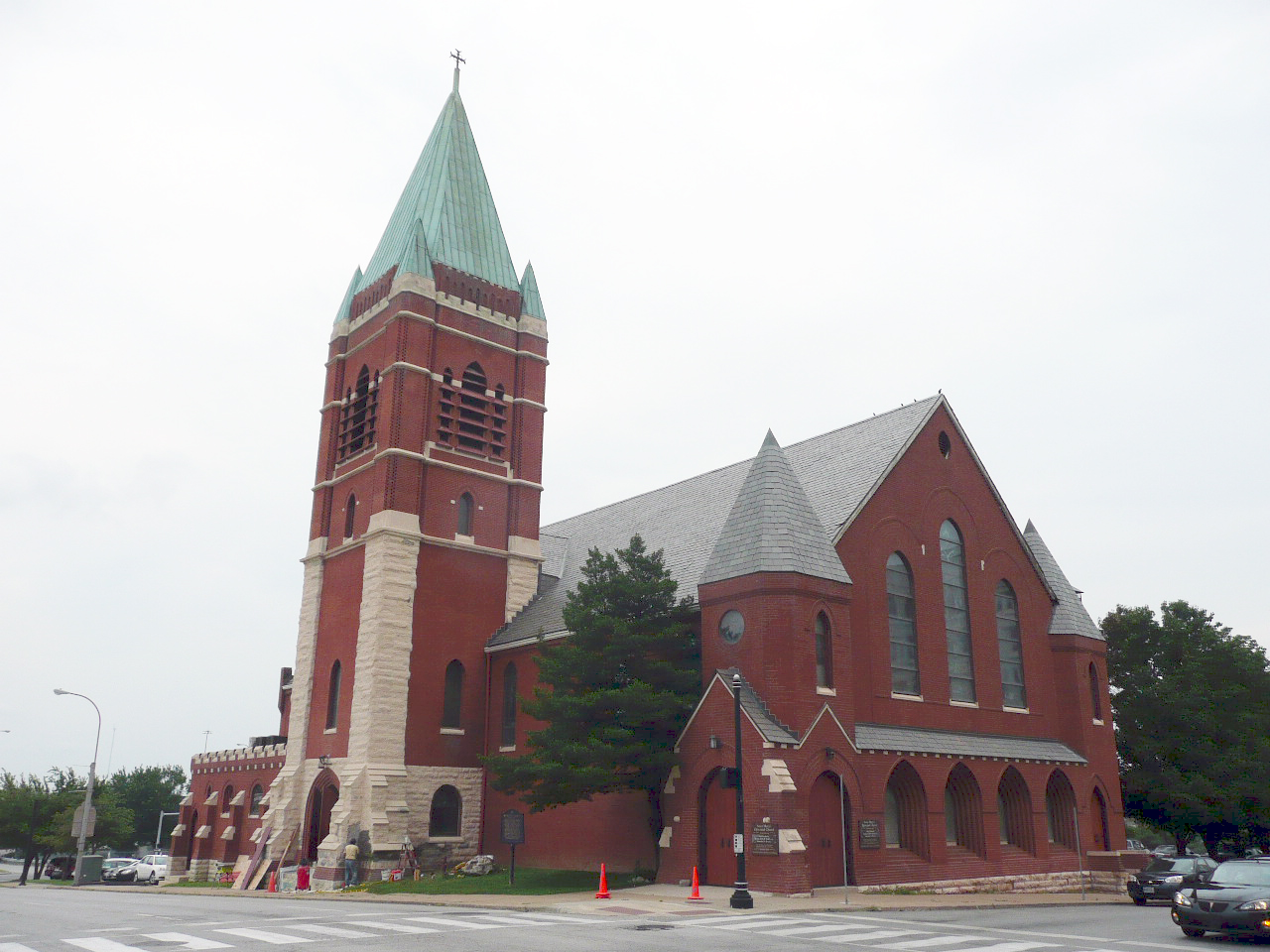
St. Mary's Episcopal Church in Kansas City keeps a priest under its altar — Father Henry Jardine, who died in 1886 wearing an iron chain welded around his waist as penance. In 2000, when crews dug up his bones, the chain was still with them.
In 2000, the parish of St. Mary's Episcopal Church in Kansas City dug up the remains of a priest who had been dead for over a century, so they could finally entomb him beneath the altar. The crews found bits of coffin wood, broken glass, and his bones. They also found a small box. Inside it was an iron chain.
Father Henry Jardine had worn that chain welded shut around his waist. He couldn't have taken it off without tools. A private penance, the story goes, for some guilt of his youth he never named.
The chain was on him when he died, too. Jardine arrived in 1879 and brought incense, candles, altar boys, and confession to a city with no taste for any of it, and he made enemies fast. In 1885 the Kansas City Times ran "Jail-Bird Jardine," airing a youthful prison term, then a follow-up alleging he'd used confession to prey on women. The paper started calling his sacristy the "spankistry."
An ecclesiastical court found him guilty. The church's own historian, who later read the trial records, called it a kangaroo court where witnesses made outrageous claims with no evidence. On the Sunday before the verdict, the vestrymen came to Mass with pistols at their sides, and Jardine led the service wearing a revolver under his robes. His sermon that morning was titled "courage."
He went to St. Louis in January 1886 to appeal. The next morning, the priest he was staying with went to wake him and found him dead in the sacristy of Trinity Church, a handkerchief over his face, a bottle of chloroform beside him, the chain still welded at his waist. The St. Louis medical examiner doubted suicide. The bishop ruled it suicide anyway, which barred Jardine from consecrated ground for the next hundred years.
So his body kept moving. Elmwood Cemetery in 1890. Forest Hill in 1921. And at last, the altar at St. Mary's in 2000.
The people there report him now. Incense in the air with nothing burning, the same kind he used to swing at his high Mass. The feeling of being watched, alone, at night. In the 1990s a longtime member stood in the parking lot and swore he saw a figure on the second floor, and when they went up to look, the door was locked, and noises came from behind it anyway.
The church has never tried to bury the story. In 2004 it threw a $45-a-plate "Historic Haunting" dinner, fake fog and all. "He is quite a legend," its historian said that night. "And sometimes it's hard to know what to believe."