About This Location
Organized in 1796, Grove Street Cemetery was the first private, nonprofit cemetery in the world and one of the earliest burial grounds with a planned layout. The cemetery is surrounded by Yale University and contains 16 of Yale's 22 presidents.
The Ghost Story
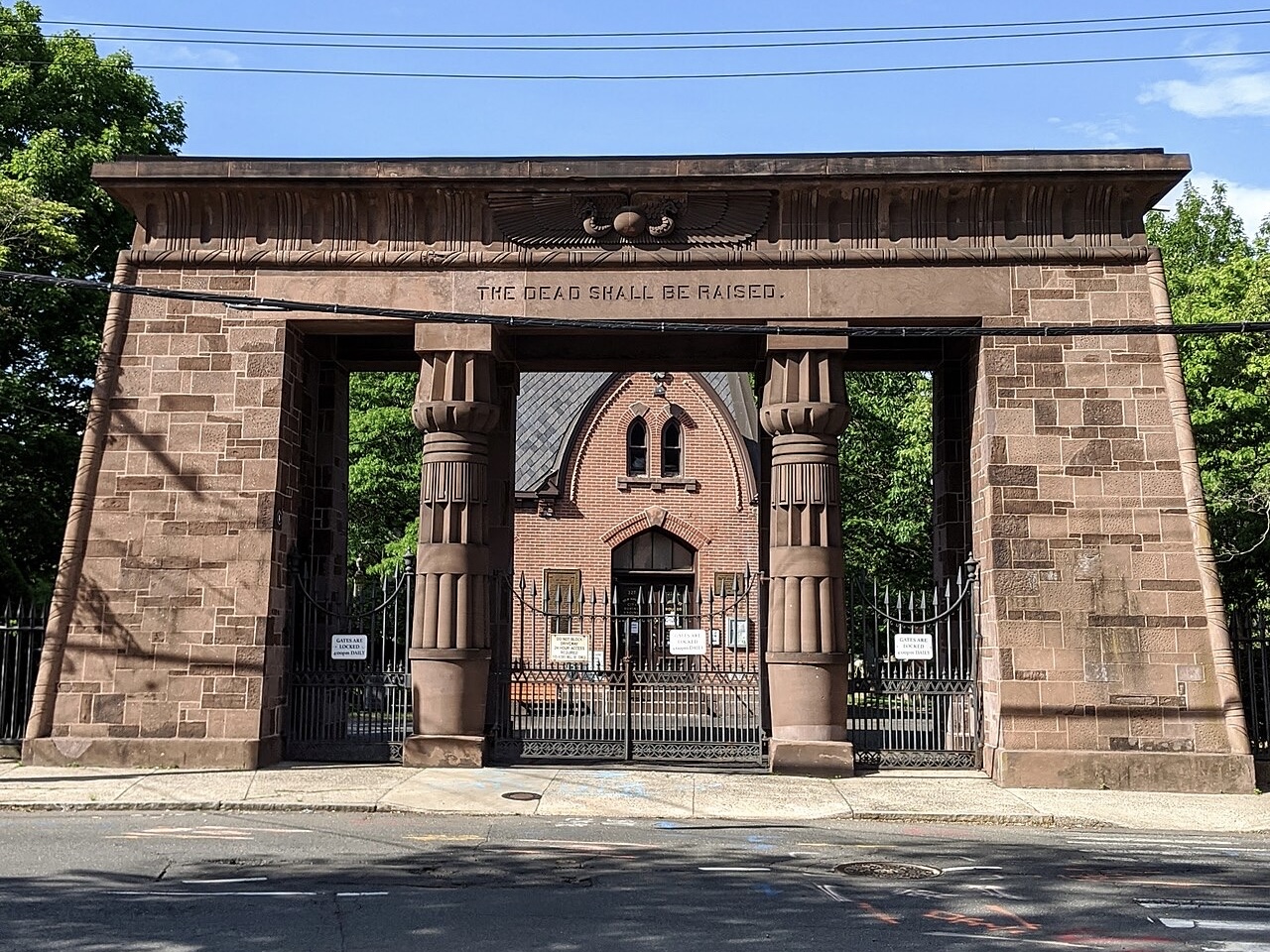
The massive brownstone gateway looms before you, its sloping Egyptian pylon topped with a carved winged orb—the ancient symbol of immortality. Cut into the lintel in bold letters is a proclamation that has unsettled visitors since 1848: THE DEAD SHALL BE RAISED. This is Grove Street Cemetery, America's first chartered burial ground, where Yale's dead share eternal rest with the fathers of the nation—and where the boundary between the living and the departed has never been quite clear.
The cemetery opened in 1796 after yellow fever epidemics overwhelmed the burial ground on New Haven Green, where perhaps 10,000 souls lay stacked in shallow graves. Senator James Hillhouse organized prominent families to create something unprecedented: a planned "city of the dead" with named avenues, permanent family plots, and dignified memorials. When headstones were eventually moved from the Green, the bodies remained behind—their markers now lined alphabetically along Grove Street's rear walls, silent witnesses separated from the bones they once identified.
The Egyptian Revival gate, designed by architect Henry Austin in 1845, took three years to complete. Austin borrowed from temples at Dendera and Esna, carving lotus-topped columns and adorning the cornice with uraeus cobras—symbols of divine authority. The architect lies buried within, as does sculptor Hezekiah Augur who carved the brownstone ornaments, both men having passed through the very portal they created. When visitors walk beneath the winged orb, they walk through Austin's final work to reach Austin's final rest.
But the cemetery harbors darker history. In the predawn hours of January 11, 1824, grave robbers exhumed nineteen-year-old Bathsheba Smith from nearby West Haven and delivered her body to Yale's medical school on Grove Street. A neighbor heard the cart rattling between midnight and 2 a.m. The next day, constables found Smith's corpse "doubled up in a heap entirely covered with the grave clothes" beneath a cellar stone. An indignant mob of 600 townspeople armed with pistols and daggers besieged the medical building for two days, hurling rocks and burning coals while 81 medical students barricaded inside. Governor Oliver Wolcott Jr. called the militia to read the Riot Act.
Rumors spread of underground tunnels connecting the medical school to Grove Street, through which "resurrectionists" might spirit away cadavers undetected. Tour guides still repeat the legend: two tunnels allegedly survive, one said to contain jars of preserved brains. The cemetery's chief docent insists there are no tunnels—but the stories persist, whispered by those who feel watched among the weathered monuments.
The grounds are rich with restless history. Roger Sherman, the only man to sign all four founding documents of American sovereignty, lies beneath a five-legged table tomb—four legs for each document, one in the center for his tenure as New Haven's first mayor. Eli Whitney, Noah Webster, fourteen Yale presidents, and paleontologist O.C. Marsh rest nearby. Walter Camp, the "Father of American Football," shares the earth with Bart Giamatti, Yale president turned baseball commissioner who died just days into his tenure.
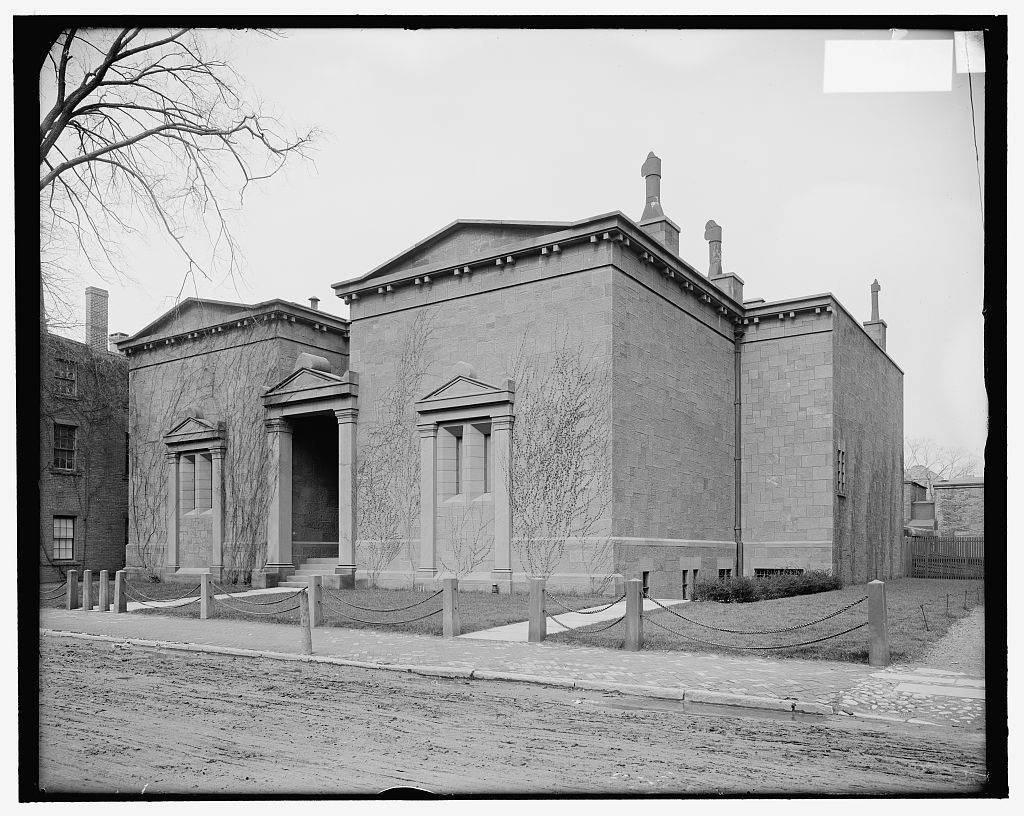
Yale's secret societies cast long shadows here. The Book and Snake tomb rises directly across Grove Street, a white-columned edifice surrounded by black spiked fences adorned with metal serpents—watching the cemetery gate like a sentinel. The Skull and Bones "Tomb" stands nearby, its Egyptian Revival columns echoing Austin's gate. Legend claims Bones members possess Geronimo's skull, stolen from his Oklahoma grave in 1918; a 2005 letter discovered by a Yale historian suggested bonesmen believed their fellows had indeed taken "the skull of the worthy Geronimo."
The New Haven Ghost Walk culminates here, where guides speak of restless spirits and the "phantom of Geronimo" said to wander the grounds. Visitors report an eerie presence felt among the tombstones—the sensation of being observed by countless eyes from the 18th and 19th centuries. The atmosphere grows heavy near dusk, when shadows lengthen between the Victorian monuments and the inscription above seems less a promise than a warning.
The dead shall be raised. Whether Austin meant comfort or caution, his words hover over everyone who passes beneath. In Grove Street Cemetery, America's founders and inventors, artists and scholars, lie waiting—their headstones gleaming in morning light, their secrets buried beneath the oldest planned cemetery in the nation.
Researched from 12 verified sources including historical records, local archives, and paranormal research organizations. Learn about our research process.