Seaside Sanatorium

Seaside Sanatorium

🏥 hospital

Waterford, Connecticut ยท Est. 1934

TLDR

Built in the early 1900s to treat children with tuberculosis, the Seaside Sanatorium faced serious allegations of patient mistreatment before it was shut down. The buildings have been deteriorating on the shoreline ever since.

👻

The Full Story

Verified · 12 sources

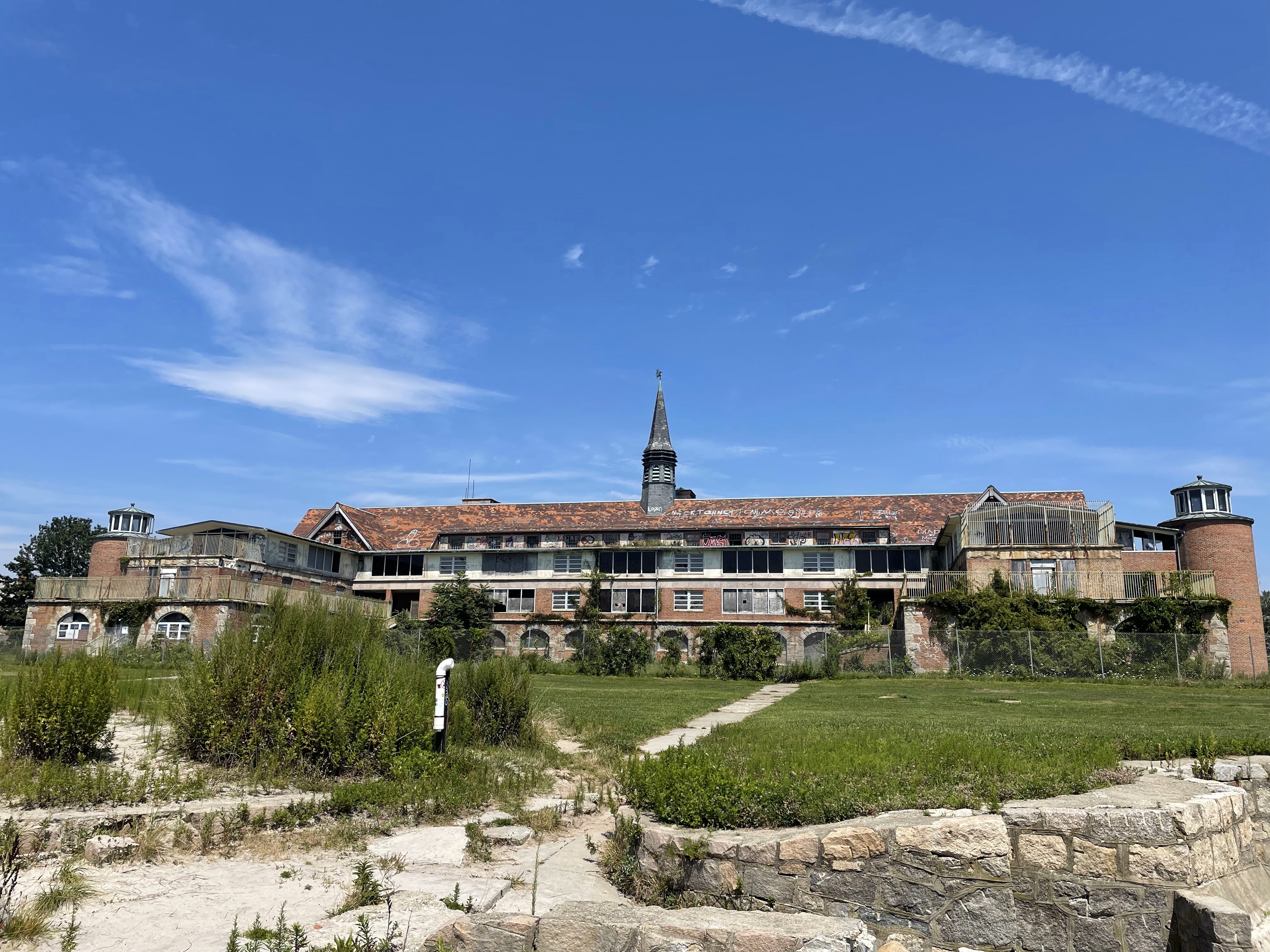
The Seaside Sanatorium is one of Connecticut's most haunting monuments to institutional tragedy. Built on a scenic bluff overlooking Long Island Sound, this Tudor Revival masterpiece was designed by renowned architect Cass Gilbert--the same visionary behind the U.S. Supreme Court and New York's Woolworth Building. When the Stephen J. Maher Building opened in 1934, it represented the nation's first institution designed specifically for heliotropic treatment of children suffering from tuberculosis.

In those early years, children as young as five and no older than fourteen came here to be cured by sunlight. They spent their days in bathing suits year-round--even in winter, wearing only hats and gloves--sunbathing on the 1,700-foot sand beach or the south-facing terraces. The heliotherapy treatment was considered revolutionary, offering cure rates of 70 to 90 percent for bone and glandular tuberculosis without surgery. For many children, Seaside was a place of healing. But not all of them left.

The sanatorium's purpose shifted dramatically after antibiotics made tuberculosis treatment obsolete in the 1950s. From 1959 to 1961, Seaside served as a geriatric center for elderly patients. Then, in 1961, it became the Seaside Regional Center for the Mentally Retarded--a transformation that would darken its legacy forever.

In the early 1970s, disturbing allegations emerged that patients were being violently abused by staff. Superintendent Fred Finn was accused of mismanaging funds and mistreating residents. By the mid-1990s, the facility had become notorious for its unnaturally high mortality rate--patients were turning up dead at alarming frequency. The circumstances surrounding these deaths remained hidden behind a wall of secrecy, with the state refusing to release investigation findings even to grieving families.


The center finally closed in 1996, officially due to deinstitutionalization policies, though the shadow of scandal lingered. The buildings have stood abandoned ever since--nearly three decades of decay overlooking the peaceful Connecticut shoreline.

Paranormal investigators have documented extensive activity within and around the deteriorating structures. The New England Paranormal Video Research Group conducted investigations in 2007, capturing EVPs (electronic voice phenomena) and photographing spirit orbs throughout the complex. During one investigation, a team walking along the back of the main building heard a dog barking from inside. When the security guard searched the interior, no animal was found--only silence.

The Connecticut Ghost Seekers reported capturing an EVP of a male voice that "wasn't happy they were there." Dark figures are among the most frequently reported phenomena--misty shapes of both patients and staff seen walking the grounds, passing from building to building as if still going through their daily routines. Visitors have reported hearing voices echoing through the crumbling halls with no one there, including the laughter and cries of children--a haunting reminder of the young tuberculosis patients who spent months or years within these walls.

One visitor's companion reported seeing a pair of eyes staring them down from the end of a hallway filled with cubicles. Others have captured strange images--dark figures and luminous orbs appearing in photographs taken on the grounds.


The buildings themselves have become deadly dangerous. A vagrant who had taken up residence inside was found dead after falling through two floors. The 36-acre property now operates as Seaside State Park, where visitors can walk the grounds and peer through chain-link fences at the boarded-up buildings.

The state has announced plans to demolish the historic structures and create a passive park, funded by $8.1 million in American Rescue Plan Act funds. Demolition is expected to begin in 2026. Developer Mark Steiner fought to save the buildings through multiple lawsuits, but his final case was dismissed in December 2024.

Soon, only the foundations and memories will remain.

Visiting

Seaside Sanatorium is located at 36 Shore Road, Waterford, Connecticut.

Open in Google Maps →

Researched from 12 verified sources including historical records, local archives, and paranormal research organizations. Learn about our research process.