About This Location
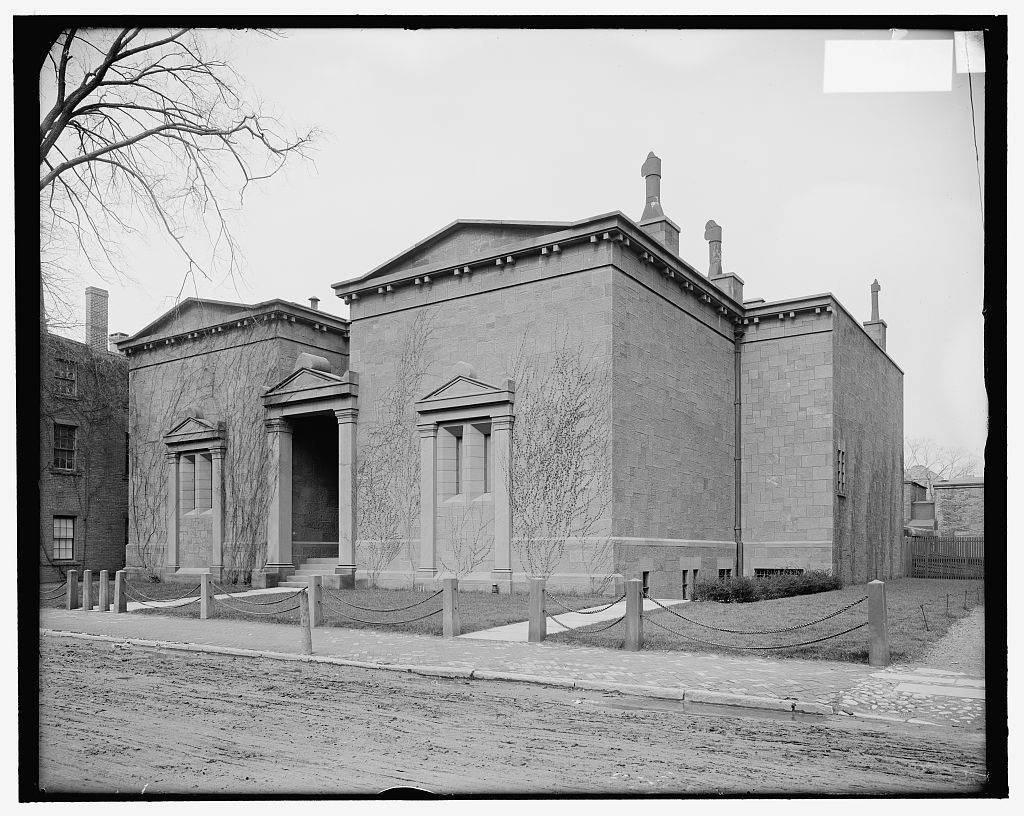
The windowless headquarters of Yale's most famous secret society, Skull and Bones, founded in 1832. The Egyptian-style building is surrounded by mystery and legend, including controversial claims about stolen artifacts.
The Ghost Story
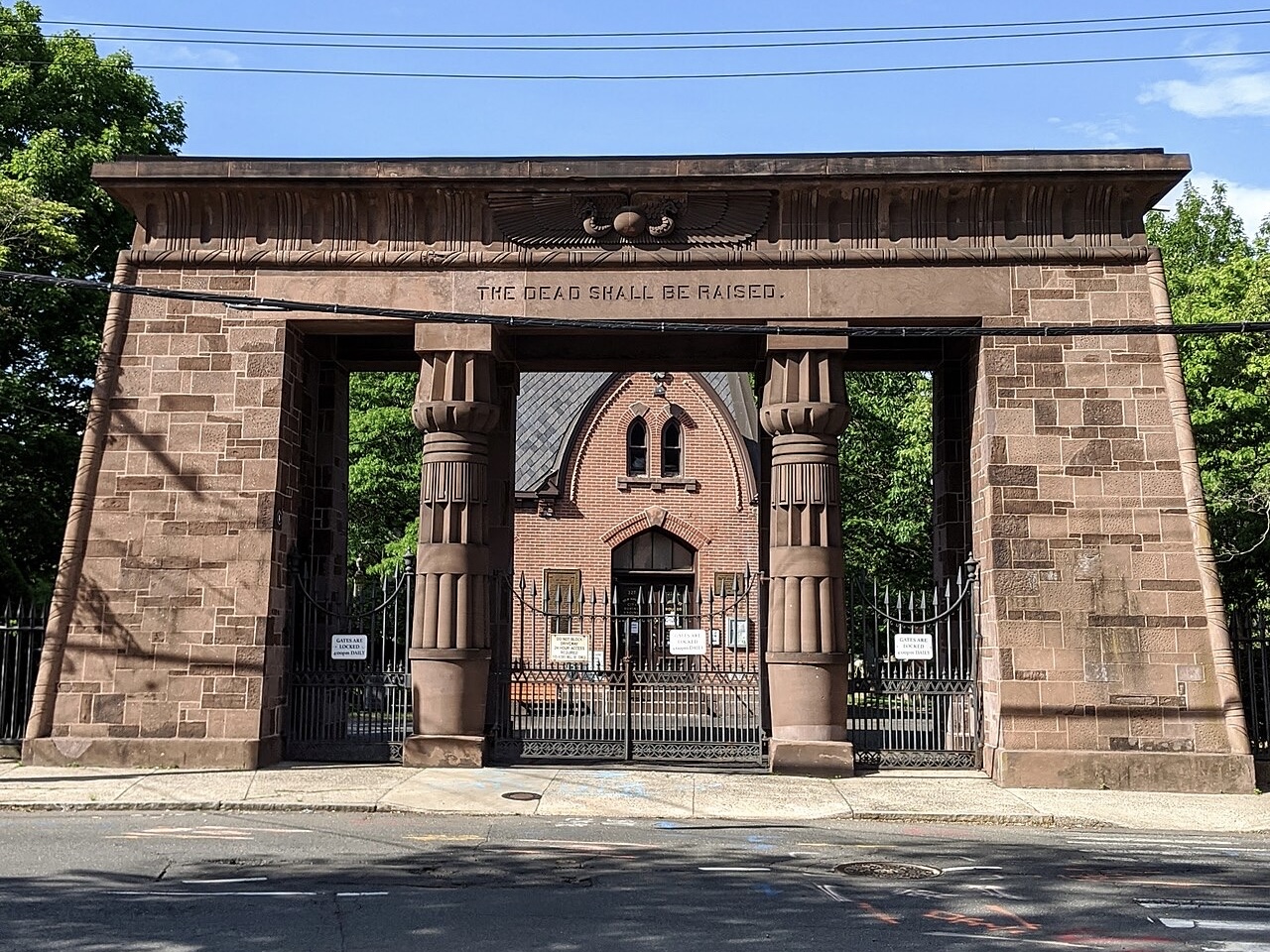
The Skull and Bones Tomb stands at 64 High Street like a fortress of secrets, its windowless Portland brownstone facade deliberately designed to intimidate and intrigue. Built in three phases beginning in 1856, the Egypto-Doric structure was designed by either Alexander Jackson Davis or Henry Austin, both of whom also worked on the eerily similar Egyptian Revival gates at nearby Grove Street Cemetery. The building expanded in 1903 and again in 1912, when Neo-Gothic towers were added to the rear garden, bringing the secretive complex to approximately 16,000 square feet of forbidden interior space.
Inside, according to accounts from rare witnesses, visitors would find human and animal skeletons decorating the walls, a mummy in the upstairs hall, tableware engraved with "S.B.T." (Skull and Bones Tomb), and drinking vessels shaped like skulls. The infamous Room 322 contains a German slogan painted on arched walls above a painting of skulls surrounded by Masonic symbols: "Wer war der Thor, wer Weiser, Bettler oder Kaiser? Ob Arm, ob Reich, im Tode gleich"—"Who was the fool, who the wise man, beggar or king? Whether poor or rich, all's the same in death."
Death is their decor of choice. The society was founded in December 1832 by William Huntington Russell and Alphonso Taft after a dispute over Phi Beta Kappa awards. Russell had just returned from Germany, where he encountered mystical elite clubs that mimicked the Enlightenment-era Illuminati. Members worship Eulogia, a fictional goddess of eloquence, and adopt pseudonyms during initiation—"Long Devil" for the tallest member, "Boaz" for the varsity football captain. George H.W. Bush was known as "Magog," while Averell Harriman bore the name "Thor."
The society has produced three presidents—William Howard Taft, George H.W. Bush, and George W. Bush—and in the 2004 election, both major candidates were Bonesmen. But it is not the living members who draw ghost hunters to High Street.
The most persistent haunting involves Geronimo, the legendary Chiricahua Apache leader who died in 1909 as a prisoner of war at Fort Sill, Oklahoma. According to legend, nine years after his death, a group of Bonesmen stationed at the army base during World War I desecrated his grave and stole his skull. The accused grave robbers allegedly included Prescott Bush—father and grandfather to two future presidents—along with Henry Neil Mallon and Ellery James, all members of the class of 1917.
In the fall of 2005, Yale historian Marc Wortman discovered a 1918 letter in the university archives that seemed to confirm the legend. Written by Winter Mead to fellow Bonesman Frederick Trubee Davison on June 7, 1918, it stated: "The skull of the worthy Geronimo the Terrible, exhumed from its tomb at Fort Sill by your club and Knight Haffner, is now safe inside the T—together with his well worn femurs, bit and saddle horn."
Author Alexandra Robbins, who penetrated the society's wall of secrecy, reported that a glass case inside the Tomb still displays a skull that members refer to as Geronimo. The Apache warrior's descendants filed a federal lawsuit in 2009, on the centennial of his death, seeking the return of his remains. The case was dismissed in 2010, but the legend—and the haunting—persist.
Tour guides from the New Haven Ghost Walk regularly stop at the Tomb to tell Geronimo's story. On one cold and foggy March night, guide John Degon claimed he saw something on the roof of the building while speaking about the Apache chief. "A figure was watching our tour group," Degon reported. He believes it was the ghost of Geronimo himself, forever restless, forever watching from the building that allegedly holds his desecrated remains.
The society has also been accused of possessing the stolen skulls of President Martin Van Buren and Mexican revolutionary Pancho Villa. Members call the practice of stealing keepsakes "crooking" and reportedly compete to outdo each other's acquisitions. Alexandra Robbins claims that even Elihu Yale's gravestone was stolen from Wrexham, Wales, and now sits in a glass case inside a room with purple walls.
What spirits wander the sixteen thousand square feet of forbidden corridors? The Bonesmen are sworn to secrecy—the mere mention of Skull and Bones allegedly causes any member to leave the room. Whatever darkness dwells inside the Tomb, only the initiated will ever know for certain.
Researched from 11 verified sources including historical records, local archives, and paranormal research organizations. Learn about our research process.