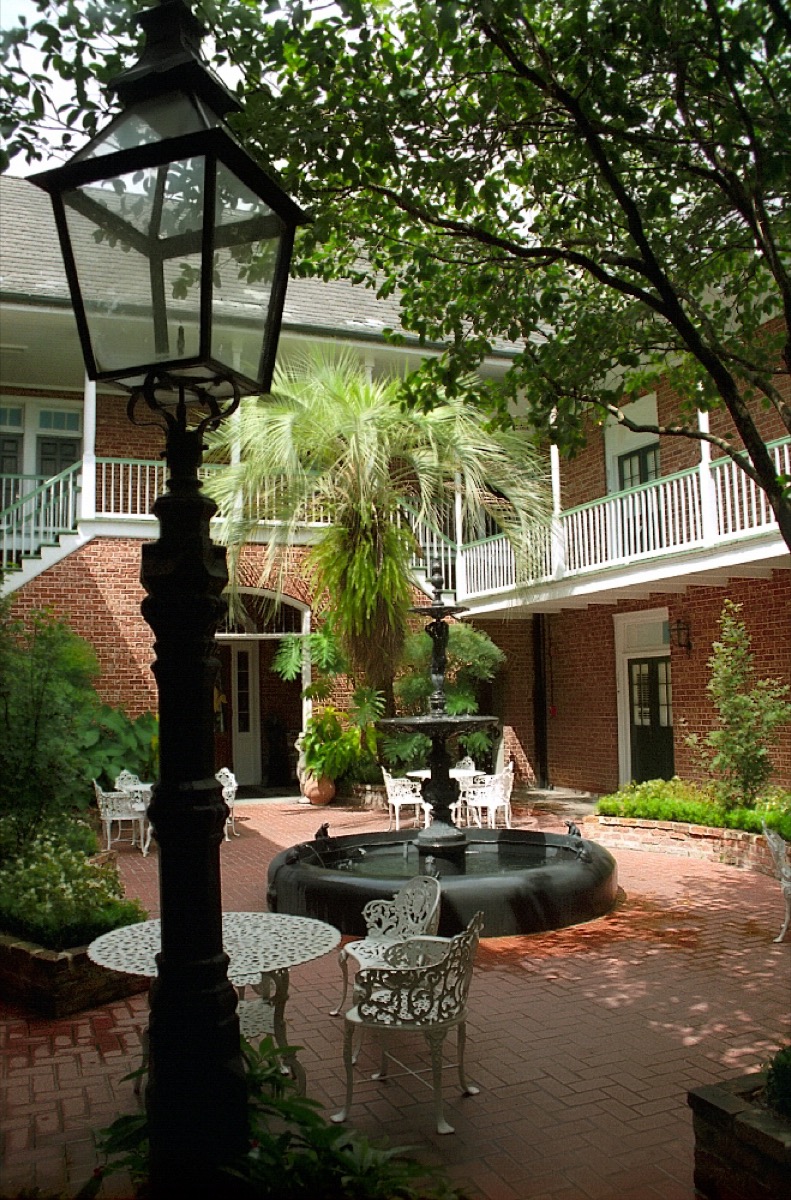
At Hotel Provincial in New Orleans, the elevator in the 500 building sometimes opens on the second floor into a full Civil War hospital scene: cots, wounded men, a soldier mid-surgery. The doors close, and it's a carpeted hallway again.
At Hotel Provincial in New Orleans, the elevator in the 500 building has a habit of opening onto the wrong century. A guest stepped off on the second floor, the story goes, into rows of cots, wounded men, and a soldier laid out under a surgeon mid-operation. The doors closed. When they opened again, it was an ordinary carpeted hallway.
The hotel doesn't deny it. Their own site tells of a security guard who got off the elevator and "stepped into a frantic hospital scene right out of Gone with the Wind." What did he do? He got back in the elevator.
The 500 building is where the reports gather. Guests say they've walked into rooms there to find bloody, moaning soldiers who vanish the instant the lights come on. Apparitions in period dress, Confederate uniforms and surgeons among them, turn up the same way. Bloodstains are said to appear on clean white bedding and on the floor, then disappear before anyone can photograph them or strip the sheets. One paranormal investigation came away with something it could play back: an EVP of a voice saying, "Tell Diane I have to go."
The most common report is the quietest. Guests wake in the pre-dawn dark to the bed rocking under them, a heavy rocking, not a tremor, that stops the moment they switch on the light. Sometimes a cool current of air trails them around the room afterward. A young woman is reported too, calmer than the soldiers, thought to be a hospital-era nurse, moving from room to room like staff between beds.
By the hotel's own telling, the ground explains all of it. "During the War Between the States," the site reads, "our lovely hotel served as a hospital for the Confederate wounded." It's a tidy origin, and the tours repeat it as settled fact. The verifiable record is older and thinner than that. A colonial military hospital did stand on this lot, but back in 1722, more than a century before the war. An 18th-century herb garden once supplied another hospital nearby. The direct Confederate-hospital claim lives in hotel literature and tour narration, not in any archive.
The buildings themselves don't even date to the war. The ones on the lot burned in the 1870s and were rebuilt; the present 500 building went up in 1874. So whatever the elevator keeps opening onto, it isn't held in the walls. Locals tell it the way the land seems to insist on it: the haunting belongs to the ground, not the lumber stacked on top of it. The hotel could burn again tomorrow and rebuild, and the soldiers would still be on the second floor, waiting for the doors to part.