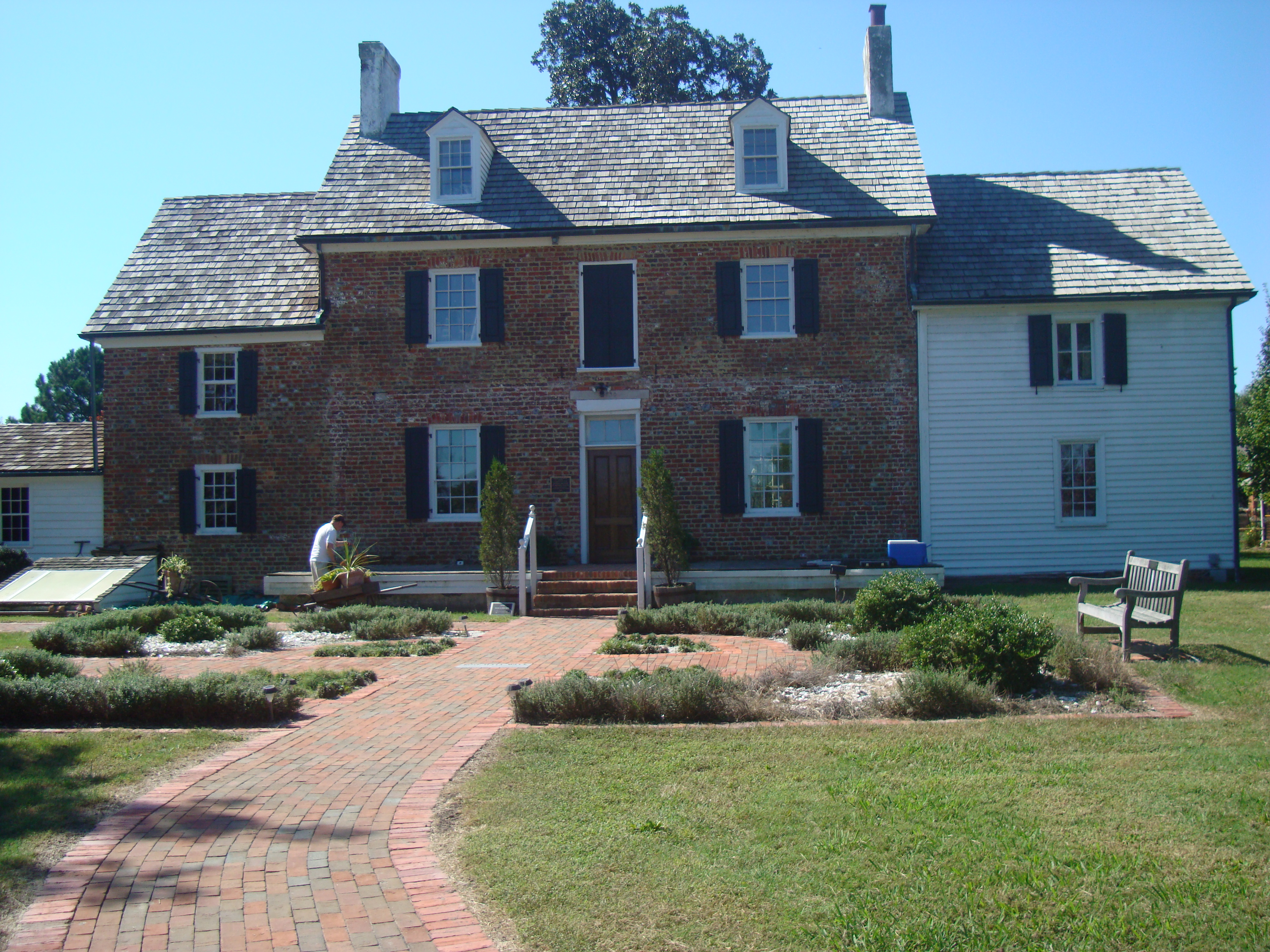
Ferry Plantation House in Virginia Beach is where Governor Kaine's 2006 pardon for Grace Sherwood was read aloud, 300 years to the hour after her ducking.
At 10 a.m. on July 10, 2006, Virginia Beach Mayor Meyera Oberndorf stood at Ferry Plantation House and read Governor Tim Kaine's pardon out loud. Three hundred years earlier, to the same hour, Grace Sherwood had been bound right thumb to left big toe, left thumb to right big toe, and dropped into the Lynnhaven River off Witchduck Point. She surfaced. The crowd took it as proof she was a witch. She spent about seven years in jail.
The pardon was informal, the only kind Virginia governors can issue for a 1706 conviction. But it cleared the name of the only person in the colony ever convicted of witchcraft by water trial, and the woman who'd spent more than two decades campaigning to get it done, Belinda Nash, finally had her day. The ceremony happened at the house because the house had become the keeper of the story. The river behind it is the same river. The point where Sherwood went under is on the same branch of the Lynnhaven, close but not the same parcel of ground.
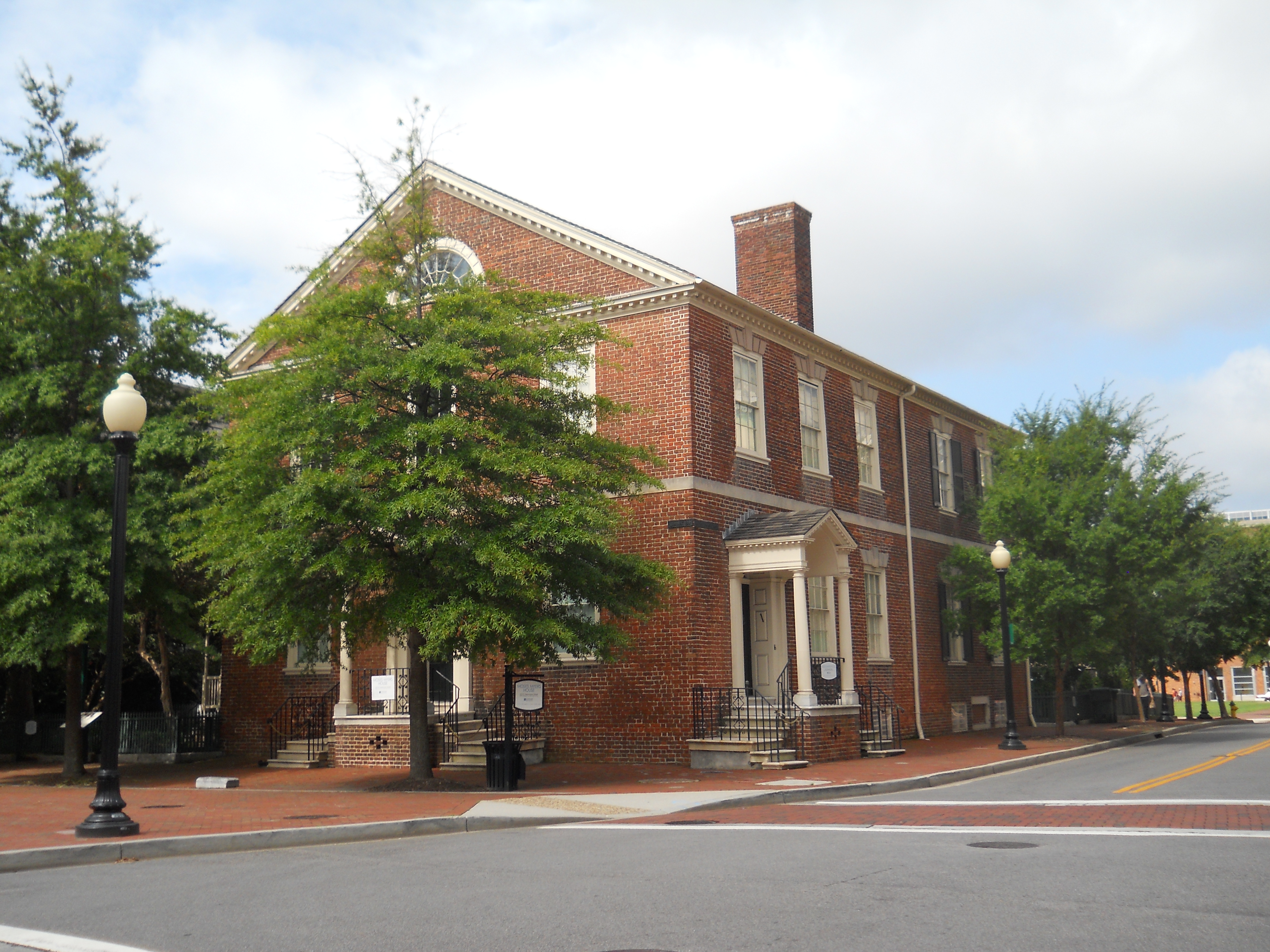
The house itself is a 1830 Federal-style brick with a wood-frame white wing on the right side that was added in 1850. George and Elizabeth MacIntosh built it from bricks salvaged from the Walke Manor House, which had stood on the property since 1751 and burned to the ground on September 12, 1828. So the bricks holding up the walls are older than the walls. That feels right for a place this haunted.
Before the manor, before the Federal-style house, there was a ferry. Savill Gaskin set up the second ferry service in Hampton Roads here in 1642, with eleven stops up and down the Lynnhaven and a cannon to signal when the boat was coming. From 1735 to 1828 the third Princess Anne County courthouse stood on the property, the first brick courthouse in the county. Stocks and a pillory came with it, though those got moved to Newtown in 1751. So the ground has been used for ferrying people across water, judging people, and burning down. Then it spent a decade rotting. The house was abandoned from 1986 to 1996. Citizens stopped the demolition. The Friends of Ferry Plantation House started restoring it in 1996 with the City of Virginia Beach, and it's been a museum ever since. National Register of Historic Places, 2005.
Henry is an elderly African-American man who comes up from the basement and kneels at the west wall. EVP recordings, according to the museum, gave them his name. General Thomas H. Williamson, son of former owners Thomas and Anne Walke Williamson, lived 1813 to 1888, and appears at the top of the stairs painting. A toddler visiting the house described a bearded man in a dirty shirt painting up there before anyone showed her a photo of the general. Then they showed her the photo. It matched.
Bessie McIntosh, daughter of Charles F. and Isabella McIntosh, died at age five in 1860. Visitors describe a small girl with ringlets in Mary Jane shoes. Eric is the young boy associated with the conference room in the 1850 west addition; he's said to have died after falling from a low window sometime after the addition went up. Children's voices have been recorded in that room.
The Lady in White is reported to have died of a broken neck after falling down the stairs. A pregnant woman in blue showed up in a Port City Paranormal photograph, reflected in a window of the Best Parlor, sad-looking, eight months along, with no flesh-and-blood pregnant woman in the building at the time. The museum tentatively identifies her as Mrs. Charles F. McIntosh, who was eight months pregnant in 1862 when her husband died on Confederate naval duty aboard the CSS Louisiana. He'd lived in the house since age seventeen, resigned his U.S. Navy commission in 1861, and lasted barely a year on the other side.
The list goes on. Sally Rebecca Walke, who planted a Southern Magnolia in the back yard on April 6, 1863, for a fiancé killed in the Civil War. A male slave from the kitchen quarters. A little girl named Mary. A servant also called Henry, this one reported to escort guests up from where the ferry landing used to be. And a cat. The "eleven" is the museum's count. Sources between them name nine to eleven specific spirits depending on who's counting.
A few of the more cinematic claims are softer. Wikipedia and a few tourism roundups mention lights turning on by themselves on the third floor when the building is empty, and the sound of dragging chains from the courthouse era. Neither claim has a named witness in the sources I could find. There's also a long-circulating story that some of the ghosts are victims of an 1810 shipwreck at the ferry landing. I couldn't trace it to a contemporary newspaper or wreck record. The story keeps repeating itself, but the paperwork isn't there.
What is there, and what the house has built itself around, is Grace Sherwood. She lived to about eighty, dying in 1740. She was a midwife and a herbalist, which in 1706 was enough to get neighbors accusing each other in court for almost a decade before someone finally tried the water test. "Duck the witch!" Wikipedia says the spectators shouted as she was led down the road that's now named, exactly, Witchduck Road. In 2007, a year after the pardon, sculptor Robert G. Cunningham's statue of her went up in Virginia Beach. A basket on her arm. A raccoon at her feet. A healer, finally cast in bronze.
The Halloween-season tour is called the Stroll of Lost Souls. The magnolia is still in the back yard.