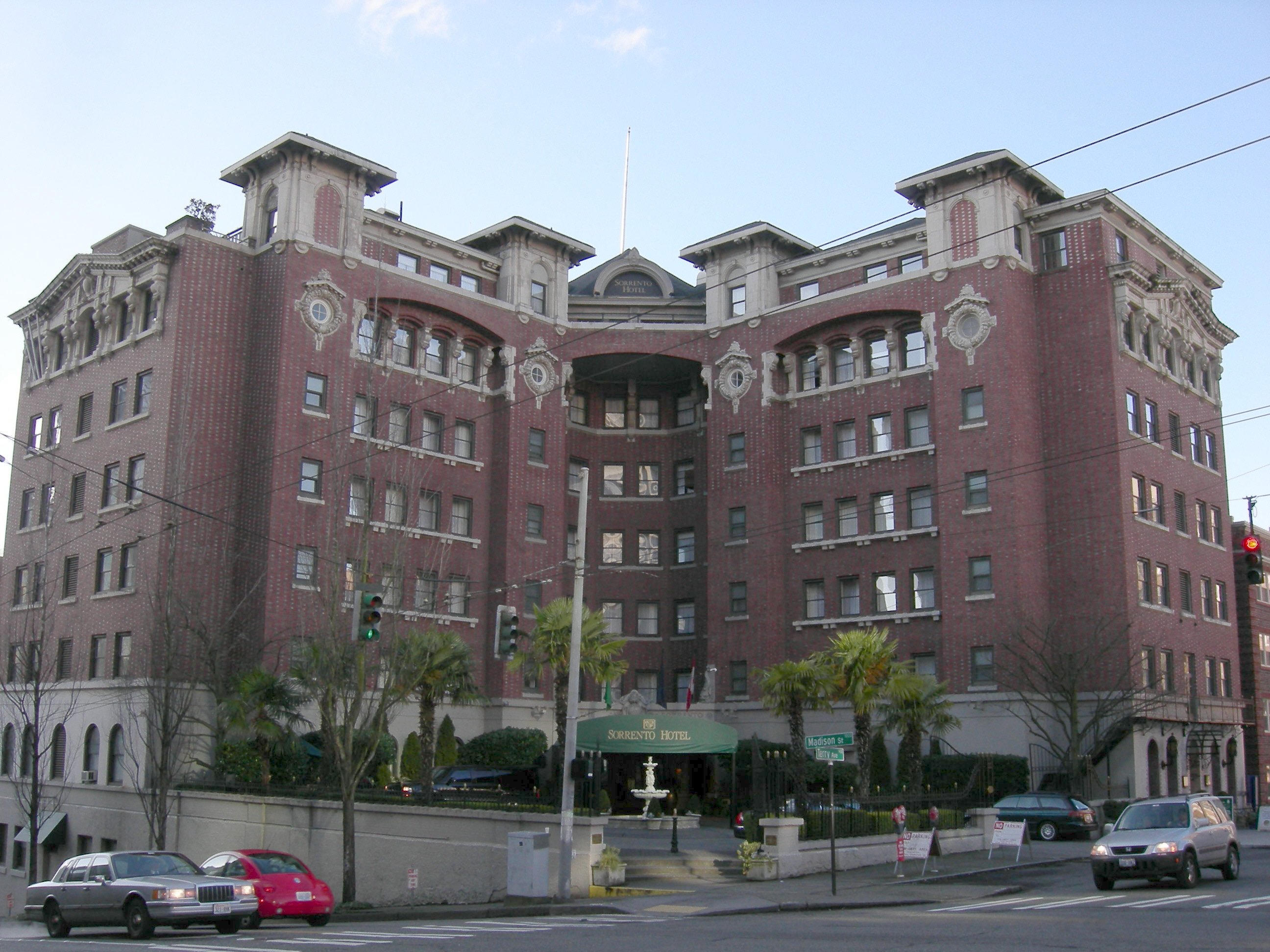
Guests on the fourth floor of Seattle's Hotel Sorrento report the hallway lights flickering and a weight settling onto the end of the bed. Staff say it's Alice B. Toklas, who was living in Paris when the hotel opened and never set foot inside it.
The Hotel Sorrento in Seattle keeps its ghost on the fourth floor, around Room 408. Guests in and near that room report the hallway lights flickering all the way down the corridor, co-owner Barbara Malone told Seattle Refined, and the feeling of someone sitting down on the edge of the bed. A blogger named Malia Miglino booked 408 for a night and got nothing from the room until checkout morning, when she heard a woman humming behind her in the bathroom.
Staff will tell you who she is. They say she's Alice B. Toklas, Gertrude Stein's partner, the name on the 1954 cookbook with the hashish fudge in it. Toklas never stayed at the Sorrento. She never walked through the front door. By the time it opened in 1909 she and Stein were already in Paris, and her family had left Seattle more than a decade before that.
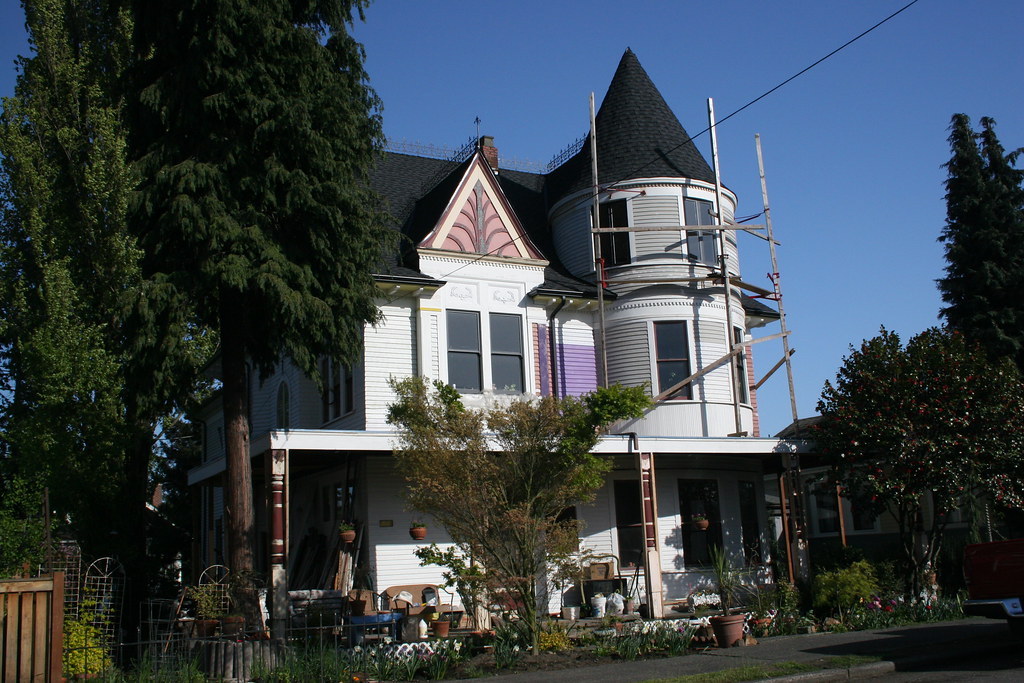
What she had was the block. Toklas moved here as a girl in 1890, was schooled by the Cochrane sisters at their Mount Rainier Seminary, and studied piano at the University of Washington meaning to play concerts. Her mother Emma kept a garden at the family house, Homer roses and dwarf yellow pansies and sweet peas, which is the detail people reach for to explain why the woman keeps turning up outside.
Where that house actually stood is the entire basis of the haunting, and nobody can pin it. Next door, around the corner, or directly under the hotel, depending which telling you get. Tiffiny Costello, the hotel's former marketing director and its ghost-tour guide, dug through City of Seattle records and found nothing at all. Miglino turned up an 1895 city directory listing Alice and her father Ferdinand at 1006 9th Avenue, roughly beside the hotel site rather than on it.
Staff told Seattle Refined they have seen a woman in turn-of-the-century dress in and around the building, and found footprints on the patio where a large garden used to be. She is usually described in flowing white. Drinks and glasses moving on their own down in the bar. Costello says the most-reported sighting of all is Alice out in the garden "in her overcoat and little hat," and that the elevator stops on an empty fourth floor for her, which happened in her first week on the job in 2019 and again the day before she sat for the interview.
The elevator has its own history. On the evening of Monday, May 7, 1923, a 21-year-old Filipino bellboy named Catalino Tarantan climbed into the shaft to fetch a small rubber ball a judge's daughter had dropped while playing toss. The car above him shot upward, the 2,000-pound counterweight came down, and his body went to the public morgue.
Both Seattle dailies ran it. "Never once did I read about a haunted elevator or the poor bellboy," Miglino wrote. "I would put my money on Catalino."