Island Path Road runs through the salt marsh in Hampton, New Hampshire, past where Goody Cole's cabin once stood. Drivers report a figure in the fog. She was the only person New Hampshire ever convicted of witchcraft, and her grave was never found.
Island Path Road runs through the salt marsh in Hampton, New Hampshire, between the beach and the Hampton River. The story drivers tell is about a figure that appears in the fog along it: a woman who steps out of the marsh, lights that aren't headlights, objects that move on their own. The reports name her Goody Cole, and she lived right here, at the secluded end of the path, in a cabin by the water.
Eunice "Goody" Cole is the only person New Hampshire ever convicted of witchcraft. The case predates Salem by decades. Hampton was a fishing community of fewer than 300 people, and in 1656 they convicted her of cursing a neighbor's cattle, which then died, and of "evil knowledge" of a child's illness. Witnesses reported scratching at the windows, which they blamed on an invisible demonic cat. She was sent to prison in Boston and spent much of the rest of her life there. She was tried again in the early 1670s and once more around 1680, those trials ending not in fresh conviction but in "vehement suspicion."
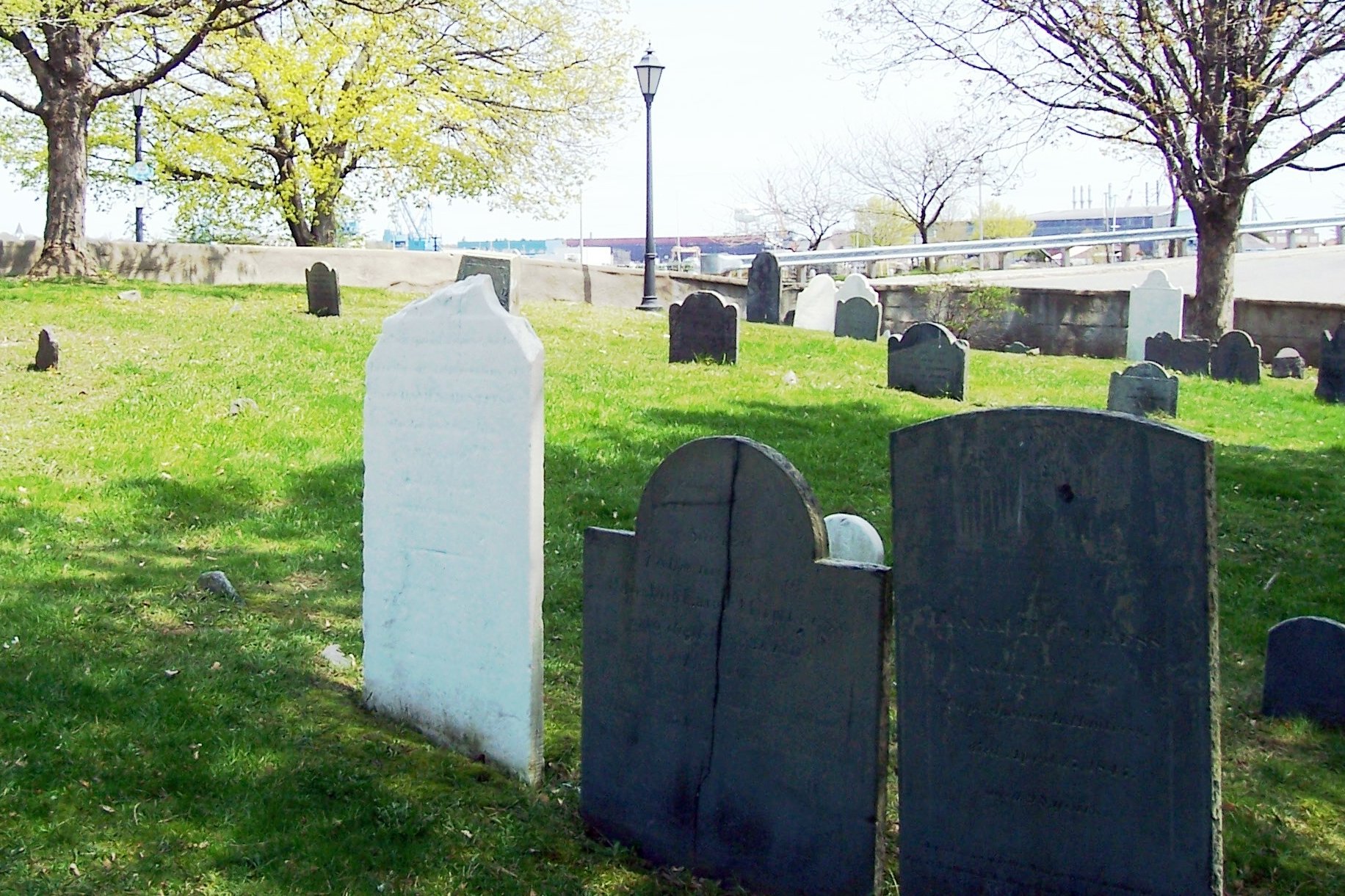
She died around 1680, destitute, with no marker. And here is where the road's lore begins. Local tradition holds that when the townspeople buried her, they drove a stake through her heart to pin her in the ground, and pinned a horseshoe to the stake to ward off the Devil. Then they lost the spot. Her grave has never been found.
The poet John Greenleaf Whittier wrote her into two poems in the 1860s, including one where she curses a fishing party that drowns in a sudden storm. The story stuck. In 1938, during the town's tercentenary, Hampton voted to clear her name, burned her conviction papers, and kept the ashes in an urn. A stone went up in 1963. In 2013, on the 375th anniversary, the historical society added a nameplate bearing her name to that stone, beside the Tuck Museum on Park Avenue. A Dover musician funded it with money from a Goody Cole album. "If Goody's ghost has been walking the streets all these years looking for her gravestone," he said, "I would like to think this stone finally gives her peace."
The stone is at the museum. It is not where she lies. The museum keeps an urn of dirt from a spot where some people merely think she might be buried. Her body was never recovered. The road past her old cabin, out in the marsh, is where people say she still walks.