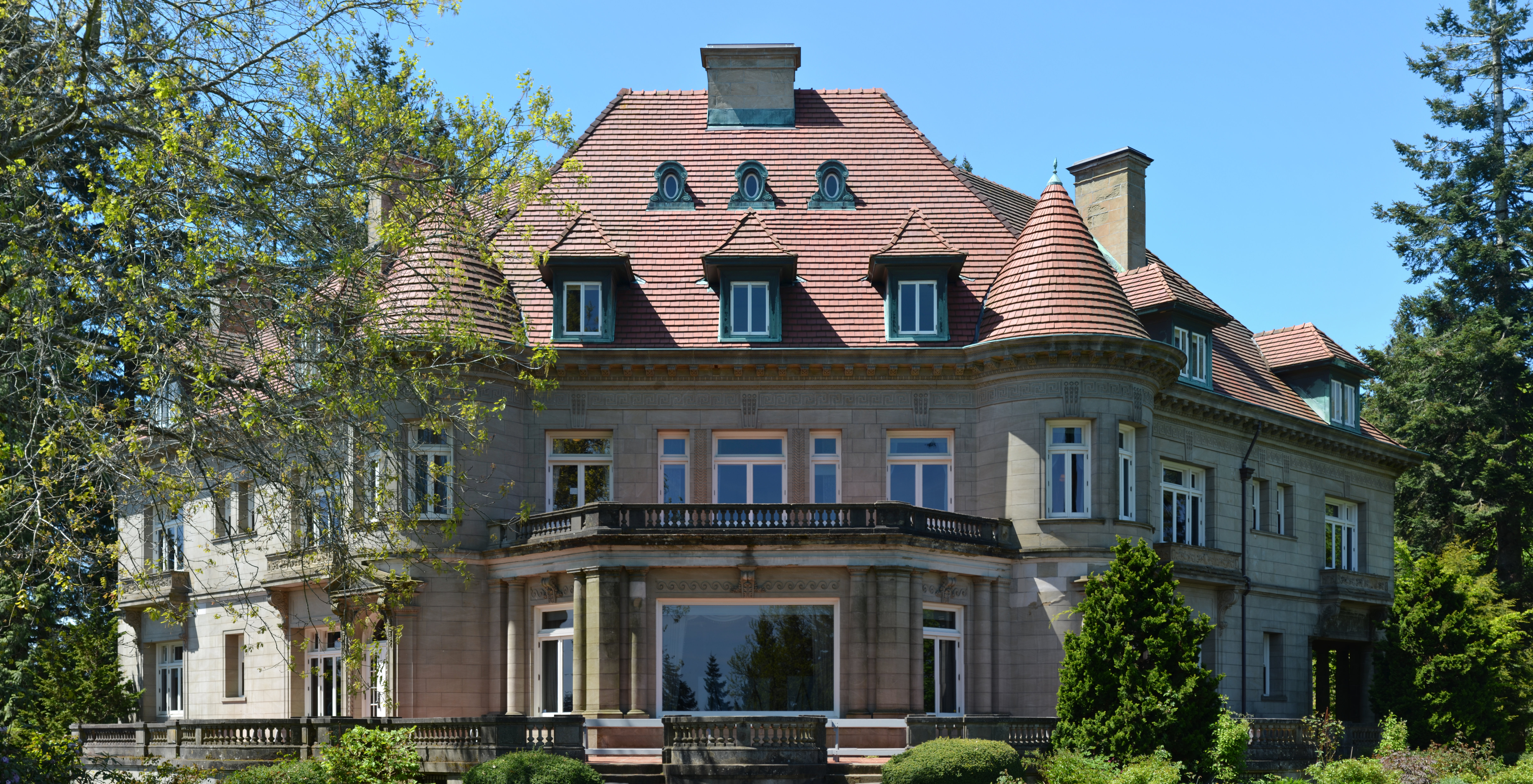
The Pittock Mansion in Portland, Oregon was built by a newspaper baron and his wife, who barely got four years in it. Today guides report the couple at the windows, plus a boy nobody can explain, running the servants' stairs and laughing in rooms that stand empty.
The Pittock Mansion in Portland, Oregon keeps a child no one can account for. Guides hear running footsteps on the servants' stairs and laughter coming from empty rooms, and the small things they set down keep turning up somewhere else. One guide who put objects on a table and later found them moved said it was as if he was telling her, "Yes, I'm here, and I heard you talking about me."
He's a boy, maybe 8 to 12, by the accounts that have built up around him. The trouble is there's no boy to find. No Pittock child died young in the house. No servant lost a son on the grounds. Nothing in the record gives him a name, a date, or a reason to be here. The laughter and the footsteps are reported all over the upper floors, and not one of them belongs to anyone the house can name.
The people who do have a reason barely got the chance to stay. Henry Pittock came to Portland over the Oregon Trail in 1853 and built The Oregonian into the paper that made him rich. He and his wife Georgiana moved into their 46-room chateau in the West Hills in 1914, after years of construction. Georgiana died in 1918, Henry the year after. They had about four years in the house they'd spent so long building, less time than some of the guides who now tell their story have worked the rooms.
They turn up too, the stories go. Georgiana near the master bedroom, an old woman in period dress at the window, and the scent of roses in upstairs rooms with no flowers in them, which staff tie to the rose society she founded. Henry at his study desk, a drift of pipe tobacco in a building where smoking's been banned for decades, and a portrait of him in the library said to follow you with its eyes. Sometimes the two are seen together, a couple's silhouette at the window of the round smoking room, with the room found empty when someone goes up to check. None of it is written down anywhere. The whole tradition comes from the people who work and tour there, not the museum's own history.
So the house holds two who loved it and a boy who has no claim on it at all. As one family was leaving, the story goes, their young daughter called back over her shoulder to someone they couldn't see: "Bye! I hope you find someone to play with you next time!"