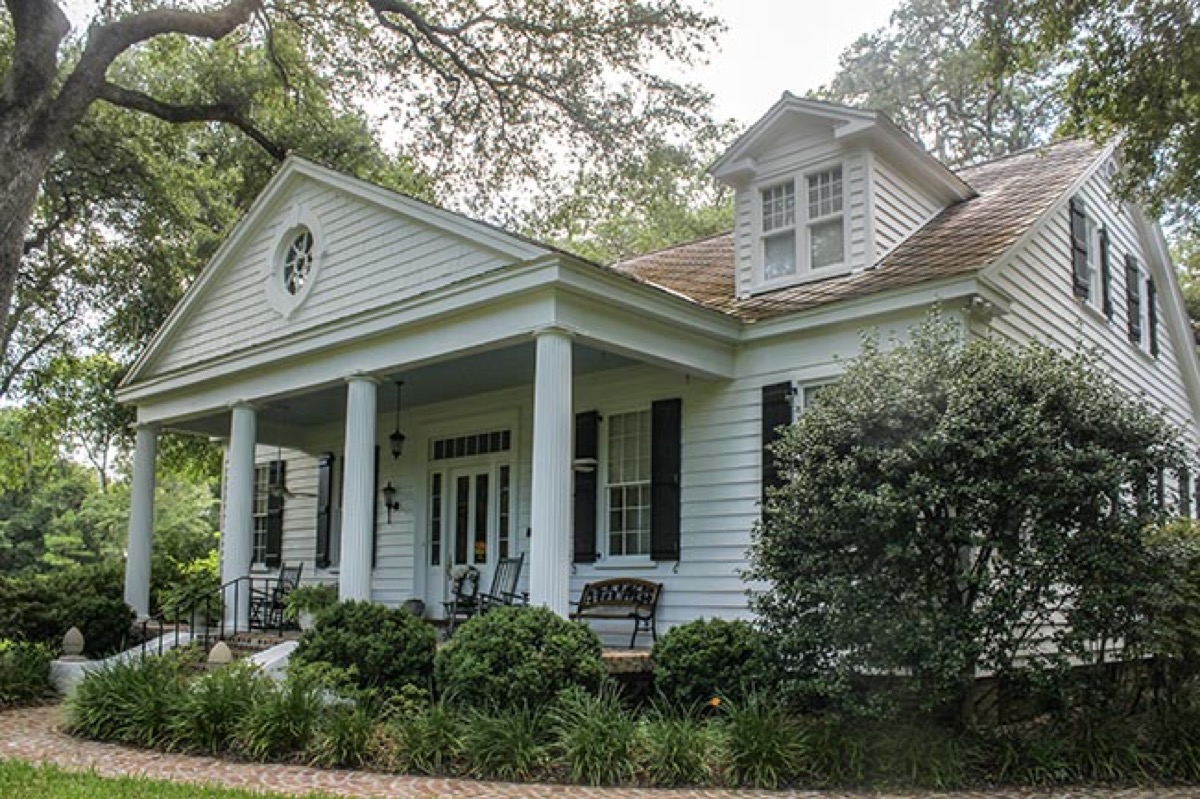
For over a century, visitors have circled Alice Flagg's grave near Pawleys Island and left rings for a girl who died searching for hers. A local historian says they have the wrong grave — the real Alice lies elsewhere, while her ghost keeps to the Hermitage.
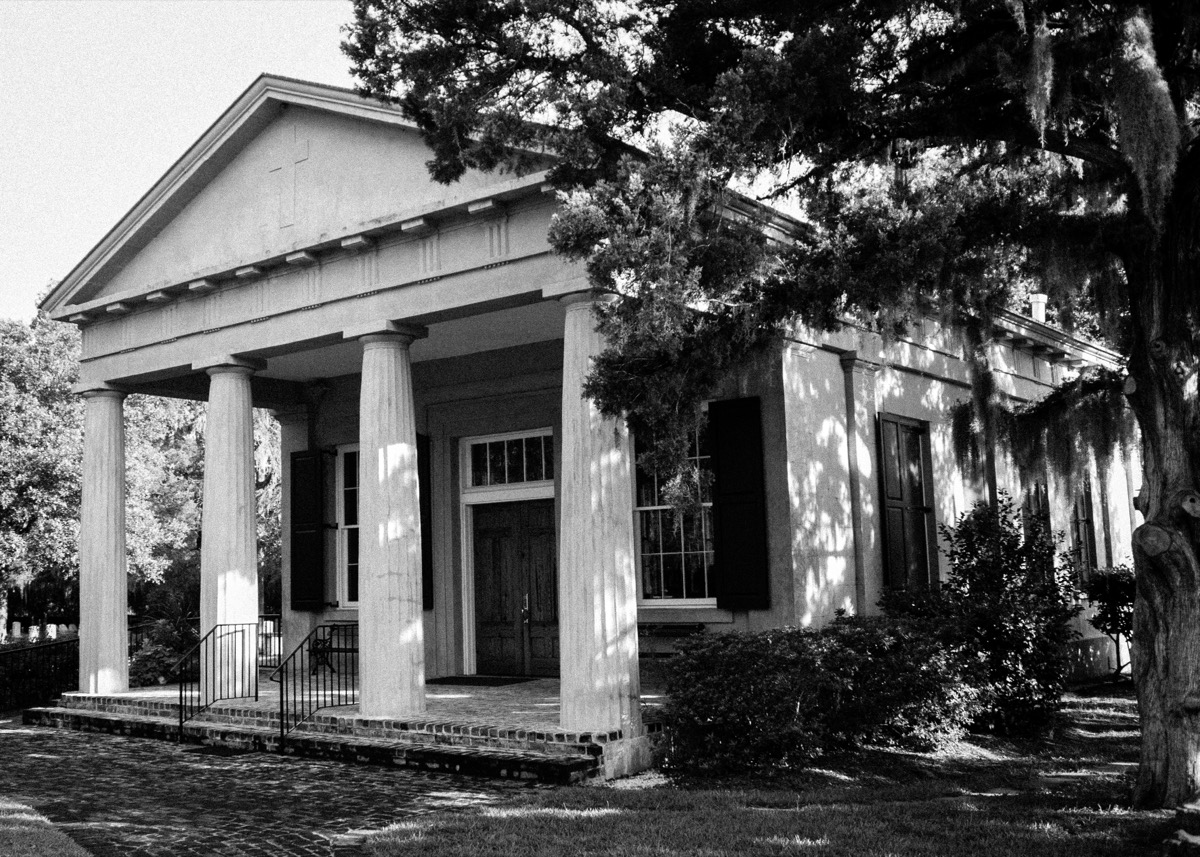
People who have been inside The Hermitage, a Greek Revival house on the marsh at Murrells Inlet, South Carolina, describe the same figure on the staircase: a young woman climbing to a second-floor bedroom that was once hers, one hand pressed to her chest, always seeming to search for something she cannot find. Her name was Alice Flagg, and what she is looking for is a ring.
Alice Belin Flagg was the youngest sister of Dr. Allard Flagg, born around 1834 into the family that summered in the house. The story goes that she fell in love with a turpentine dealer — some tellings make him a lumberman — a man her brother judged beneath the family's standing and forbade her to marry. So Alice hid the engagement ring on a ribbon around her neck, tucked beneath her collar, and wore it where no one would see it.
She was sent off to boarding school in Charleston, and came home burning with country fever, the local name for malaria. As she lay dying at The Hermitage, her brother found the ring on its ribbon and threw it into a nearby creek. Delirious, Alice kept reaching for the empty place at her throat. "I want my ring. Give me my ring," she said, and died in January 1849 without it. They laid her out in a white dress.
Her grave sits in the All Saints churchyard near Pawleys Island: a low marble slab that reads only ALICE, no surname, no dates, set between live oaks hung with Spanish moss. For more than a century, visitors have circled it backward, thirteen times in some tellings, three in others, and left rings, coins, and ribbons on the stone. A few say they feel a tug on their own rings standing beside it. The family that owns The Hermitage painted its porch ceiling "haint blue," the old Lowcountry color meant to keep the dead out.
But the people circling that stone may be at the wrong grave. A Horry County historian named Catherine Lewis went looking and found the marker is commemorative, likely raised for a different Alice Flagg — "Little Alice," killed in an 1893 hurricane. The heartbroken Alice of the legend, Lewis found, lies in an unmarked grave in another churchyard back in Murrells Inlet. And the tale does not appear in print until 1946; one account says a family descendant invented it to frighten his visiting cousins. Every backward circle, every ring on the slab, for a girl who was never under it.