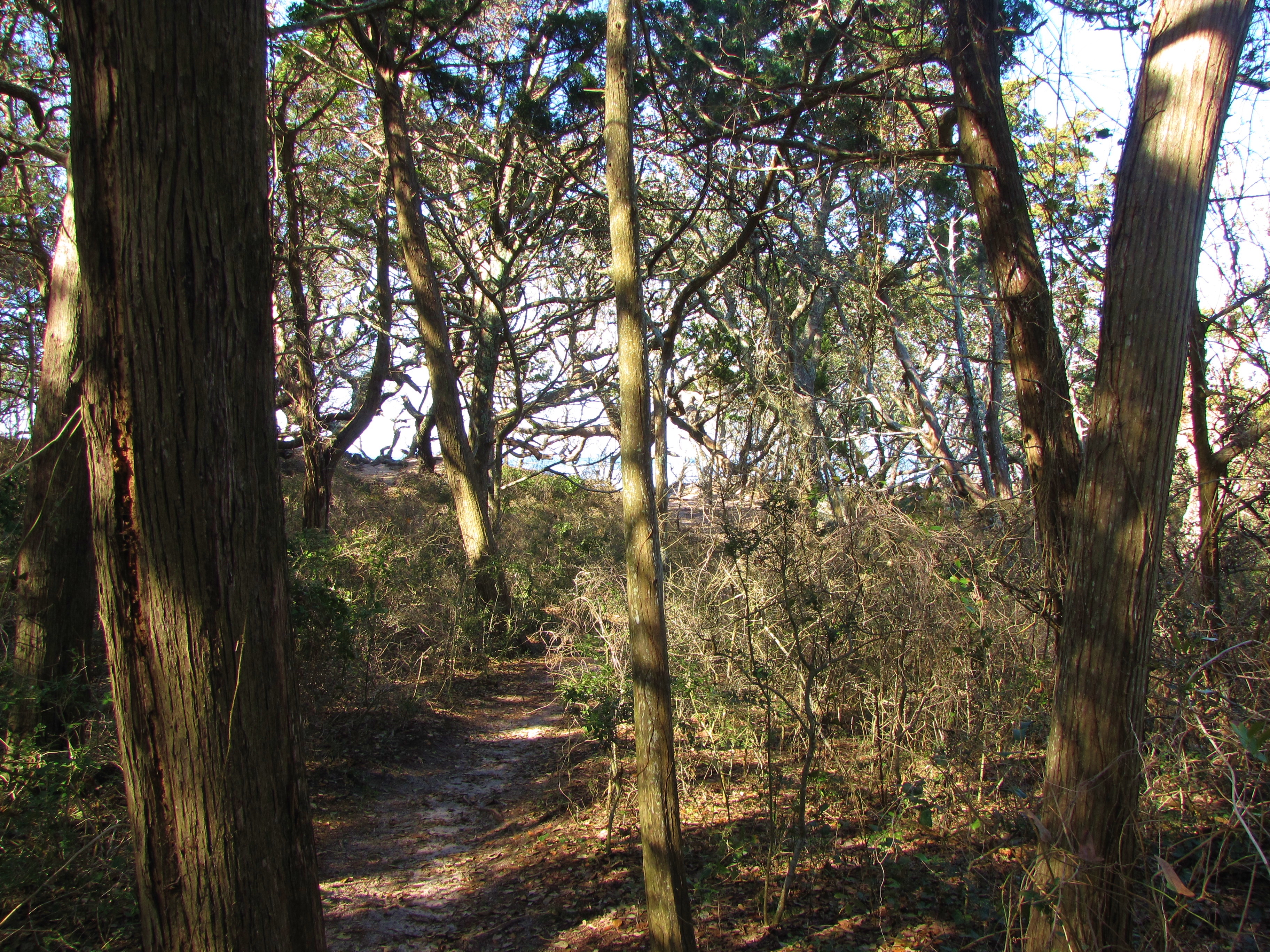
Springer's Point is a maritime forest on Ocracoke Island, North Carolina, where the channel offshore is still called Teach's Hole. Blackbeard died there in 1718, beheaded by the Royal Navy. Locals say his headless ghost still walks the beach, looking for the part of him they took.
Springer's Point is a maritime forest on the south end of Ocracoke Island, North Carolina, and the story locals tell about it is that Blackbeard's headless ghost walks the beach here, wading the shallows in search of his missing head.
He lost it a few hundred yards offshore, in a channel that's still called Teach's Hole. At dawn on November 22, 1718, Royal Navy lieutenant Robert Maynard caught up with Edward Teach in his hired sloop, sent by Virginia's governor to end him. When it was over, Maynard examined the body and recorded that it "had been shot five times and cut about twenty." Then they cut off his head, hung it from the sloop's bowsprit, and threw the rest of him into the inlet.
Five weeks before that, on this same stretch of sand, Blackbeard had thrown a party. In October 1718 he hosted what one account calls "the largest pirate gathering ever to occur in North American waters" — Charles Vane, Israel Hands, and Jack Rackham brought their crews, hogs and cattle were butchered and barbecued on the open beach, and the rum ran for more than a week. It alarmed the colonies enough that the Governor of Pennsylvania sent two sloops to break it up. They failed.
As the legend goes, the headless body went into the water and swam around Maynard's sloop before it sank — three times in most tellings, seven in others. Period accounts say only that the body was thrown overboard; the swimming is folklore that grew up around the place afterward.
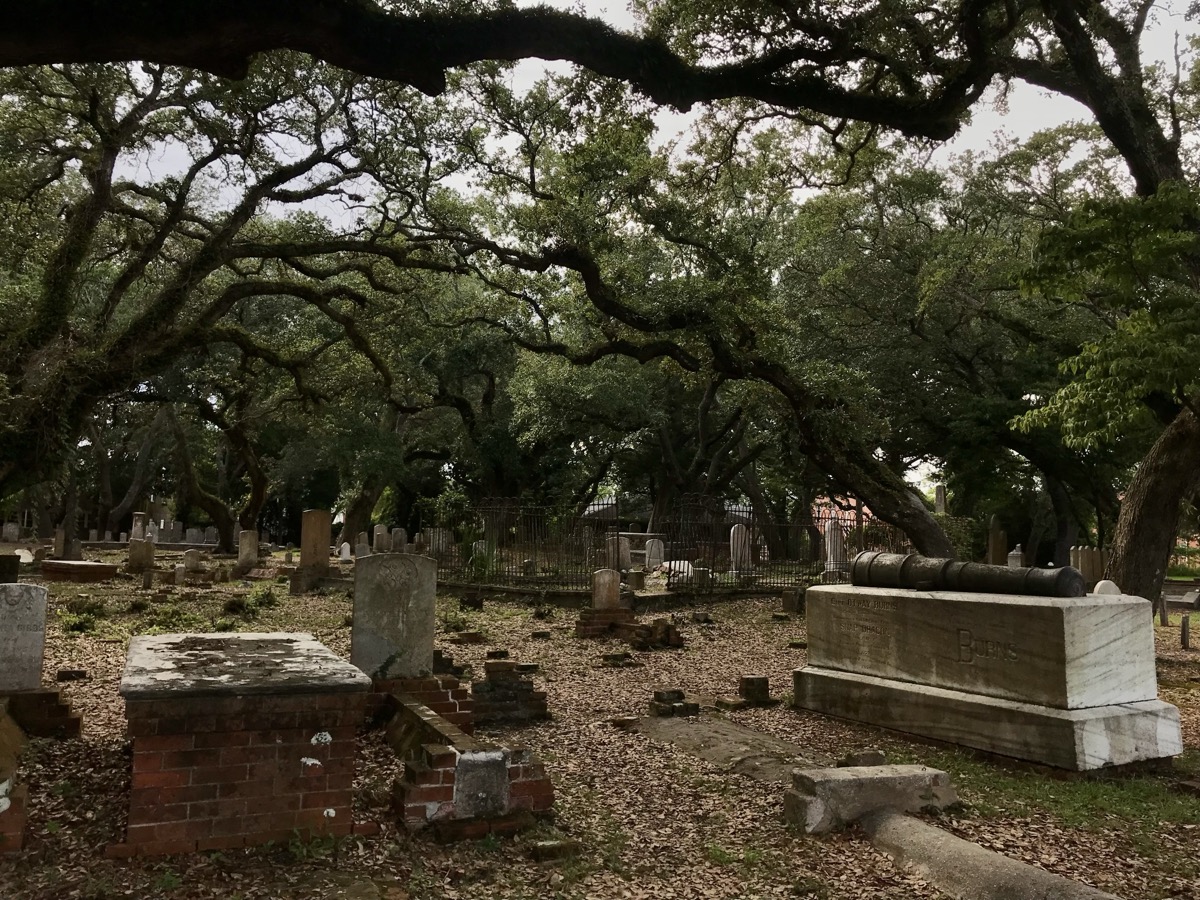
The land itself passed through quieter hands. After the pirates came William Howard in the 1820s, then the Springer family, who gave the point its name in 1883, then an eccentric islander named Sam Jones, who bought it in 1941 and is buried on the property. Today it's a preserve of ancient live oaks, gnarled and among the oldest on the Outer Banks — old enough that the canopy closes over the half-mile trail and the walk feels enclosed in daylight. Some of them were likely alive when Teach was.
The trail ends at a sound-front beach where Pamlico Sound meets the inlet, roughly the last stretch of water Blackbeard would have seen before he sailed out to the fight that killed him. Visitors report lights moving on the water and through the trees, rustling with nothing to explain it, and on stormy nights a roaring near the cove that North Carolina Ghosts describes as "a pained human voice bellowing 'Where's my head?'"
The late Ocracoke musician Roy Parsons said a large, bearded figure once chased him through these woods to the sound. In his own words, it "went down like smoke." He never went back.