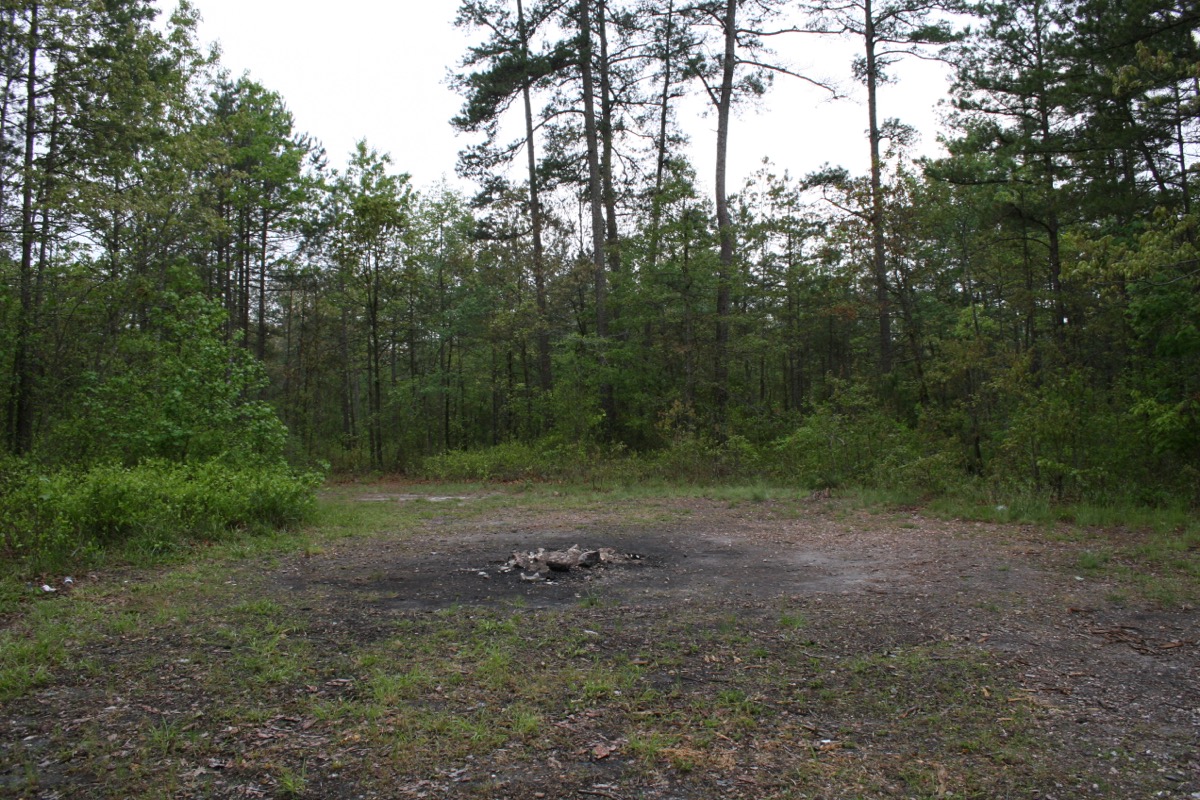
The Devil's Tramping Ground is a barren circle in the Chatham County woods near Bear Creek, North Carolina, about 40 feet across, where nothing will grow. The story goes the Devil paces it at night — and anything you leave inside is flung out by morning.
In the Chatham County woods near Bear Creek, North Carolina, there's a bare ring of dirt about 40 feet across where nothing grows. People call it the Devil's Tramping Ground, and the name is the explanation: the story goes that the Devil comes here at night and walks the circle, pacing the same path over and over as he thinks up new ways to cause trouble, and his treading scorches the ground sterile.
The detail that keeps people coming is small enough to test. Leave a stick, a stone, anything inside the ring before dark, and tradition holds it'll be flung outside the bounds by morning. Try to drive a stake in and anchor it, and the story goes you'll find it pulled loose overnight. Locals once tried to transplant the wiry grass from the circle into other soil, and it wouldn't take. Dogs, people say, won't step inside, and grow uneasy near the edge.
The Devil isn't the only story the place has collected. Some tellings make it a Native American ceremonial ground, worn bare by generations of dancing. Others call it a battle site or a burial ground tied, in one version, to a chief and to the Lost Colony of Roanoke. A plainer theory says a horse once walked the ring turning an old molasses mill, though nobody's matched it to any mill known to have stood nearby. They sit stacked in one patch of dirt, and not one of them has closed the case.
A Greensboro journalist named John Harden put the legend in print in 1949, in a book of North Carolina mystery stories that grew out of his radio show. Residents told him the same thing they'd been telling for as long as anyone could remember — that the Devil goes there to walk in circles as he thinks up new means of causing trouble. By local accounts the tract was already being called "poisoned land" in the 1700s, and an 1852 survey is said to have written it off as worthless.
Here's the part that won't settle. The state Department of Agriculture has tested the soil more than once and called it sterile, with one reading blaming high salt and a natural salt lick nearby. But later testing found the salt too low to explain anything, and a soil scientist filmed working the site for PBS came away with no answer either. The dirt is barren, it stays barren, and nobody can say why.
The land is private now, held by the same family for more than a hundred years, gated and watched by game cameras.
Except lately the circle has started to close. Some recent accounts say the ring is shrinking, grass creeping in where it never used to grow, objects left inside no longer moving overnight. After all these years the bare ground is filling in on its own — and that, too, has no explanation.